Sign in to fuzzto save your conversations, follow your research and come back anytime.

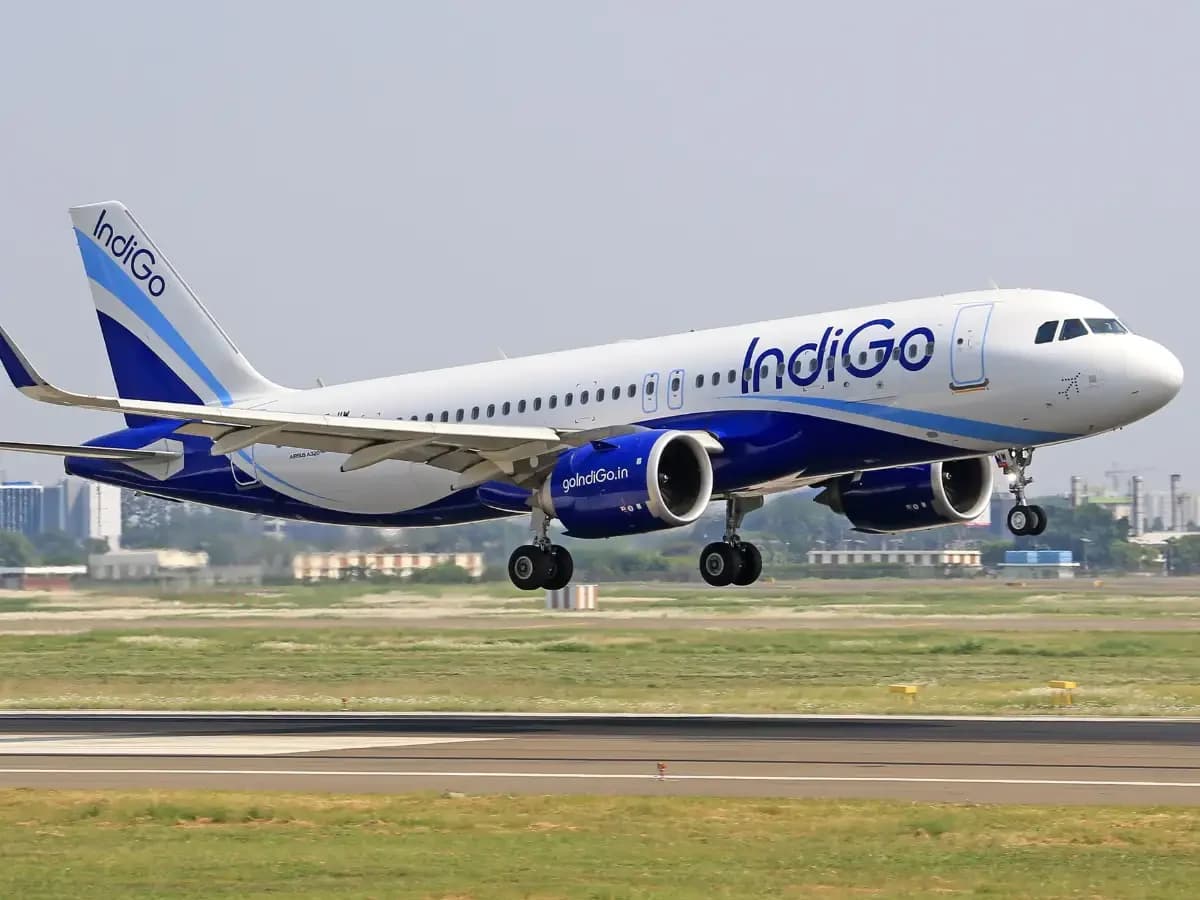
InterGlobe Aviation Limited, incorporated in 2006, operates IndiGo, India's largest airline. IndiGo primarily serves India's domestic air travel market as a low-cost carrier, offering passenger and cargo services along with related allied services. The airline operates over 1,800 daily flights to 78 domestic and 26 international destinations. As of March 31, 2023, IndiGo's fleet consists of 304 aircraft, including Airbus A320neo, A321neo, A320ceo, ATR, A321 Freighters, and a leased Boeing 777. The company has a wholly-owned subsidiary, Agile Airport Services Private Limited, which provides ground handling services at various Indian airports.
In the news
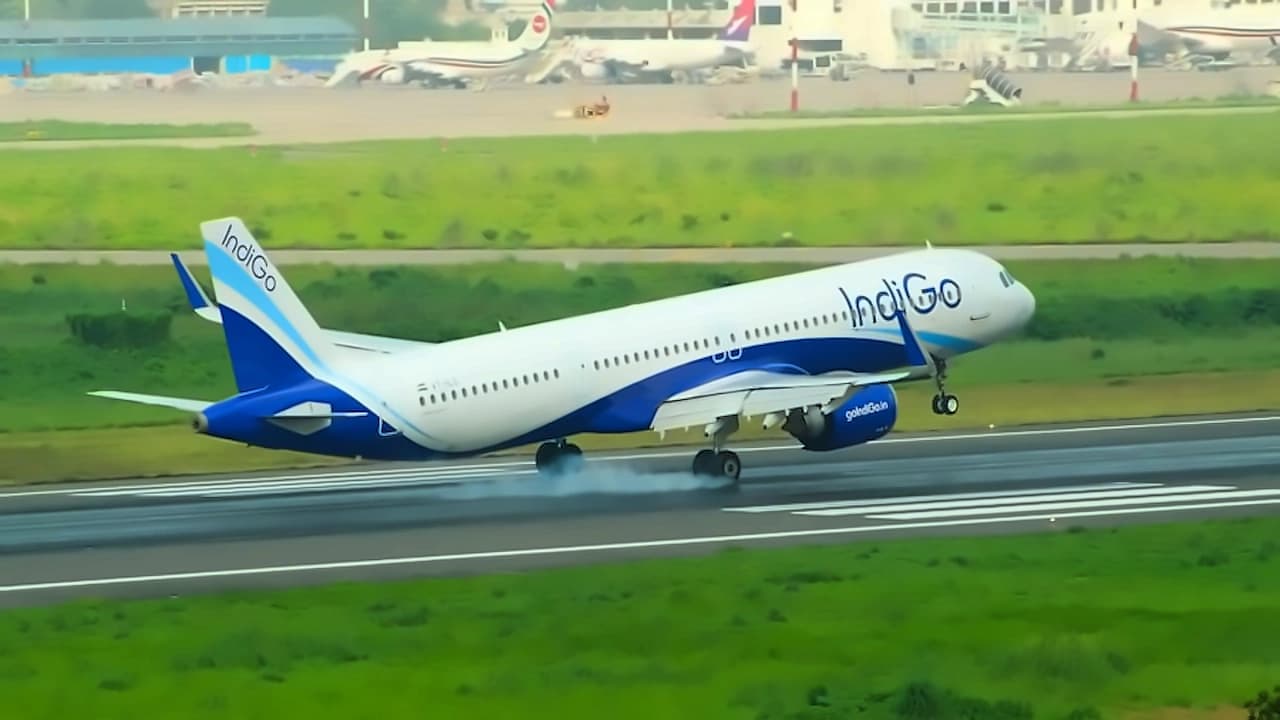
Citi, Credendo close historic $328M IndiGo aircraft financing
IndiGo's Fuel Charge Strategy: Navigating ATF Price Volatility

IndiGo shares rise on Goldman Sachs 21% upside target amid fuel cost pressures

Cash Conversion Ratio Analysis: Five Companies Study
India's air passenger traffic drops 6.34% in August 2026
HDFC Bank Down 26% YTD Amid Governance Crisis, Q2 Results Due Oct 17
Government rules out airfare caps during festive season amid fare surge
IndiGo shares jump 2.4% on Jefferies 'Buy' rating, sees 20% upside
Airbus raises India air travel forecast to 9.3%, confirms strong Asia-Pacific demand
IndiGo, Air India fight for Mumbai-Delhi route as Akasa doubles flights
IndiGo shares fall 8% amid oil surge, Ambit stays bullish
Fuel Shock: How Crude Volatility Is Testing IndiGo and SpiceJet

Expert Views: IndiGo, Maruti, LIC, Biocon Stock Recommendations

Oil spike hits aviation stocks: IndiGo, SpiceJet fall for second day
ITC, TBZ surge while Maruti, aviation stocks fall on Tuesday
ATF Prices Rise ₹6.28/Litre, Airlines Face Cost Pressure

Multiple Brokerages Maintain Buy on IndiGo with ₹6,580 Targets
IndiGo Ventures Invests in AI Firm Sarvam for Aviation Innovation

IndiGo's A350 Gamble: From Domestic Dominance to Global Ambition

SpiceJet Market Share Drops to 1.6% as Delhi Airport Expands Cargo Hub
The Quarter story
The two most recent quarterly results, compared side-by-side.
Revenue and pricing power are strengthening, but soaring fuel costs and operational expenses are keeping profits under pressure.
Revenue from operations grew from ₹185,553 Cr to ₹245,841 Cr from Q2 FY26 to Q1 FY27, driving strong top-line momentum.
Aircraft fuel expenses surged from ₹58,326 Cr to ₹108,329 Cr from Q1 FY26 to Q1 FY27, heavily pressuring margins.
Yield per RPK rose from ₹4.69 to ₹6.04 from Q2 FY26 to Q1 FY27, confirming strong pricing power.
Fuel cost per ASK jumped from ₹1.38 to ₹2.49 from Q1 FY26 to Q1 FY27, severely impacting unit economics.
CASK ex fuel fell from ₹3.71 to ₹3.22 from Q2 FY26 to Q1 FY27, showing effective non-fuel cost control.
PAT margin swung from -13.9% to -1.0% from Q2 FY26 to Q1 FY27, reflecting persistent profitability challenges.
A321neo fleet count increased from 141 to 175 from Q1 FY26 to Q1 FY27, supporting efficient capacity expansion.
Total expenses climbed from ₹192,319 Cr to ₹258,525 Cr from Q1 FY26 to Q1 FY27, reflecting sustained operational spending.
Forex cost per ASK dropped from ₹0.70 to ₹0.02 from Q2 FY26 to Q1 FY27, easing currency pressures on unit costs.
EBITDAR margin ex-forex fell from 20.5% to 16.5% from Q2 FY26 to Q1 FY27, revealing deteriorating core efficiency.
Company insights, generated from the most recent coverage.
IndiGo is absorbing roughly 30-40% of the Oct 2026 ATF increase rather than repricing it fully — a deliberate choice to protect volume and its 'low fare' brand over margin, accepting near-term EBITDA compression as the cost of holding share.
The tiered grid is an elasticity filter, not just a fuel-burn mirror. Flat surcharge would have pushed short-haul fares past the rail/bus substitution threshold; ₹375 on ≤500km keeps the charge below the demand-destruction point while ₹1,300 on >2000km recovers more from inelastic business traffic.
IndiGo raised fuel surcharges from Oct 6 2026 but deliberately under-recovered — management admits full offset needed a 'significantly larger increase'. The gap between actual ATF inflation and surcharge recovery is a margin drag that must be closed by yield or cost, not by the surcharge dial.