Sign in to fuzzto save your conversations, follow your research and come back anytime.

Adani Ports and Special Economic Zone Limited (APSEZ) is India's largest private port and Special Economic Zone operator. It develops, operates, and maintains port infrastructure and related SEZ facilities. APSEZ operates ports in Mundra, Dahej, Hazira, Dhamra, Ennore, Kattupalli, and terminals in Mormugao, Visakhapatnam, and Kandla. The company handles various cargo types including coal, crude, containers, fertilizers, agri products, steel, edible oil, chemicals, and automobiles. APSEZ has expanded its operations through acquisitions and new developments, including ports in Krishnapatnam, Gangavaram, and Haifa (Israel). It also operates in logistics, with facilities for food grain storage and transportation. The company has a presence across 13 domestic ports in seven Indian maritime states and is developing container transshipment ports in Vizhinjam, Kerala and Colombo, Sri Lanka.
In the news

Jefferies' Bullish Call on Adani Group: Growth, Synergies, and Valuation
Jefferies Maintains Buy on Adani Ports, Targets 1 Billion Tonnes by 2030

Nifty hits 5-week low, drops 4% in 1 month amid bearish signals

Adani Ports CEOs settle SEBI charges for ₹13.65 lakh each

Brokerages Eye Adani Ports, UltraTech Cement for Buying

3 Stocks Show 19-34% Upside Potential: Brokerage Picks

Adani Ports forms Astro Offshore MESA subsidiary

Adani Ports launches dedicated empty container yard at Mundra, shares jump
Adani Ports Gets Visibility Boost as Gujarat Signals Concession Extensions

Sensex expiry: Call resistance shifts to 77,600 as markets eye positive start
Motilal Oswal maintains ₹2130 target for Adani Ports despite stock drop
Adani Ports, JSW Infra, Concor in focus after Q1 results
Adani Ports Q1 profit rises 10% to ₹3,650 cr, shares up 2.06%
Adani Ports Gets ₹2,200 Target Price, 21% Upside Potential
PL Capital Picks Adani Ports as Top Sector Pick Ahead Q1 Results

Vizhinjam Port Stake Sale: The ₹13,220 Crore Dispute Shaking Kerala's Maritime Ambitions
Adani Ports Hits New High After Strong Q1 Performance

APSEZ's $2.85B Vizhinjam Bet: A Strategic Masterstroke
Brokerages Eye Adani Ports, Hindalco, Mankind Pharma Stocks
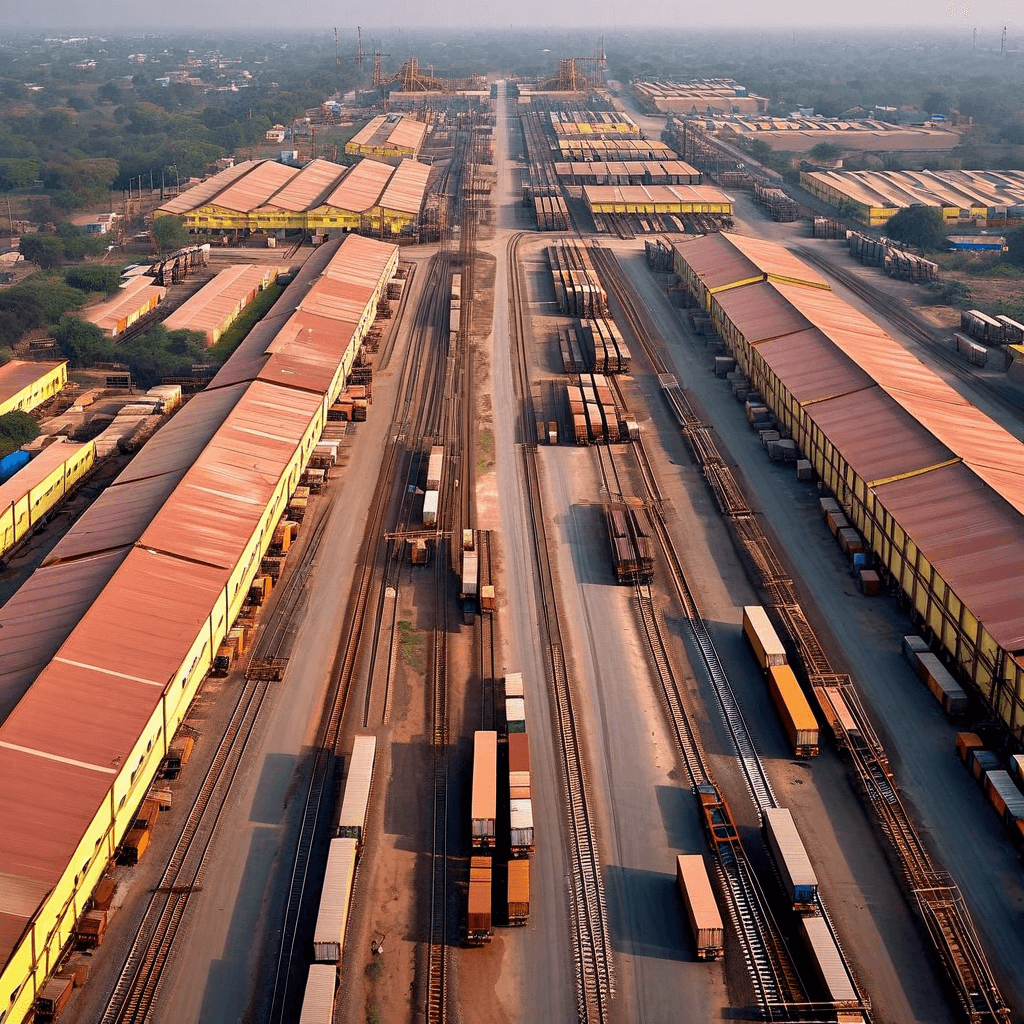
Adani Ports' ₹1,500 Crore Bet: Transforming Fertilizer Land into Logistics Gold
The Quarter story
The two most recent quarterly results, compared side-by-side.
Cargo volumes and core profitability expand on strong international trade and JV performance, while rising debt and declining rail volumes require attention.
Total cargo volume grows from 120.6 MMT in Q1 FY26 to 138.1 MMT in Q1 FY27, driving scale efficiencies across the network.
Gross debt increases from ₹51,082 Cr in Q2 FY26 to ₹56,776 Cr in Q1 FY27, funding ongoing capacity expansions.
International port EBITDA rises from ₹205 Cr in Q1 FY26 to ₹730 Cr in Q1 FY27, highlighting strong global trade recovery.
Average debt maturity shortens from 5.6 years in Q3 FY26 to 5.1 years in Q1 FY27, tightening refinancing windows.
Marine segment revenue climbs from ₹541 Cr in Q1 FY26 to ₹901 Cr in Q1 FY27, supported by a larger fleet and higher utilization.
Container rail volume falls from 178,927 TEUs in Q2 FY26 to 145,310 TEUs in Q1 FY27, signaling a shift in logistics preferences.
Key container JV EBITDA increases from ₹282 Cr in Q1 FY26 to ₹362 Cr in Q1 FY27, confirming successful partnership scaling.
All-India container market share eases from 45.9% in Q2 FY26 to 44.8% in Q1 FY27, reflecting intense sector competition.
Consolidated EBITDA margin recovers from 56% in Q4 FY26 to 60% in Q1 FY27, proving consistent pricing power.
Cash balance declines from ₹16,921 Cr in Q1 FY26 to ₹12,428 Cr in Q1 FY27, reflecting heavy capital deployment.
Company insights, generated from the most recent coverage.
T2 capacity is being raised from 40 million to 45 million passengers/year; roughly 10 million T1 passengers are slated to migrate to NMIA over time.
Management earlier said stabilising both airports and starting NMIA Phase 2 came before Terminal 1. The Jan 2027 T1 start moves ahead of that commentary, signalling capex impatience over sequencing discipline.
Adani is trading near-term airline friction for NMIA load: split operations raise airline costs and NMIA carries a higher user development fee plus longer road travel. Adani has proposed lower landing fees and covering the UDF gap, pending ministry approval.