Adani Ports and Special Economic Zone just pulled off something remarkable. On May 21, 2026, the company completed the acquisition of Jaypee Fertilizers & Industries Limited (JFIL) for ₹1,500 crore in cash. This wasn't your typical corporate takeover. It happened through India's insolvency resolution process, with the National Company Law Tribunal (NCLT) Allahabad bench giving the green light on March 17, 2026, and the National Company Law Appellate Tribunal (NCLAT) upolding the decision on May 4, 2026. Others +1
Here's the kicker:
Why? Because price isn't everything when you're dealing with complex industrial assets. Adani's track record of actually getting things done, plus the fact that they're splitting the ₹14,535 crore Jaiprakash Associates resolution plan across specialized entities—Adani Power gets the thermal plants, Adani Ports gets the logistics land—made all the difference.
Why Buy a Fertilizer Company When You Run Ports?
At first glance, this looks like Adani Ports is venturing into unfamiliar territory. But look closer, and the strategy becomes crystal clear. They're not buying JFIL for its fertilizer operations. They're buying the land.
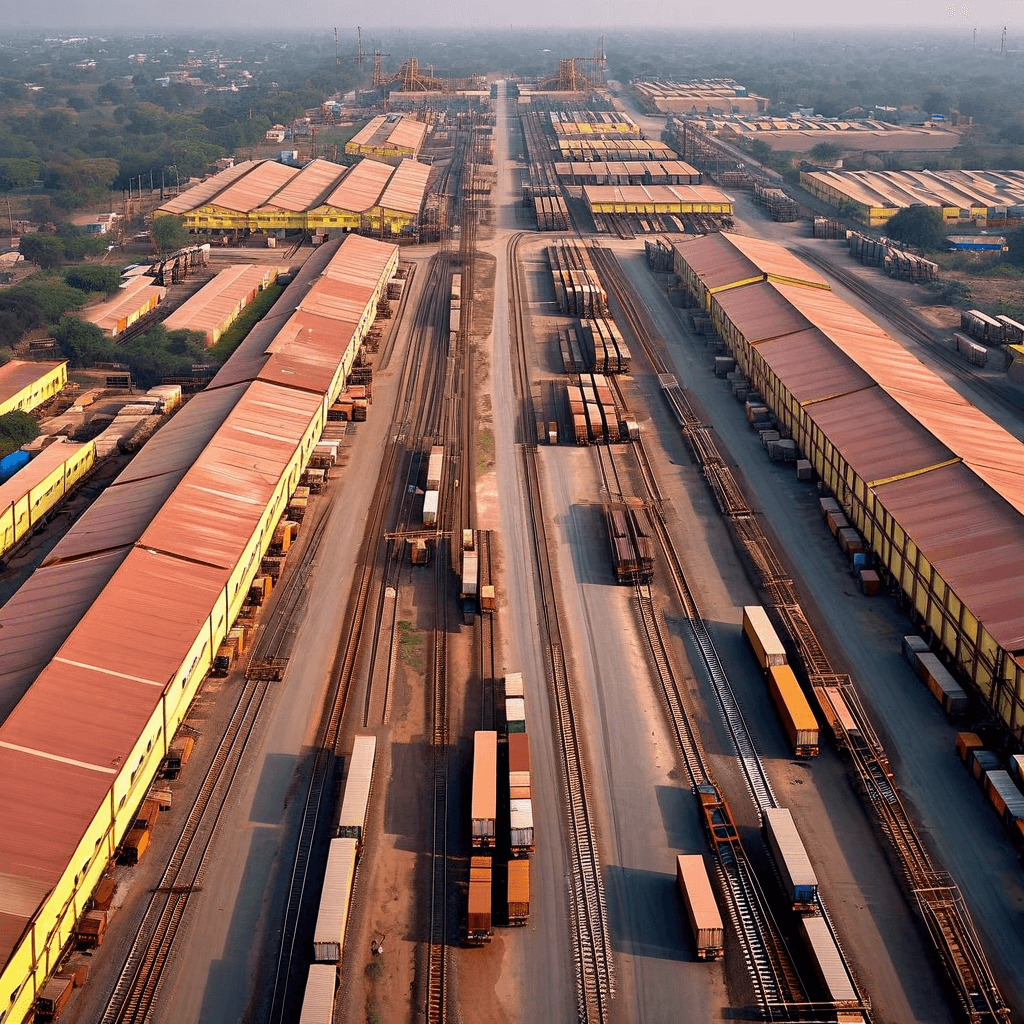
JFIL holds indirect control over Kanpur Fertilizers and Chemicals Limited (KFCL), which sits on approximately 243 acres of prime industrial and commercial land in Kanpur. That's the real prize. Adani Ports plans to transform this site into a world-class logistics park and warehousing facility, perfectly aligned with their ambitious goal to expand the Multi-Modal Logistics Park (MMLP) network from 12 to 16 locations and increase warehousing capacity nearly fourfold by 2031. Others +1
The math works out beautifully.
Try buying 243 contiguous acres in Kanpur through normal channels, and you're looking at years of negotiations, regulatory hurdles, and probably a much higher price tag. The insolvency route gave them clean title, pre-approved zoning, and immediate availability—all wrapped up in a court-sanctioned process.
The 90-Day Sprint: What Could Go Wrong?
The NCLT approval triggered a statutory 90-day window for completion, with the target closing date set for mid-June 2026. Adani Ports actually beat this timeline, closing on May 21, 2026, but the race wasn't without risks.
Several factors could have derailed the timeline. Regulatory approvals needed to fall into place—the Competition Commission of India had already given its nod back in August 2025, which helped enormously. Then there was the monitoring committee formed by Jaiprakash Associates to oversee the ₹5,700 crore initial asset transfers, which met on May 18, 2026, to authorize the definitive agreements executed on May 20. Any hiccup in this coordinated process could have pushed the closing past the 90-day deadline.
Other potential delays included finalizing the share transfer documentation, ensuring all creditor claims were properly addressed, and navigating any last-minute legal challenges. The fact that NCLAT upheld the resolution plan in early May rather than letting appeals drag on was crucial—it eliminated appellate risk and allowed Adani Ports to move forward with confidence.
From Fertilizer Plants to Logistics Hub: The Conversion Challenge
Here's where things get interesting. The Kanpur site isn't empty land—it's got existing fertilizer and chemical facilities. Converting industrial manufacturing sites into logistics parks and warehousing facilities isn't as simple as putting up a "For Rent" sign.
The environmental considerations alone are significant. Chemical manufacturing facilities often require remediation to address soil and groundwater contamination before they can be repurposed for logistics use. Then there's the structural question—manufacturing buildings aren't always designed for the load requirements of modern warehousing. Fire safety systems, utility infrastructure, and internal circulation patterns all need upgrading to meet logistics park standards.
The regulatory pathway also needs careful navigation. While the land already has industrial zoning, converting specific use from manufacturing to logistics may require additional clearances from local authorities. Building codes for warehousing differ from those for chemical plants, and safety regulations vary significantly between the two uses.
Adani Ports will likely tackle this through a phased approach. First comes comprehensive environmental and structural assessment, followed by selective demolition and retrofitting. They'll probably start with pilot operations in converted facilities while gradually expanding full-scale logistics capabilities. This staged conversion mitigates risk while allowing them to start generating revenue sooner rather than later.
The Revenue Timeline: When Will This Investment Pay Off?
Don't expect immediate returns from this acquisition. The transition from fertilizer operations to logistics park development means there's a built-in lag before the Kanpur land parcel starts contributing meaningful revenue.
In the short term (6-18 months), Adani Ports will focus on stabilizing the asset, conducting necessary assessments, and beginning initial conversion work. Revenue during this phase will be minimal as they're essentially in preparation mode.
The medium term (18-36 months) should see the first wave of warehousing operations coming online as converted facilities begin accepting cargo. This is when they'll start seeing initial returns, though likely below the facility's full potential.
It's in the long term (3-5 years and beyond) that the Kanpur MMLP should hit its stride. By then, the full logistics park should be operational, integrated with Adani Ports' broader network, and generating substantial revenue from warehousing, transportation, and value-added logistics services.
That's a massive single contribution to their growth ambitions.
Measuring Success: What Metrics Matter Most?
How will Adani Ports know if this ₹1,500 crore bet was worth it? They'll be watching a carefully curated set of key performance indicators across different time horizons.
In the short term (0-12 months), success metrics focus on execution: completing the acquisition within the 90-day window, achieving environmental and regulatory clearances for conversion, beginning initial facility retrofitting, and integrating JFIL into Adani Ports' financial and operational systems. They'll also track cost management against the budgeted conversion capex.
Medium-term metrics (1-3 years) shift toward operational performance: warehousing capacity utilization rates, cargo throughput volumes at the Kanpur facility, customer acquisition and retention rates, and the speed of MMLP development progress. Financial metrics like EBITDA margins from the Kanpur operations and return on invested capital will start becoming meaningful during this phase.
Long-term metrics (3-5+ years) evaluate strategic value creation: the Kanpur MMLP's contribution to Adani Ports' overall fourfold warehousing capacity expansion, market share gains in North India's inland logistics market, synergies realized between port operations and inland logistics, and the total economic return on the ₹1,500 crore investment.
Perhaps most importantly, they'll assess whether this acquisition has strengthened their competitive position against traditional logistics companies and other infrastructure conglomerates pursuing similar diversification strategies. The ultimate test isn't just whether the Kanpur MMLP becomes profitable—it's whether it helps Adani Ports dominate India's integrated logistics landscape.
The Bigger Picture: Why This Deal Matters
This acquisition represents more than just a land purchase. It's a template for how strategic companies can use insolvency processes to acquire prime infrastructure assets at fair value while bypassing the years of delays that typically plague large-scale land acquisitions in India.
For Adani Ports, the JFIL acquisition accelerates their inland logistics expansion by providing immediate access to strategic land in a critical North India market. The Kanpur location gives them a foothold in India's most populous state, with access to agricultural hinterlands and industrial clusters that generate substantial logistics demand.
The deal also demonstrates sophisticated capital allocation—using the company's strong balance sheet to make an all-cash acquisition that provides strategic assets without inheriting operational baggage. At roughly 40.5% of quarterly Net PBIT, the ₹1,500 crore price tag represents a manageable investment that won't compromise their ability to fund the ₹13,000 crore fleet expansion program or other strategic initiatives.
As India's logistics sector continues its rapid growth, driven by increasing consumption, e-commerce expansion, and infrastructure development, Adani Ports is positioning itself to capture value across the entire supply chain—from port handling to inland distribution. The JFIL acquisition is a crucial piece of this puzzle, transforming a distressed fertilizer asset into a logistics powerhouse that will serve the company's ambitions for decades to come.