The Asia-Pacific region is positioned for unprecedented data centre investment, with $280 billion in expansion planned between now and 2030, according to a new report by real estate consultancy Cushman & Wakefield. This massive investment comes as data centres in the US and EU face a rising wave of opposition, with 75% of Americans opposing data centre construction in their local areas and more than 60% strongly opposed. In contrast, the Asia-Pacific region benefits from government measures that have limited environmental and water consumption impacts, stymying the same backlash seen in Western markets. The region ranks as the world's fastest-growing data centre market, holding 60% of global population but only 22% of data centre capacity currently in operation, making it the most underserved market globally.
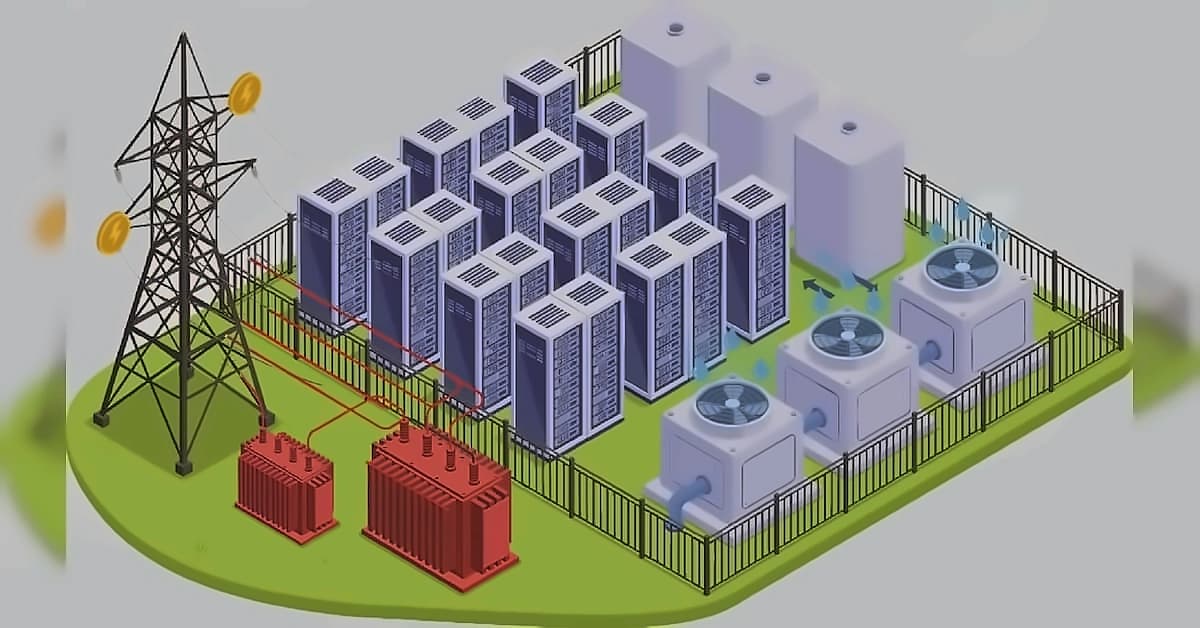
China's AI expansion is fundamentally changing the geographic distribution of data centre infrastructure across the Asia-Pacific region. According to Wood Mackenzie's report, the country is transitioning from a traditional model where data centres cluster around major cities and technology hubs to what they term a 'compute follows power' model. This strategic shift allows China to leverage sparsely populated regions in the western part of the country, which offer abundant land and growing renewable generation capacity. The approach creates opportunities to locate data centres close to power sources, optimizing both cost and environmental considerations. As Wanting Zhao, a Wood Mackenzie analyst for Asia Pacific power and renewables, noted, access to reliable, cost-competitive and lower-carbon electricity will play a growing role in determining where and how new data centre capacity is developed.
Ulanqab in China's Inner Mongolia Autonomous Region is rapidly emerging as a capital of artificial intelligence computing, driven by its abundant wind and solar resources and low electricity costs. The region holds roughly 10% of China's total wind energy resources, while approximately 67% of the city's electricity consumption is supplied by clean energy sources such as wind and solar power. Electricity for data centres costs $0.05 per kilowatt-hour, only about half the rate in major eastern cities such as Beijing and Shanghai. Ulanqab's cool, dry climate allows data centres to use air-side free cooling with cold outdoor air rather than relying on costly mechanical air conditioning. Under these conditions, the power usage effectiveness (PUE) of Ulanqab's major data centre clusters remains below 1.15, well under China's national average of 1.5. Envision Group recently brought the Galaxy Campus, a hyperscale AI computing facility in Ulanqab, into full operation - a 120,000-square-meter facility designed to accommodate as many as 1 million AI accelerators with a total planned power capacity exceeding 2 gigawatts.
Data centre growth is expanding beyond established hubs such as Singapore and Malaysia into Thailand, Indonesia, the Philippines, and India, as hyperscalers and operators pursue access to power, land, connectivity, and rising domestic demand. According to Vikram Kumar, head of APAC infrastructure at the International Finance Corp, growth is expanding beyond established hubs into these emerging markets. Despite 2,200MW of new colocation capacity going live in the past year, vacancy rates have tightened, showing demand is running ahead of supply. Another 22.7GW of colocation capacity is in the pipeline, supported by strong pre-leasing sales, suggesting sustained growth over the next three to five years. This expansion reflects the region's strategic positioning to capitalize on AI infrastructure demands while avoiding the environmental and political challenges facing Western markets.
Asia-Pacific governments are implementing stringent environmental standards to manage data centre growth. The Singapore government imposed a moratorium on new data centres in 2019 due to demands on limited land supply and energy consumption, lifting it in 2022 to accept proposals for 80MW of new capacity. Last Friday, Singapore approved four companies - Digital Realty, Equinix, Keppel Data Centers, and ST Telemedia Global Data Centers - to build 200MW in additional capacity, with commitments to deploy green energy for more than 50% of capacity. Johor, Malaysia's data centre boom center, has halted approvals for projects that don't meet power and water efficiency standards. Australia recently unveiled plans to require new data centres to provide their own clean energy and limit water consumption, with the national cabinet due to discuss the legislation this week.