China has officially launched the world's first commercial offshore wind-powered underwater AI data centre near Shanghai's Lingang Special Area, marking a major step in the country's push toward sustainable artificial intelligence infrastructure. The facility houses nearly 2,000 servers inside pressure-resistant underwater modules installed approximately 35 meters below the ocean surface. The project combines renewable energy with natural seawater cooling to sharply reduce electricity consumption, land use and freshwater demand. Developed through a partnership involving the Lingang Special Area Administrative Committee, Shanghai Lingang Special Area Investment Holding Group and Hi cloud Technology, the facility is designed for AI workloads, cloud computing, big data processing and domestic large language model development.
The underwater data centre project reportedly cost around ¥1.6 billion (about $226 million) and was developed through a partnership involving the Lingang Special Area Administrative Committee, Shanghai Lingang Special Area Investment Holding Group and Hi cloud Technology. Construction began in 2025, trial operations started earlier this year and full commercial operations officially commenced in May 2026. The facility evolved from a smaller 2.3 MW pilot into a full-scale 24 MW commercial operation. China Telecom and local computing provider LinkWise have already deployed GPU clusters inside the subsea modules to support AI computing and data-intensive services.
Unlike conventional data centres that rely heavily on industrial air-conditioning systems, the Lingang facility uses seawater as a passive cooling mechanism. According to HiCloud Technology, server heat converts refrigerant from liquid to gas inside copper pipes, after which surrounding seawater removes the heat through a heat exchanger before the refrigerant condenses and recirculates. The facility reportedly maintains a Power Usage Effectiveness (PUE) rating of around 1.15 — significantly lower than many traditional data centres operating between 1.5 and 2.0. Developers claim the system cuts electricity consumption by 22.8%, eliminates freshwater usage and reduces land requirements by over 90%. The underwater structure depends heavily on naturally stable ocean temperatures surrounding pressure-resistant server modules, addressing the cooling demands that have become major obstacles for modern data centres using advanced GPU clusters.
While China advances sustainable underwater AI infrastructure, the UK faces a climate crisis with more than 100 AI data centres planning to burn gas for electricity generation, risking climate goals. According to Ofgem's Stuart Okin, speaking at the UK's largest renewable energy conference, 100GW of data centre projects are currently planned across the UK, with not all able to connect to the grid due to their near-24/7 energy demands. In Scotland alone, the total demand from proposed data centres is upwards of 4.8GW, which would more than double Scotland's peak winter electricity demand of just over 4GW. Silvia Simon from Future Energy Networks reports receiving more than 100 requests for gas connections from data centre operators over the past two years, amounting to more than 15 terawatt hours of energy each year - enough to power London for roughly four and a half months.
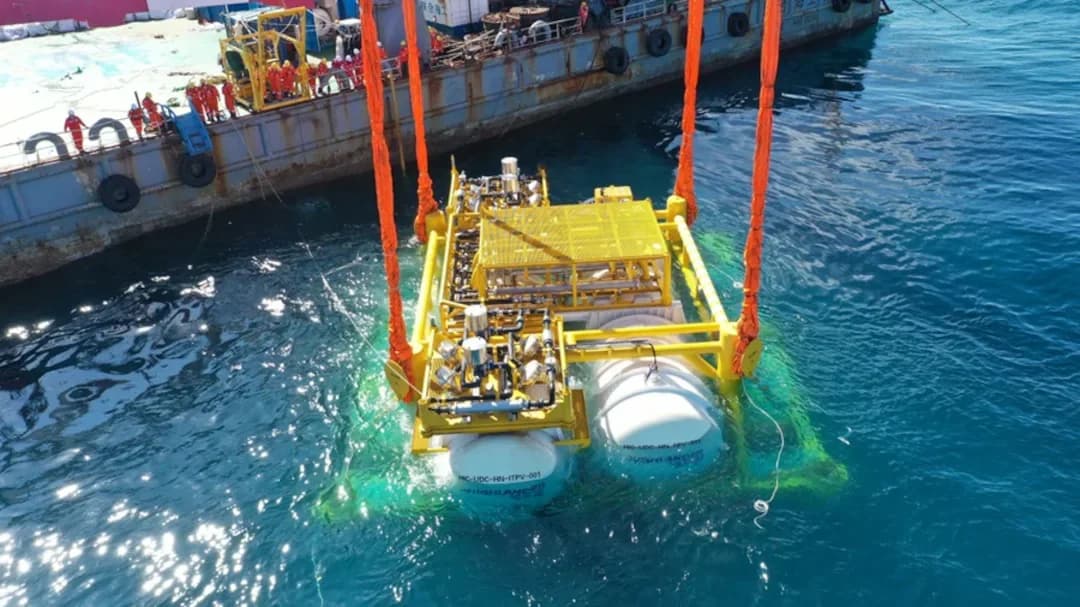
The stark contrast between China's underwater AI facility and the UK's gas-powered data centre proposals highlights the urgent need for sustainable infrastructure solutions. China's facility demonstrates that renewable energy integration is feasible for large-scale AI operations, while the UK's reliance on gas generators threatens climate targets. Dr Kat Jones from Action to Protect Rural Scotland warns that promoting hyperscale AI data centres "seems to be living in a parallel reality where the last 50 years of climate science hasn't happened," as these developments could consume more unabated gas than the UK's Clean Power 2030 target allows. The UK's National Energy System Operator notes that gas buildout for data centres could complicate Britain's climate goals, as the target was to get less than 5% of unabated gas supplying electricity in the system.