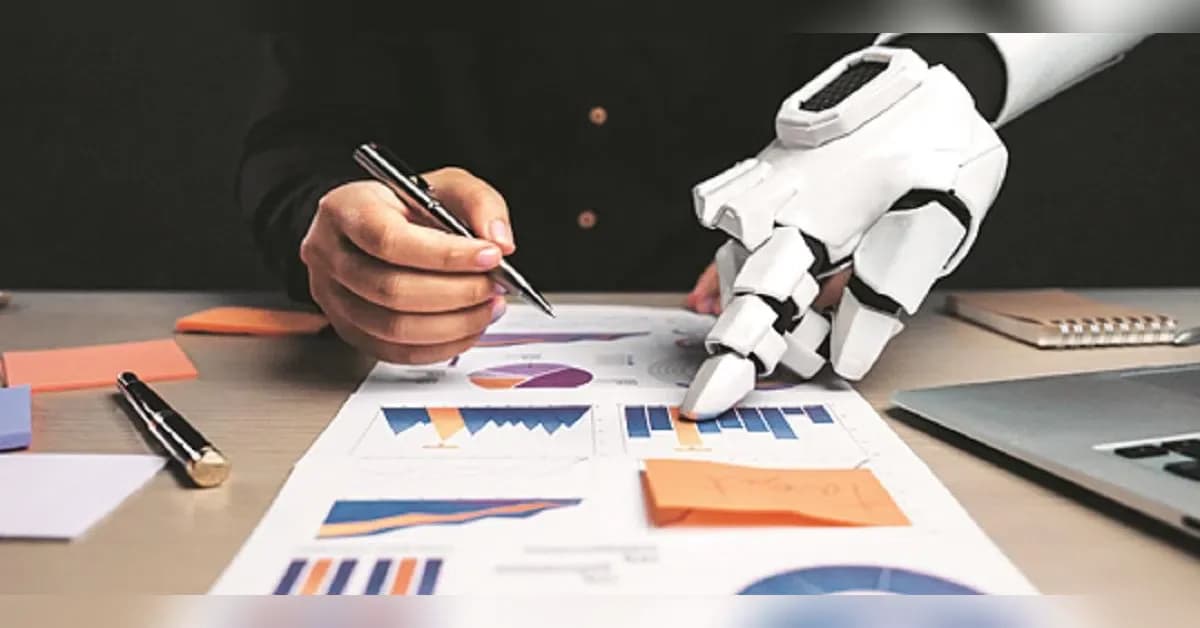
AI is fundamentally reshaping factory operations by enabling closer collaboration between humans and machines, moving beyond traditional automation models. According to the World Economic Forum's 'Human Machine Collaboration in Industrial Operations: Activation Playbook', the evolution progresses from humans managing machines to co-bots supporting humans, with AI now bringing decision-making capabilities to industrial operations. As reported by the WEF, work is transitioning from periodic, human-executed processes to continuous, human-orchestrated operations, with systems becoming capable of collecting, reconciling and acting on information autonomously.
ACG, a Mumbai-based pharmaceutical company, demonstrates successful human-machine collaboration through machine learning implementation. The facility manages equipment over six decades old while producing more than 5,000 stock keeping units requiring precise tolerances. According to the WEF report, the company implemented machine learning models trained on more than two years of historical data, now providing prescribed optimal settings for initial machine programming to ensure 'first-time-right' results. Operators integrate these recommendations and continuously refine models based on real-time outcomes, ensuring professionals running equipment are also training the underlying intelligence.
Schneider Electric exemplifies how generative AI and augmented reality are streamlining equipment management. As reported by the WEF, the company introduced AR glasses providing immediate access to comprehensive equipment data and technical manuals, displaying real-time diagnostics and solutions directly to users. These glasses have reduced new technician training periods by half, cutting time to mastery from 18 to nine months. The success depends on a 'calibrated trust loop' where operators verify and improve AI suggestions, effectively capturing veteran staff expertise while building new hire confidence.
The human-machine collaboration creates a new 'grey-collar' professional class, blurring traditional factory divisions between white-collar managers and blue-collar workers. According to the WEF report, workers are evolving into hands-on operators using real-time data and AI tools to manage production lines. While workers move up the effort value chain to higher-value tasks like system optimization decisions and governance, factory employment numbers are declining as fewer people are needed for judgment decisions compared to shop floor operations. The report emphasizes that enterprises must continuously experiment and adapt for relevant outcomes rather than waiting for perfect technology implementation.