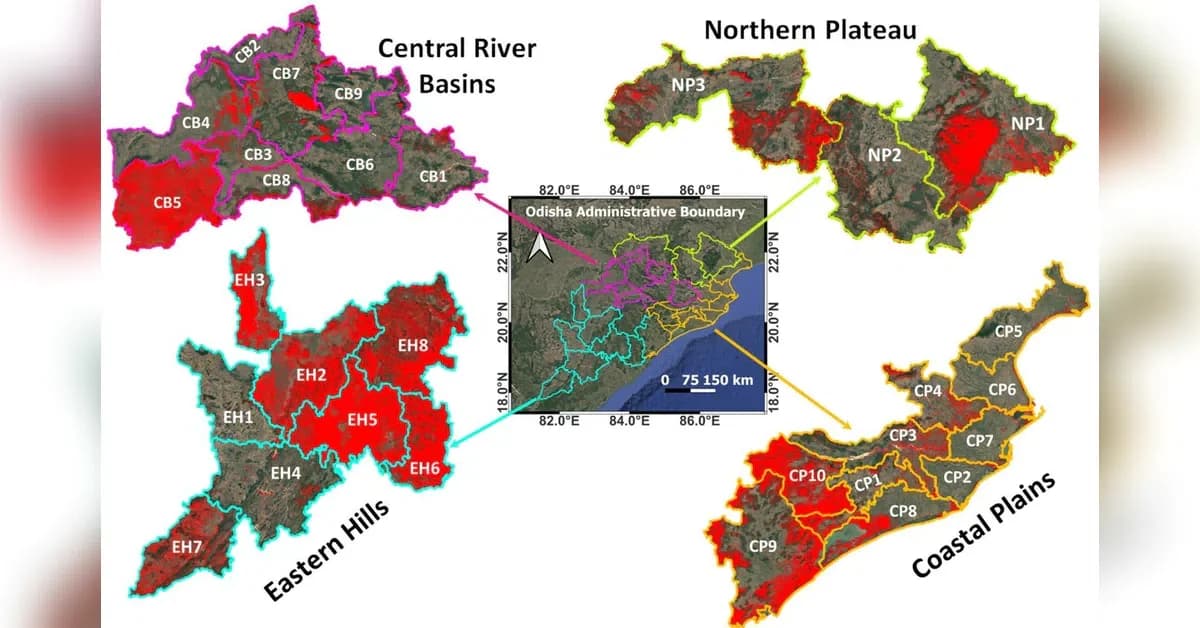
Indian cities are experiencing a night-time heat crisis that extends beyond daytime temperatures, with night-time warming across 141 Indian cities averaging 0.53 degrees Celsius per decade during 2003-2020, roughly twice the India-wide background warming rate. According to a 2024 research by IIT Bhubaneswar, this night-time warming pattern is creating severe health impacts, with night-time indoor temperatures in low- and middle-income homes remaining between 31.2 degrees Celsius and 32 degrees Celsius in cities like Chennai. The problem is compounded by urban heat island intensity ranging between 2 degrees Celsius and 10 degrees Celsius, with urban neighbourhoods remaining up to 4 degrees Celsius warmer at night than surrounding areas. As reported by This Can Be Understood, Ratna (name changed), a house help in New Delhi's Rohini area, experiences this reality daily - working in air-conditioned homes during the day but returning to a top-floor room where the roof radiates heat, walls remain warm to touch, and the fan only moves hot air around.
While Indian weather agencies have traditionally relied on AI for heatwave forecasting and early-warning systems, experts say the conversation is shifting toward operationalizing AI insights across infrastructure, healthcare, and public services. As reported by Business Standard, Vijay Sampathkumar, chief business officer at Refroid Technologies, emphasized that "forecasting is only the first layer of heat resilience," with the larger opportunity lying in how cities operationalize these insights. Professor Anjal Prakash from FLAME University noted that AI's most important contribution is converting hazard information into precise local actions that reduce harm, including high-resolution heat and vulnerability maps for prioritizing interventions. The technology is particularly crucial for addressing the urban heat island effect, where cities absorb more heat than their surroundings and release it more slowly due to concrete, masonry, asphalt, and dark roofs that store solar heat during the day and continue radiating it at night.
AI systems are increasingly being used to identify urban heat islands and improve cooling infrastructure planning. According to Business Standard, Agendra Kumar from Esri India explained that GIS models can overlay land surface temperature data with green cover and building density to pinpoint exactly where interventions like cool roofs, tree corridors, or ventilation pathways can deliver the highest cooling impact. The technology is helping authorities pre-position ambulances and strengthen hospital preparedness before temperatures peak, with systems capable of delivering targeted public-health messaging before temperatures reach dangerous levels. RMI India Foundation's 'Turning Down the Heat' report identifies key causes including low-albedo materials, anthropogenic heat, small sky-view factors, and limited vegetation that trap heat in dense built-up areas. Cool roof pilot programs have shown significant results - RMI's cool roof pilot in Chennai's Perumbakkam area demonstrated 9 degrees Celsius to 12 degrees Celsius reduction in outdoor surface temperature during peak hours, while indoor ambient temperatures decreased by 0.5 degrees Celsius to 1.5 degrees Celsius and comfort hours within the adaptive comfort range increased from 65% to 85%.
India's peak power demand touched a record 270.82 gigawatts (GW) during daytime solar hours on May 21, driven by soaring temperatures and increased cooling requirements across several regions. As reported by Business Standard, Vasudha Madhavan from climate-tech investment banking firm Ostara Advisors noted that AI systems are increasingly helping cities forecast cooling demand and anticipate stress on electricity grids before blackouts occur. The role of AI is expanding into digital twins - virtual replicas of urban systems that allow authorities to simulate heat stress scenarios before implementing interventions. However, Delhi now has two distinct summer peaks: one around 3 pm linked to commercial cooling demand, and another around midnight driven by residential AC use, creating additional challenges for power grid management. According to a March 2025 working paper by the India Energy and Climate Center and UC Berkeley, India adds 10-15 million new room air-conditioners every year, with another 130-150 million expected over the next decade, potentially contributing 120 GW to peak demand by 2030 and 180 GW by 2035, nearly 30% of total demand.
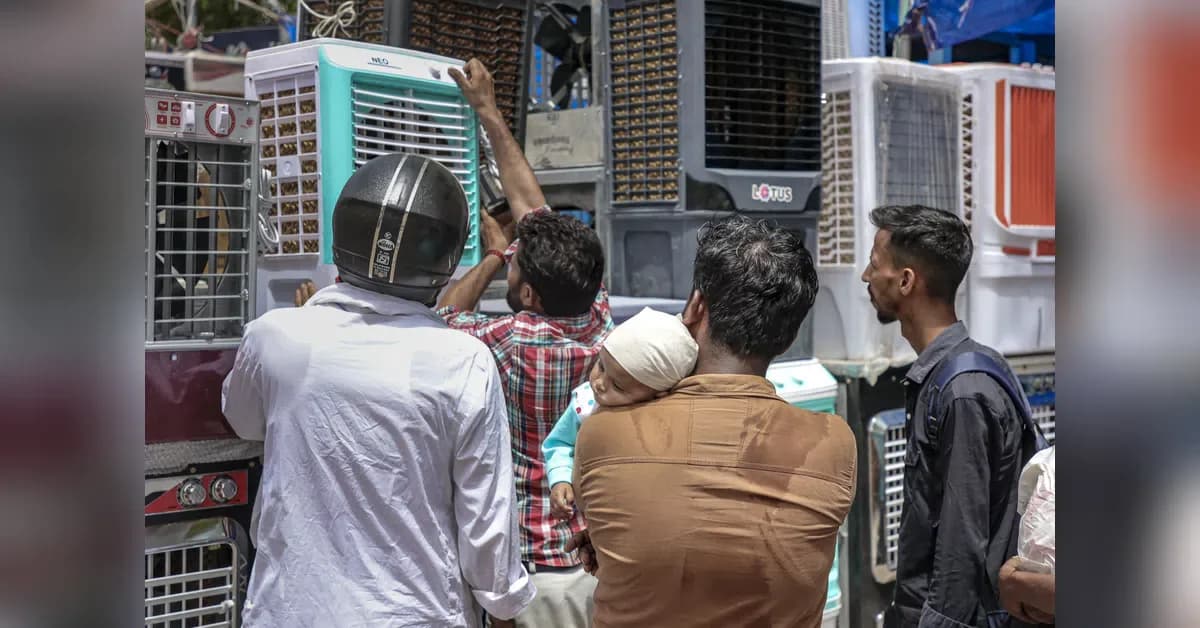
Despite technological advances, experts warn that governance accountability remains the biggest barrier to effective AI-assisted heat resilience. According to Business Standard, Anupam Shrey from AI climate risk assessment firm Plutas.ai emphasized that AI cannot operate in a policy vacuum, pointing out that many heat action plans still lack detailed ward-level risk mapping. Janhavi Bhujabal from the Climate and Sustainability Initiative cautioned that AI-led climate systems risk deepening existing inequalities if they fail to account for vulnerable populations and weak last-mile connectivity. The implementation challenges are particularly acute for informal settlements and low-cost rental housing, where families may lack reliable electricity, fans, coolers or air-conditioning, and where affordable housing programmes have often prioritised unit delivery and cost over thermal comfort. While Ahmedabad's Heat Action Plan is widely seen as an early template, and community-led plans in cities such as Varanasi and districts such as Churu have focused on vulnerability mapping and cooling centres, the larger problem remains implementation across India's diverse urban landscape.