Recent developments in Delhi-NCR have highlighted critical safety concerns around air conditioning systems. In a tragic incident on May 27, retired IAS officer Dhanendra Kumar, who previously served as India's executive director at the World Bank, died after a fire reportedly broke out following an AC blast inside his south Delhi residence in Hauz Khas Enclave. According to police reports, a PCR call about the blaze was received at Hauz Khas police station around 11:18 pm on May 27, with firefighters and police teams controlling the fire using two fire tenders. Kumar succumbed to smoke inhalation while undergoing treatment at the AIIMS Trauma Centre, while his son, who was also injured, is currently out of danger. The preliminary probe suggests the fire started after a blast in the indoor unit of an air conditioner, with five people, including family members and domestic staff, inside the house during the incident.
According to the latest reports from The Lancet Countdown on Health and Climate Change, India lost an estimated 247 billion potential labour hours to extreme heat exposure in 2024 alone. This translates to $194 billion in potential income losses from heat-related reductions in labour capacity, with much of the impact concentrated in agriculture and construction sectors. The report indicates that a 0.64-degree rise in average temperature could reduce pass rates by as much as 3%, significantly impacting educational outcomes across the country. This economic toll underscores the urgent need for comprehensive cooling infrastructure as India faces a world likely to cross the 1.5 degrees Celsius warming threshold over pre-industrial levels.
Delhi's electricity rates follow a tiered structure with ₹3 per unit for the first 200 units, ₹4.5 per unit for 201-400 units, ₹6.5 per unit for 401-800 units, ₹7 per unit for 801-1200 units, and ₹8 per unit for consumption above 1200 units. However, as reported by The Lancet Countdown, slab pricing can end up penalizing cooling as heat intensifies. The analysis reveals that a well-insulated, well-designed home with a modern, efficient AC unit draws less power than a home with a tin roof and a power-guzzling second-hand air-conditioner. This means the latter household can end up paying more per degree of cooling, creating an unfair burden on those who need cooling most.
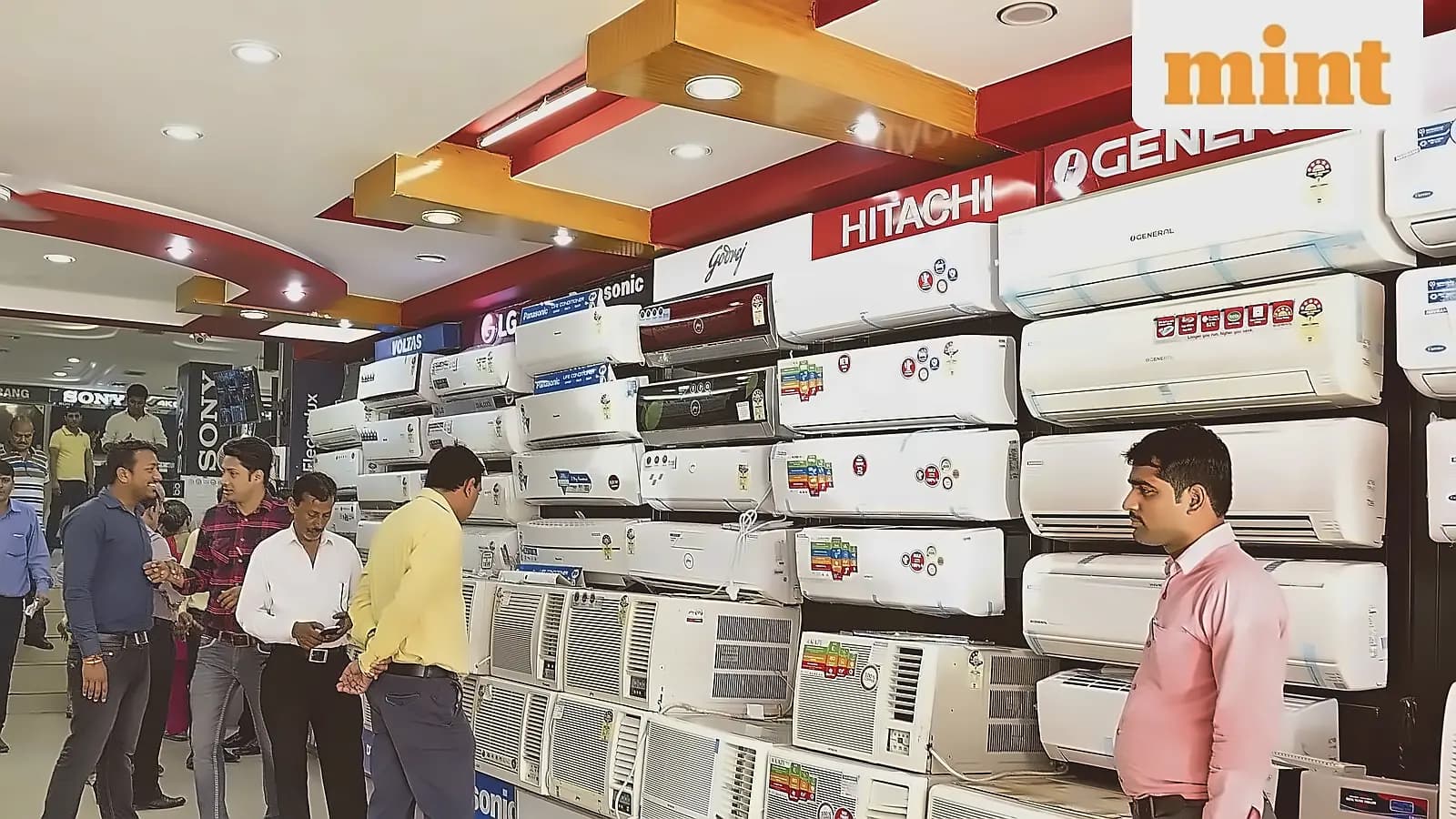
According to ChatGPT's analysis reported by Mint, the optimal choice for Delhi's climate conditions is a 5-star inverter split AC with copper condenser and variable-speed compressor. The recommendation specifically avoids non-inverter ACs, old window ACs, and portable/tower ACs. For room sizing, the analysis suggests 1.5 ton AC for bedrooms up to 180 square feet, with the key specification being ISEER rating above 5 for better energy efficiency during long Indian summers. Recent safety incidents have highlighted the importance of regular inspections, safe servicing and awareness about refrigerant-related risks to prevent AC-related accidents. Common warning signs include burning smell from the indoor or outdoor unit, unusual loud noises from the compressor, repeated tripping of circuit breakers, and excessive heating around the AC unit.
As detailed in ChatGPT's recommendations reported by Mint, the most cost-effective approach involves setting the AC at 25-26 degrees Celsius with a ceiling fan running on low speed. This strategy allows the fan to improve perceived cooling by 3-4 degrees Celsius while reducing compressor runtime and electricity consumption by 20-35%. The analysis emphasizes using sleep mode and eco mode at night, when body cooling needs are lower, to further reduce consumption. However, as noted by The Lancet Countdown, research indicates that higher temperatures during the school year significantly reduce performance, with a 2025 study showing that a 0.64-degree rise in average temperature could reduce pass rates by as much as 3%.
Despite the critical need for cooling infrastructure, India continues to treat thermal comfort as an elite perk rather than essential infrastructure. Only 30% of coaches operated by Indian Railways are air-conditioned, with about 78% of all railway berths being non-air-conditioned. The gap is even wider in terms of affordability, with the Vande Bharat launched in 2019 starting at ₹1,000 per head for sleeper fares, while the Amrit Bharat launched in 2024 offers modern but explicitly non-AC services starting at ₹149 per head. This pattern repeats across urban transport, housing, offices, schools, and hospitals, with the burden of rising heat falling disproportionately on lower-income strata who lack paid leave and must pay for hot days through lost working hours.