For FY 2025-26, salaried taxpayers earning below certain income levels can achieve zero tax liability under both the new and old income tax regimes. According to The Times of India, under the new tax regime, income up to ₹12 lakh is tax-free, while the basic exemption limit remains at ₹4 lakh. This creates a gap where taxpayers with income between ₹4-12 lakh must claim eligibility for zero tax liability. The old tax regime offers a basic exemption of ₹2.5 lakh, with a rebate of up to ₹12,500 available for individuals with taxable income up to ₹5 lakh. Effective assessment year 2024-25, Section 115BAC of the Finance Act 2023 was amended, making the new tax regime the default option when filing returns, though taxpayers can opt for the old regime if preferred.
The new tax regime offers lower slab rates with more granular income brackets compared to the old regime. Under the new regime, tax rates apply from ₹4 lakh to ₹8 lakh at 5%, ₹8 lakh to ₹12 lakh at 10%, ₹12 lakh to ₹16 lakh at 15%, ₹16 lakh to ₹20 lakh at 20%, ₹20 lakh to ₹24 lakh at 25%, and above ₹24 lakh at 30%. The old regime has a peak rate of 30% applicable from ₹10 lakh onwards, while the new regime's highest rate begins at ₹24 lakh. The standard deduction is ₹75,000 under the new regime versus ₹50,000 under the old regime, providing additional relief for taxpayers.
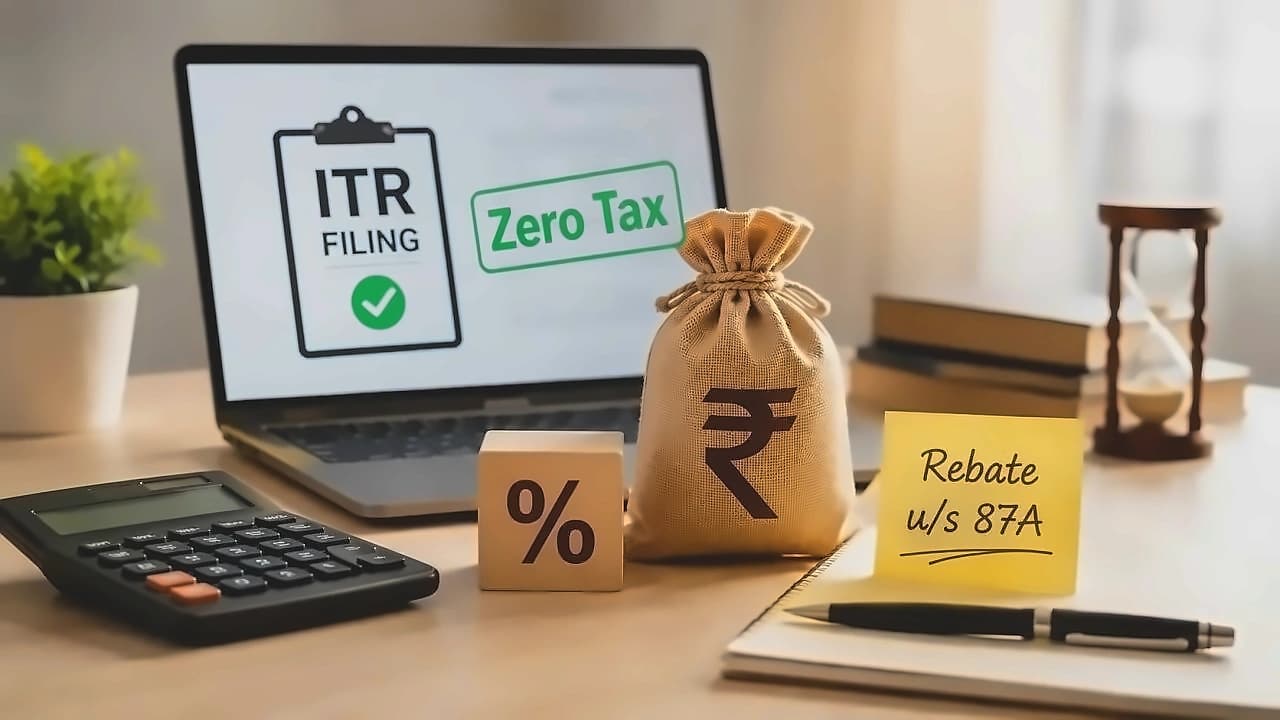
The rebate under Section 87A provides crucial tax relief for individuals whose total income falls below prescribed limits. As reported by The Times of India, Hitesh Sharma, Partner at Vialto Partners, explains that tax is first calculated according to applicable rates and then reduced by the available rebate. Under the new tax regime, individuals with total income up to ₹12 lakh can claim a rebate of up to ₹60,000, resulting in zero or no tax liability. The old tax regime offers a rebate of up to ₹12,500 for individuals with taxable income up to ₹5 lakh. Section 97A has replaced Section 87A with effect from April 1, 2026, applicable for FY 2026-27.
The new tax regime includes marginal relief that provides additional protection for taxpayers whose income slightly exceeds the zero tax threshold. According to The Times of India, Sharma explains that marginal relief limits tax payable to the amount by which income exceeds ₹12 lakh, but only if total taxable income remains below ₹12.70 lakh. This protection ensures that even when income crosses the zero tax limit, the tax burden remains manageable.
Several illustrations demonstrate how the rebate works across different income levels and regimes. As reported by The Times of India, for ₹7 lakh gross income under the old regime, tax before cess is ₹12,500, reduced to ₹0 after rebate. Under the new regime for the same income, tax before cess is ₹21,500, but rebate of ₹60,000 brings it down to ₹0. For higher income levels, marginal relief becomes relevant - for ₹12.77 lakh gross income under new regime, tax before cess is ₹60,300 with rebate of ₹60,000, resulting in ₹300 tax liability. Tax deductions under section 80C, 80D, 80DD, 80G etc. are available only under the old regime, requiring taxpayers to opt out of the new regime.
Taxpayers can switch between regimes while filing returns but cannot go back to the other one until the year ends after making a selection. According to Business Standard, the new regime benefits people with lower deductions, those wanting simple filing processes, and those with income below ₹7 lakh. The maximum surcharge on income above ₹5 crore is reduced to 25% under the new regime compared to 37% in the old regime. To evaluate which regime is better, taxpayers should conduct a comparative study based on income, exemptions, deductions limit and tax savings using the Income Tax Calculator on the official website at https://www.incometaxindia.gov.in/tax-calculator-old-regime-vs-new-regime. During the beginning of the financial year, employees must declare their chosen regime to employers, failing which they follow the new regime by default.