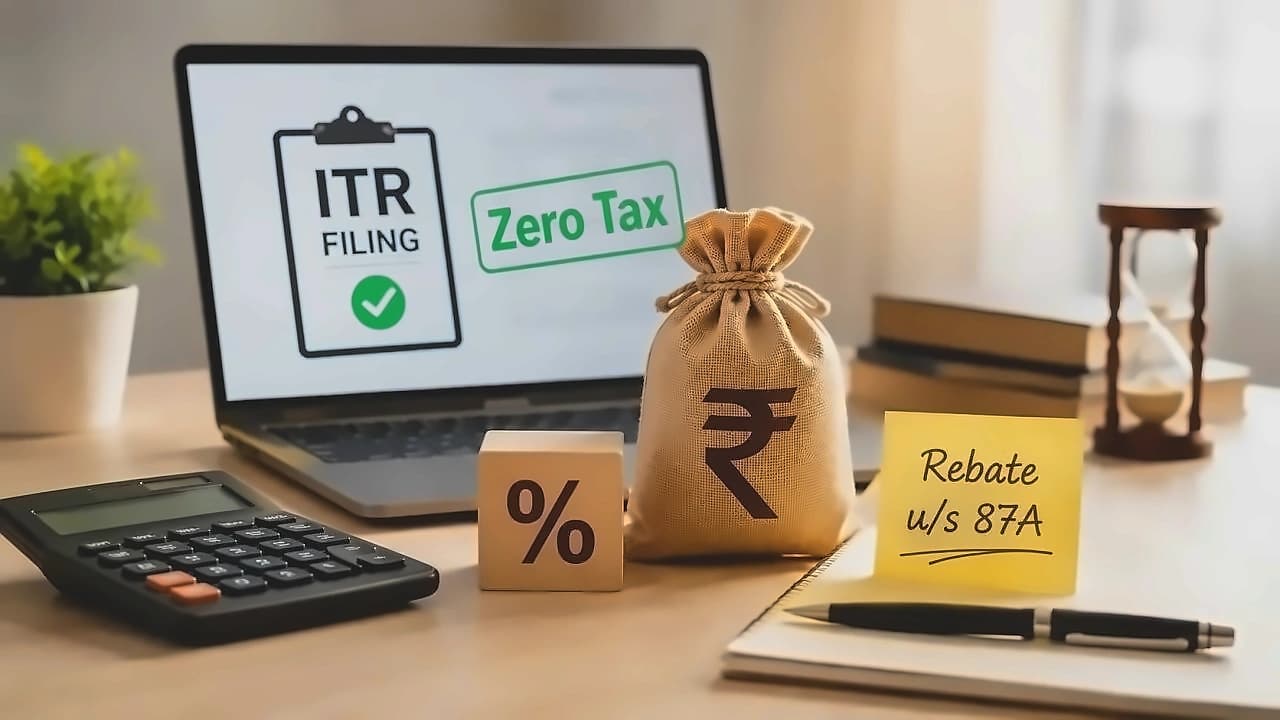
The new tax regime offers competitive tax rates for individuals below 60 years of age under Section 115BAC, with taxpayers receiving a basic exemption limit of ₹4 lakh along with a tax rebate of up to ₹60,000 under Section 87A. This structure enables resident individuals with taxable income up to ₹12 lakh to effectively pay no income tax. However, Section 87A tax rebates do not apply to special-rate capital gains such as STCG (under Section 111A) and LTCG (under Section 112A), meaning even if total net taxable income falls below the tax-free threshold, flat tax percentages still apply to stock market gains. The old tax regime remains more beneficial for salaried employees with significant salary perks, as exemptions such as House Rent Allowance (HRA), Leave Travel Allowance (LTA), and employer contributions to National Pension System (NPS) can significantly reduce taxable income under the old regime only. According to CA Chandni Anandan, Tax Expert at ClearTax, these exemptions and perks can translate into tax savings running into lakhs of rupees every year, with some cases helping reduce tax liability by as much as ₹2 lakh depending on income level, city of residence, and salary structure.
For Assessment Year 2026-27, the tax framework for share market income has undergone significant changes following the Union Budget 2026. The Short-Term Capital Gains (STCG) rate on equity has been raised from 15% to 20%, while the Long-Term Capital Gains (LTCG) rate remains unchanged at 12.5% with an increased exemption limit to ₹1.25 lakh. Delivery-based equity investments are taxed under Section 112A for LTCG above ₹1.25 lakh and Section 111A for STCG, requiring ITR-2 filing. Intraday trading is classified as speculative business income taxed at slab rates under ITR-3, while F&O trading is treated as non-speculative business income under ITR-3/ITR-4. Dividends are fully taxable under 'Income from Other Sources' at applicable slab rates, with ₹10,000+ dividends requiring cross-verification of 10% TDS deducted under Section 194.
For salaried employees, the old tax regime provides significant benefits through various salary perks and exemptions. House Rent Allowance (HRA) remains one of the most valuable tax exemptions, with eligible exemption linked to factors such as rent paid, salary level, and city of residence. According to Ashish Mehta, Partner at Khaitan & Co, to maximize HRA exemption, employees should understand that the exemption is the least of the following three: rent paid minus 10% of salary, 50% of salary for metro cities (Mumbai, Delhi, Chennai, Kolkata), or 40% for non-metros. Leave Travel Allowance (LTA) provides tax relief for eligible domestic travel expenses incurred by employees and their families, generally claimed for two journeys in a block of four calendar years, though it requires actual travel proof and proper documentation. The old regime also allows deductions for Section 80C, Section 80D, and housing loan interest, with the new regime more beneficial for tax calculation without exemptions on allowances and perquisites. For employees residing in rented accommodation, maintaining proper rental documentation and ensuring rent paid is meaningfully higher than 10% of salary can increase HRA exemption significantly.

The new tax regime provides several deductions and exemptions to reduce taxable income. Taxpayers can claim deductions on home loan interest for let-out property under section 24(b) with no upper limit, though losses cannot be set off against other income heads. The regime allows employer contributions to National Pension System (NPS) accounts under Section 80CCD(2) up to 14% of salary, and deductions for contributions to Agniveer Corpus Fund under Section 80CCH for Agnipath Scheme enrollees. Retirement-related exemptions include gratuity (Section 10(10)), leave encashment (Section 10(10AA)), and VRS compensation (Section 10(10C)), subject to conditions and limits. For stock market investments, realizing gains before March 31 each year helps maximize the ₹1.25 lakh LTCG exemption annually. According to CA Chandni Anandan, Tax Expert at ClearTax, the old regime also provides maximum meal coupon exemption of ₹50 per meal, 2 meals per day, 22 days per month for all months, along with car lease perquisites and children education allowance for two children.
For Assessment Year 2026-27, significant changes have been introduced to ITR-1 (Sahaj) form. Taxpayers can now report income from up to two house properties instead of just one, with a new field for "rent which cannot be realized" added to aid taxpayers with rented properties. The form no longer requires reporting of income from more than two house properties or income from owning and maintaining racehorses. Foreign asset reporting requirements for retirement benefits have been removed. From AY 2026-27, revised returns can be filed up to March 31 of the relevant assessment year, with additional fees of ₹1,000 for total income up to ₹5 lakh and ₹5,000 for income exceeding ₹5 lakh under section 234I. The new tax regime remains the default option from AY 2024-25, with taxpayers able to switch between old and new regimes annually. However, salaried employees must note that the option to choose between the old and new tax regimes for those who do not have business income is available only until the ITR deadline, meaning if you fail to file ITR on time, then you would not be able to switch your tax regime while filing belated return. Hence, those filing ITR 1 or ITR 2 must adhere to the July 31, 2026 deadline, unless extended, in order to be able to choose the old tax regime.