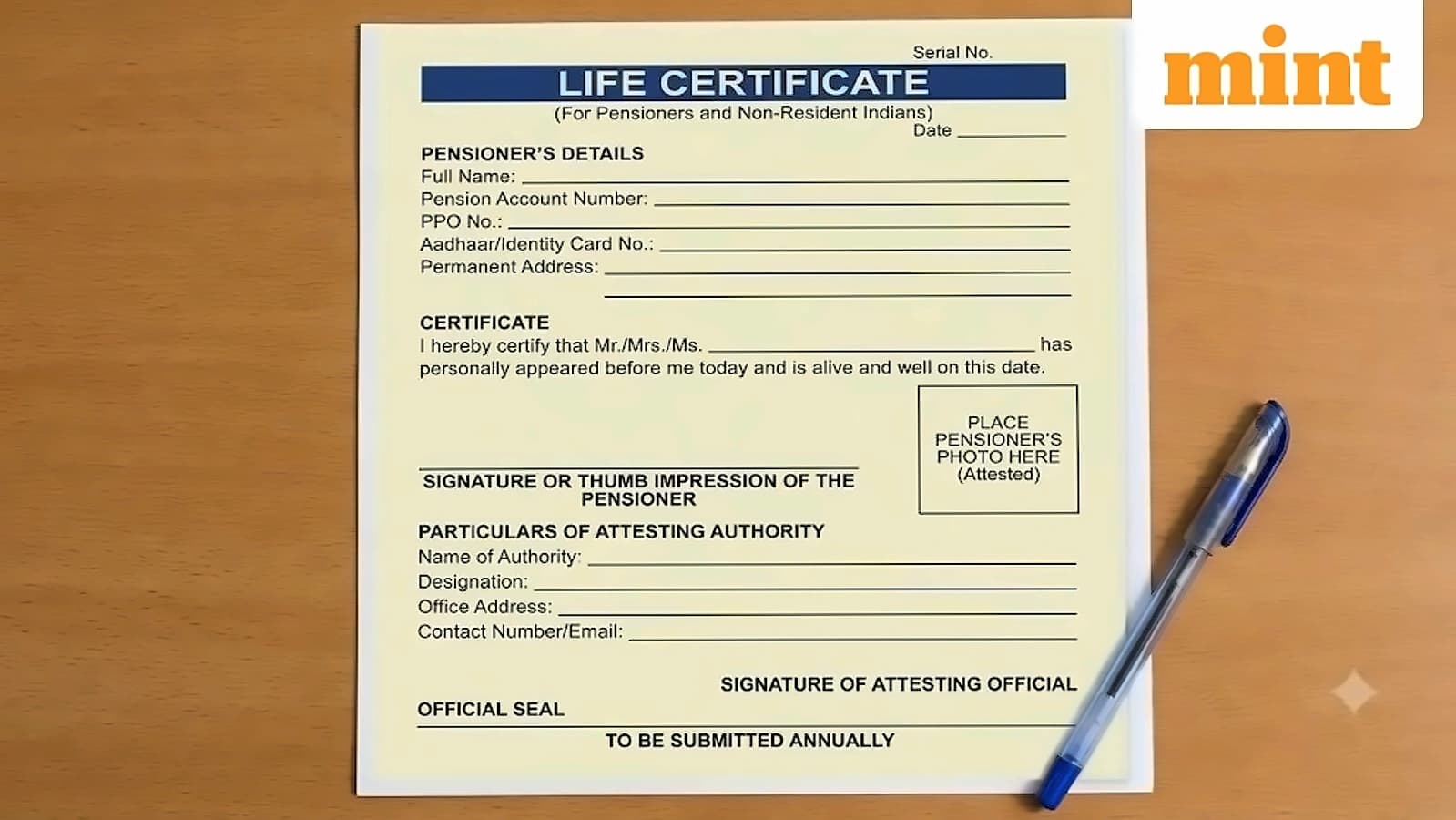
The Bharat Pensioners Samaj (BPS) has proposed a significant enhancement to the life certificate submission process for overseas central government pensioners. In a reminder sent on August 11, 2026, BPS urged the government to amend existing rules to allow overseas/NRI central government pensioners and family pensioners to submit duly authenticated life certificates through their registered email IDs. According to BPS, this facility should be introduced as an additional option and not as a replacement for existing modes, with the proposal building on their previous request from July 1, 2026. The pensioners' body points out that a similar electronic mechanism already works for Defence pensioners under the SPARSH system, administered by the Principal Controller of Defence Accounts, and extending this facility to civilian and Railway pensioners would ensure administrative uniformity, technological consistency and equitable treatment of all Central Government pensioners.
Indian pensioners living abroad can avoid travelling to India for annual life certificate submission through multiple digital and alternative routes. According to reports from Business Standard, the Jeevan Pramaan system allows eligible pensioners to generate life certificates using Aadhaar authentication, which can be stored electronically and accessed by pension disbursing agencies. The government has expanded face-authentication facilities allowing pensioners to generate Digital Life Certificates through smartphones without visiting banks or government offices. As reported by S4S Technologies, eligible pensioners can now generate a Digital Life Certificate (DLC) through the Jeevan Pramaan platform using Aadhaar-based biometric authentication, where available. Once generated, the certificate is electronically shared with the pension disbursing authority, eliminating the need to submit physical documents. However, pensioners face significant challenges with digital submission due to biometric or facial-authentication failures, lack of access to Aadhaar-linked Indian mobile numbers, and limited digital proficiency among elderly pensioners. According to Mint, pensioners can use Aadhaar Face Authentication by downloading the 'AadhaarFaceRD' and 'Jeevan Pramaan Face App' from Google Play Store or App Store, ensuring their smartphone has at least a 5 MP front camera, taking a photograph for face scanning, entering pensioner details, and receiving the certificate via SMS link.
NRI pensioners receiving pension through banks covered under the Second Schedule of the Reserve Bank of India Act, 1934 can use the bank route. As reported by Business Standard, the life certificate can be signed by a designated officer of the bank, eliminating the need for personal appearance before pension disbursing authorities in India. This option is particularly useful for pensioners maintaining pension relationships with Indian banks while residing overseas, though pensioners should verify procedures and documentation requirements with their specific bank branch. According to S4S Technologies, many pension disbursing authorities accept Life Certificates attested by authorised officials such as notaries public, magistrates, officers of Indian banks operating abroad or other designated authorities, subject to the applicable pension rules.
NRI pensioners can also submit life certificates through authorized agents such as magistrates, notaries, bankers, or Indian diplomatic representatives. According to Business Standard, the certificate can be issued or authenticated by eligible authorities, with the authorized agent producing the certificate to relevant pension authorities. Additionally, Indian embassies, high commissions, or consulates can provide life certificates for pensioners who cannot travel to India, with authorized diplomatic officials verifying pensioners using documents like Pension Payment Order (PPO) and passport photographs. As reported by S4S Technologies, NRI pensioners can visit the nearest Indian Embassy, High Commission or Consulate to obtain a certified Life Certificate. After verification by the authorised diplomatic mission, the document can be forwarded to the concerned pension disbursing authority in India. However, when digital submission is not possible, pensioners face significant challenges including long distances and travel-related difficulties, high costs and slow delivery of sending original certificates through international post or courier, and potential delays that may lead to avoidable suspension of pension despite completing formalities within deadlines.

The availability of digital services has significantly simplified the process for NRIs, enabling them to fulfil compliance requirements while continuing to receive pension benefits without the need to travel to India. Some banks and pension disbursing agencies have introduced video-based Life Certificate verification or doorstep digital services for eligible pensioners. These facilities allow pensioners to complete identity verification remotely through secure digital platforms without visiting a branch. According to S4S Technologies, pensioners should verify the list of acceptable certifying authorities with their pension provider before submission, as different pension disbursing authorities may have specific procedures and documentation requirements. According to Mint, some banks and India Post Payments Bank also offer doorstep services for elderly or immobile pensioners, making it easier to stay compliant with the annual Life Certificate requirement.
Regardless of the chosen route, NRI pensioners should maintain basic pension and identity records including Pension Payment Order (PPO) details, Aadhaar and Aadhaar-linked mobile numbers, passport and recent photographs, pension account details, pension-disbursing bank information, and medical certificates for health-related non-appearance. As reported by Business Standard, pensioners should complete test runs well before submission deadlines and verify that pension authorities have recorded certificate submissions to ensure uninterrupted pension payments. The annual Life Certificate confirms that the pensioner is alive and eligible to continue receiving pension benefits. According to S4S Technologies, pensioners are advised to confirm the accepted mode of submission with their respective pension provider to avoid delays, as different pension disbursing authorities may have specific procedures and documentation requirements.
The life certificate requirement is essential as pension disbursal is linked to submission of the life certificate, with pensioners who fail to complete the process within prescribed periods facing disruption in pension payments. According to S4S Technologies, the annual Life Certificate confirms that the pensioner is alive and eligible to continue receiving pension benefits. The Jeevan Pramaan system stores successful digital certificates in its repository for pension disbursing agency access, though pensioners should confirm certificate acceptance and retain acknowledgements for records. The system is designed as an annual verification mechanism to ensure eligible beneficiaries continue receiving pension payments. Failure to submit the certificate within the prescribed period may result in a temporary suspension of pension payments until the required verification is completed. BPS has requested that suitable instructions be issued before the forthcoming Annual Life Certificate submission period so that overseas pensioners and family pensioners do not face hardship or interruption in pension payments. As reported by Mint, pensioners are required to submit Life Certificate or Jeevan Pramaan Patra every year to their pension disbursing authority, with the document serving as proof that pensioners are alive and needing to be submitted every 12 months digitally or in person. If a fresh certificate is not submitted before the validity period expires, pension payments can be stopped from the next payment cycle, though the pension can be resumed after new certificate submission and processing.