For FY 2025-26 (AY 2026-27), the new tax regime is the default option and offers lower slab rates with a standard deduction of ₹75,000, while the old regime retains familiar deductions like 80C, HRA, and home loan interest. According to The Times of India, taxpayers face significant challenges in selecting the correct income tax return form, with ITR-1 and ITR-2 being the most commonly confused forms. Richa Sawhney, Tax Partner at Grant Thornton Bharat, emphasizes that taxpayers must pay close attention to eligibility conditions linked to their income profile, residential status, and nature of transactions when selecting their ITR form. The choice between regimes depends on whether your total deductions exceed approximately ₹5.9 lakh at ₹15 lakh income, with the new regime winning for most salaried individuals with typical deductions.
ITR-1 is applicable for taxpayers with total income not exceeding ₹50 lakh, as reported by The Times of India. The form covers income from salary or family pension, house property (not owning more than two houses), and other sources except lottery winnings or race horse income. Long-term capital gains under section 112A must not exceed ₹1.25 lakh, and the taxpayer cannot have any loss brought forward or carry forward. Additional requirements include no business or profession income, no foreign assets or foreign income, no signing authority in accounts outside India, and no director status in any company. Under the new regime, income up to ₹12 lakh is tax-free due to the Section 87A rebate, making it particularly advantageous for taxpayers in this bracket.
ITR-2 is designed for individuals with total income exceeding ₹50 lakh and includes income from salary, pension, house property, capital gains, and other sources. As reported by The Times of India, this form is also required for taxpayers with foreign assets or income, income from more than two house properties, or those not eligible to file ITR-1. The form covers individuals with business or profession income, loss brought forward or carried forward under any head of income, and various other specific scenarios including agriculture income exceeding ₹5,000. Under the old regime, the Section 87A rebate covers income up to ₹5 lakh with a standard deduction of ₹50,000, while the basic exemption is higher for older taxpayers at ₹3 lakh for those aged 60-80 and ₹5 lakh for those above 80.
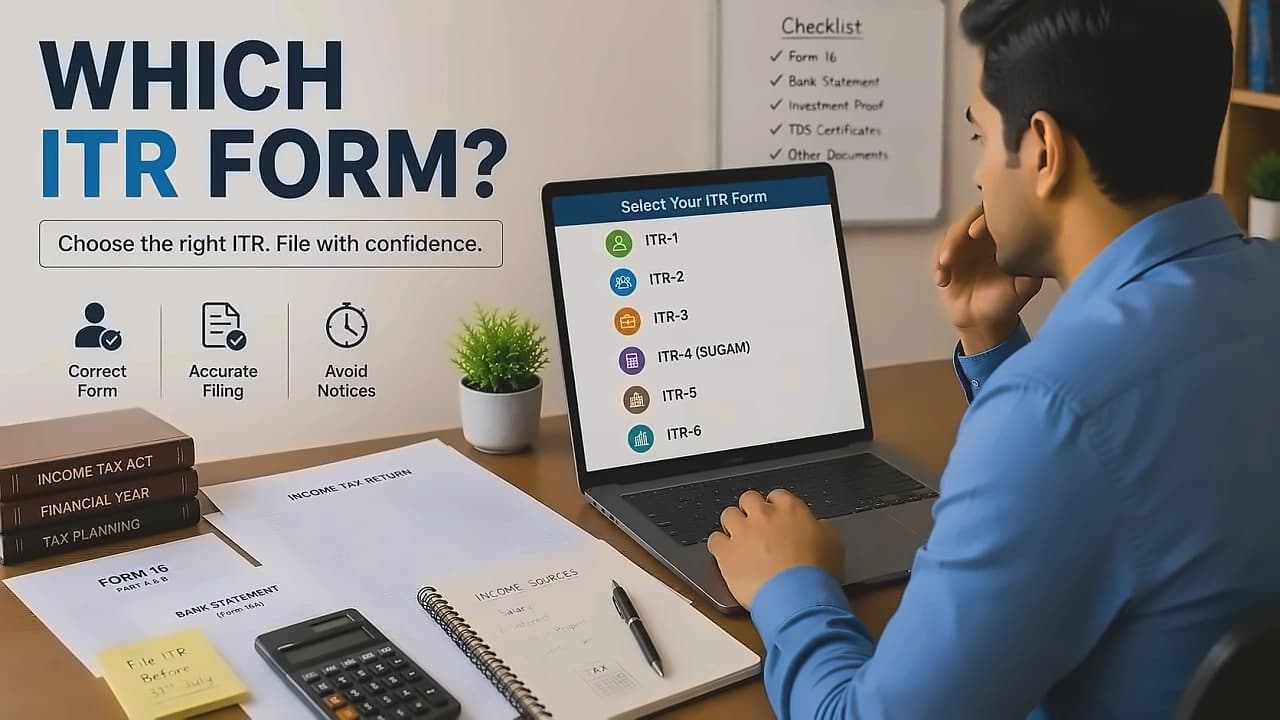
ITR-4 is specifically for business or profession income under the presumptive tax scheme (sections 44AD, 44ADA, and 44AE), according to The Times of India. The form maintains the ₹50 lakh total income limit and includes all ITR-1 requirements except for the presumptive tax scheme income. Additional eligibility includes agriculture income exceeding ₹5,000, unexplained money or investments, taxes deducted on cash withdrawals, and deferred tax on ESOP for eligible startups. Under the new regime, business income is taxed at 10% for ₹8-12 lakh, 15% for ₹12-16 lakh, 20% for ₹16-20 lakh, 25% for ₹20-24 lakh, while the old regime offers a 4% Health and Education Cess on top of both regimes.
Taxpayers must reassess all parameters annually to ensure accurate reporting and smooth processing of their returns, as noted by The Times of India. The choice of form should not be treated as a mechanical carry-forward of the previous year's position. For assessment year 2026-27, returns will be governed by the provisions of the Income-tax Act, 1961. The new regime is the default option unless you actively choose the old regime, which requires filing Form 10-IEA before the due date for business income. A belated return can lock you into the new regime by default, making timely filing crucial. Taxpayers should be aware that changes occur annually in some of these forms, making it essential to stay informed about any updates to ensure proper compliance. The right choice depends on your income level and genuine deductions, with most salaried individuals claiming ₹2-4 lakh in total deductions typically remaining in new-regime territory.