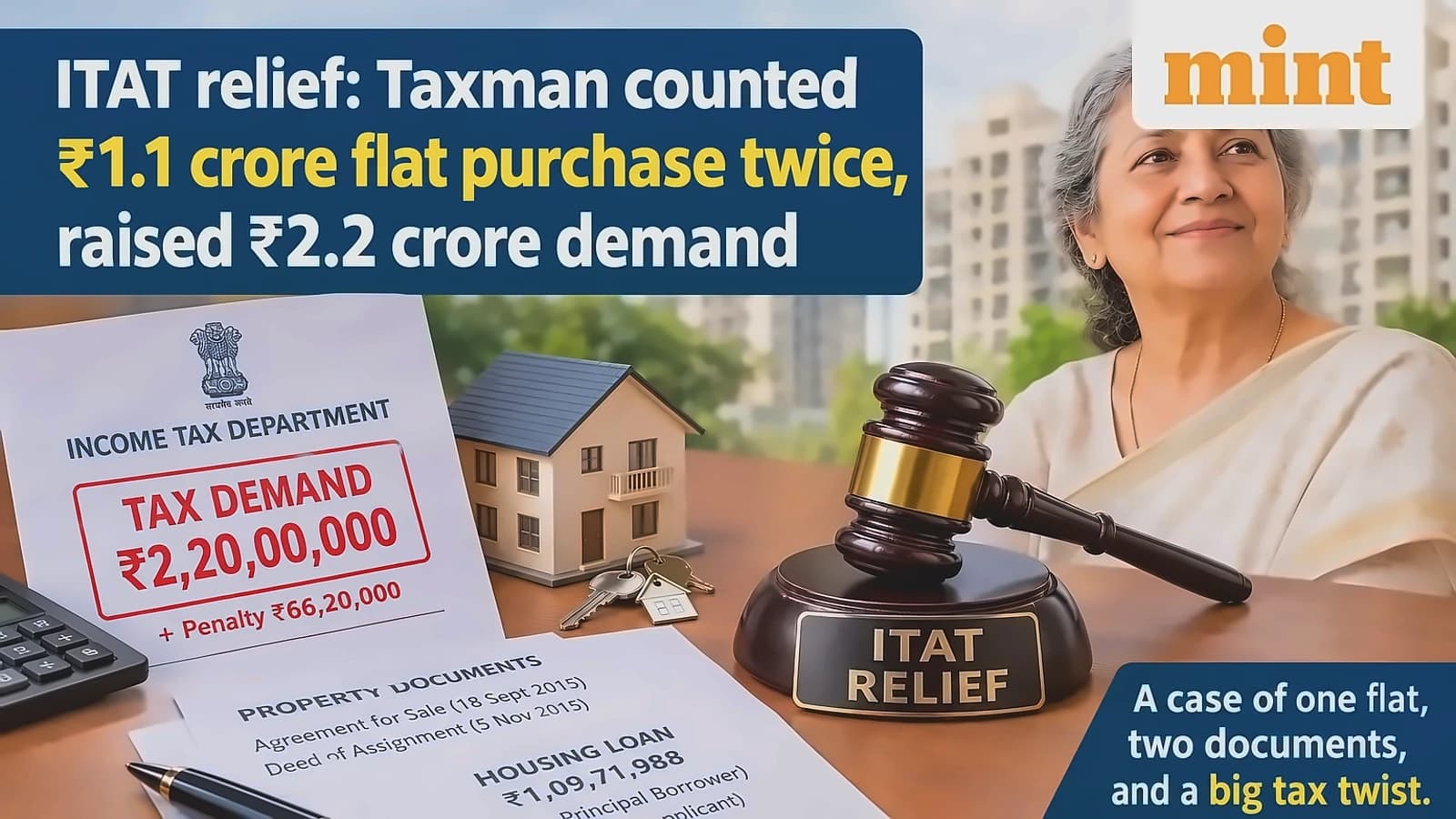
The Calcutta High Court has reinforced the Income Tax Appellate Tribunal's (ITAT) landmark ruling on property shortfall taxation, dismissing the Revenue's appeal on September 22, 2026. A Division Bench of Justices Rajarshi Bharadwaj and Sudip Deb held that a different view of evidence taken by the Assessing Officer and Commissioner of Income-tax (Appeals) cannot, by itself, justify interference with ITAT's factual findings under Section 260A of the Income Tax Act. The court's decision provides crucial legal precedent for cases involving property shortfall disputes.
The Pune bench of the Income Tax Appellate Tribunal (ITAT) has established that buying property at prices below government stamp duty valuation does not automatically trigger taxation on the shortfall. According to the ITAT order dated September 7, 2026, no addition can be made under Section 56(2)(vii)(b) of the Income-tax Act where the gap between purchase price and property fair value falls within the permissible tolerance limit of 5-10%, even if the difference exceeds the ₹50,000 threshold built into the provision. The tribunal noted that the 10% tolerance limit was introduced by the Finance Act, 2020 effective from April 1, 2021, which was subsequently substituted by 10% by the Finance Act, 2020 effective from April 1, 2021.
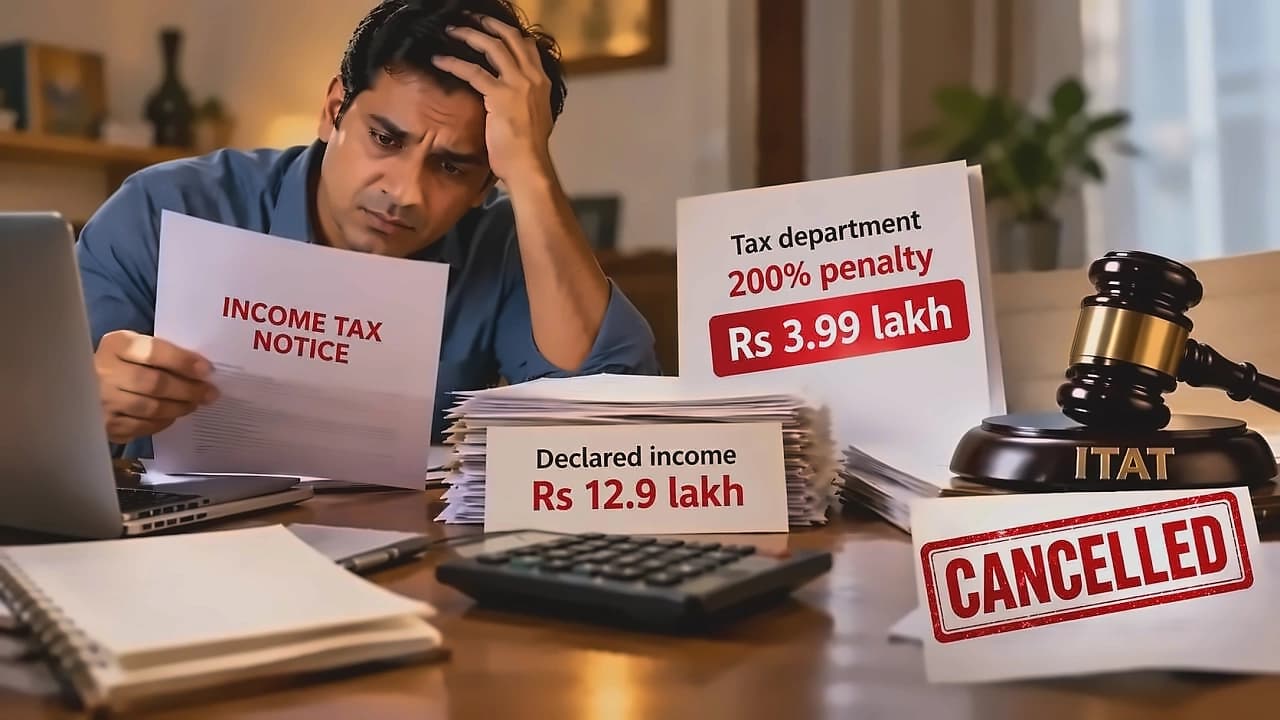
A recent ITAT ruling from Delhi demonstrates how property transactions below stamp duty value can trigger tax scrutiny but may not automatically result in penalties. In a case involving a ₹48 lakh property purchase with a ₹58.7 lakh stamp duty value, the taxpayer faced a ₹70,700 penalty under Section 270A for under-reporting income. The taxpayer, who was semi-literate and had limited knowledge of tax laws, initially did not file an income-tax return and the Assessing Officer issued a notice under Section 148. After receiving the reassessment notice, the taxpayer disclosed the differential amount and paid the tax due. The ITAT Delhi noted that the tax department had not placed evidence on record establishing mala fide intent to conceal income and held that the taxpayer's case fell within the exception under Section 270A(6)(a), which covers situations where a taxpayer provides a bona fide explanation and substantiates it by disclosing material facts.
The ruling was based on the case of Aslam Sadule Khan, who purchased 2,080.28 sq. meters of land at ₹3,91,00,000 in Mauje Khandala from Shri Behram Kali Mehta in July 2015. The Stamp Duty Valuation Authority had valued the same property at ₹6,00,00,000, creating a shortfall of ₹2,09,00,000. The assessing officer added this entire difference to Khan's income under Section 56(2)(vii)(b), resulting in total income assessment of ₹2,20,54,390 for Assessment Year 2016-17. However, a Departmental Valuation Officer (DVO) subsequently assessed the property's fair market value at ₹4.031 crore, reducing the difference to ₹12.10 lakh and bringing it well within the permissible tolerance limit.
The tribunal noted that the 5% tolerance limit was introduced by the Finance Act, 2018 effective from April 1, 2019, which was subsequently substituted by 10% by the Finance Act, 2020 effective from April 1, 2021. The ₹12.10 lakh difference (approximately 3% of the purchase price) was found to be within the permissible tolerance limit, with the tribunal applying retrospective effect to the tolerance provision despite it not existing at the time of the purchase in AY 2016-17. The ruling emphasizes that stamp duty value and fair market value are not always identical, requiring examination of actual property circumstances and DVO valuations where applicable. The recent ITAT case from Delhi further illustrates how the tolerance limit applies to property transactions, with the tribunal noting that the ₹10.7 lakh difference in that case was within the permissible limits.