The Income Tax Appellate Tribunal (ITAT), Delhi, quashed the entire proceedings against Akhil Bansal on June 24, 2026, after discovering a critical procedural error by the income tax department. According to reports from Personal Finance News, the case centered around Bansal's credit card bill payments of ₹13,73,640 during the assessment year 2012-13, which triggered the department's decision to reopen his assessment. Bansal, a resident of Shamli in Uttar Pradesh with income from salary, rent, business, and other sources, had completed his original assessment on March 29, 2015, before the assessing officer reopened the case years later.
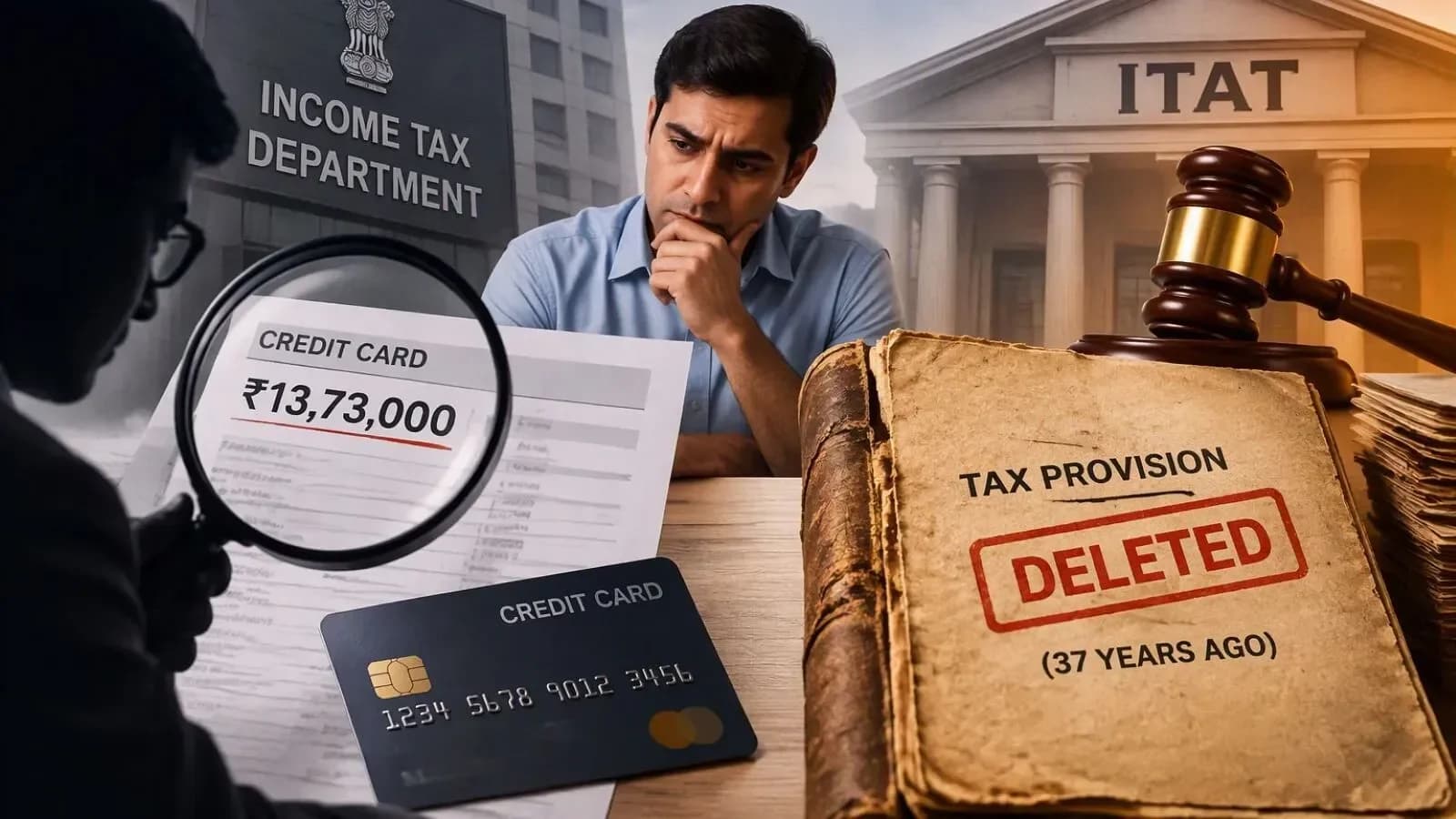
The tribunal found that the approval form for the reassessment notice cited section 147(b) of the Income-tax Act, 1961, which was a provision that had been omitted from the statute with effect from April 7, 1989. As reported by Personal Finance News, Bansal's counsel argued that the approving authority, the Principal Commissioner of Income Tax (PCIT), had granted approval "in a mechanical manner without looking at the reasons and the section under which the Assessing Officer sought approval." The department's representative insisted the citation was a clerical error, claiming it had been "inadvertently mentioned" and that what was really meant was clause (b) of Explanation 2 to section 147, but the tribunal was not convinced.
The ITAT bench held that "the reopening of assessment fails to pass the test of judicial scrutiny since the mandatory approval is without application of mind," according to Personal Finance News. The tribunal recorded that neither the Range Head nor the PCIT had bothered to examine the contents of the approval received from the Assessing Officer, showing "complete non-application of mind by the approving authority." The approval for initiating proceedings under section 148 of the Act was deemed "mechanical and perfunctory, hence, unsustainable," resulting in the complete quashing of the proceedings without examining the credit card payments themselves.
In a separate but related development, ITAT Delhi recently ruled that long-term capital losses of ₹90.81 lakh from STT-paid share transactions cannot be carried forward under section 10(38) of the Income Tax Act. As reported by Personal Finance News, the tribunal held that when income is exempt under section 10(38), both positive income and negative losses do not enter regular computation. The ruling distinguished earlier cases like Royal Calcutta Turf Club v. CIT and relied on the Supreme Court decision in CIT vs. Harprasad & Co. (P.) Ltd., establishing that exempt income under section 10(38) constitutes a separate source of income outside the total income computation.