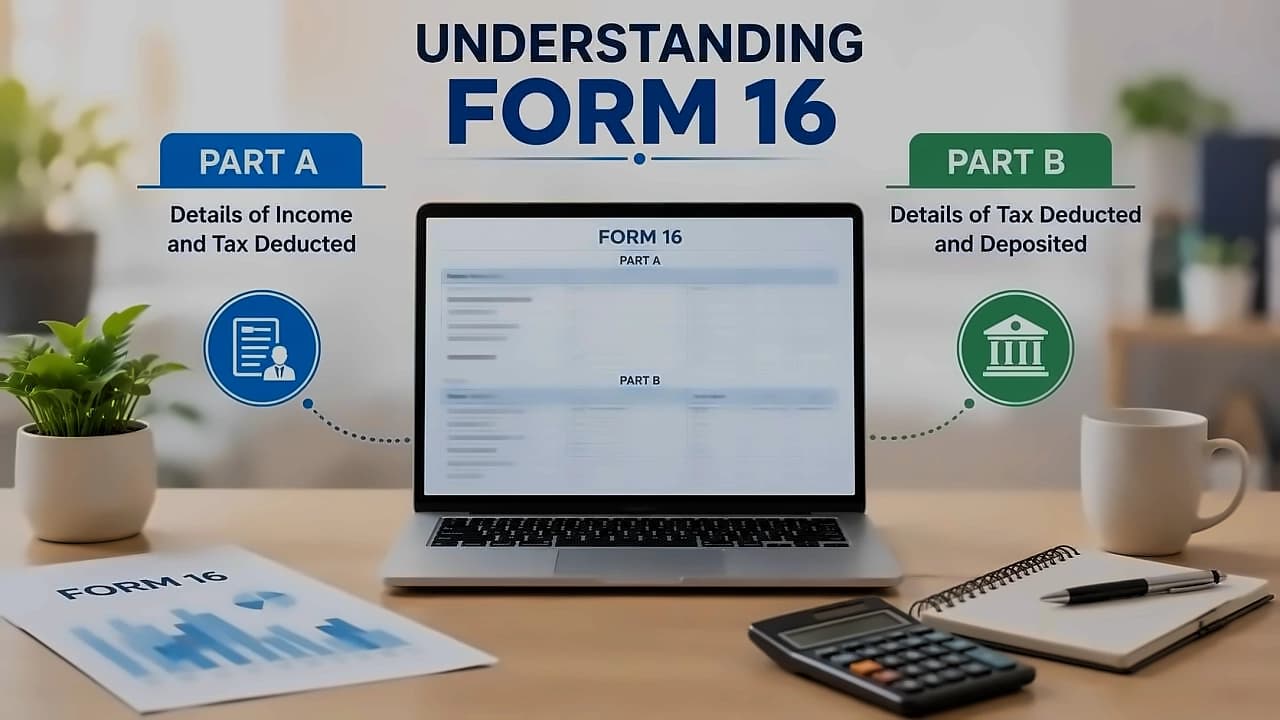
Form 16 is a Tax Deducted at Source (TDS) certificate issued by employers to salaried employees in India, serving as official proof that tax has been deducted from salary and deposited with the Income Tax Department. According to reports from Mint, this crucial document is needed while filing income tax returns and serves as a comprehensive statement of an employee's salary earnings and tax deducted during a financial year. The certificate is essential for verifying tax details and filing ITR, making it easier to understand salary structure and tax implications. Under the Income Tax Act, 2025, Form 16 has been renamed as Form 130 and will come into effect from Tax Year 2026-27, i.e., April 1, 2026, onwards, though for FY 2025-26, employers can still issue Form 16.
Part A of Form 16 provides comprehensive details about employer and employee information, including employer's name, address, PAN and TAN, employee's PAN, period of employment, and quarter-wise summary of TDS deducted and deposited. As reported by Mint, this section includes challan details of tax deposited with the government and is crucial for understanding the employer's tax deduction process. The employer is required to verify all details in Part A before issuing the certificate, ensuring accuracy in tax deduction records. Part A is an official government-generated document and should be generated through the TRACES portal, making it the most reliable source for TDS information.
Part B contains a detailed breakup of employee salary income, including gross salary (including all allowances and perquisites), exempt allowances under section 10, income other than salary declared for TDS deduction, deductions under chapter VI-A, total taxable income, tax payable, and eligible rebates or reliefs. According to Mint, this section includes estimated tax liability (tax, surcharge, cess and rebate calculated separately) and relief under section 89. The comprehensive salary breakdown helps employees understand their taxable income and deductions claimed under various provisions. Part B contains the clear income and tax picture of your salary and should be cross-verified with salary slips, as discrepancies between records and Part B are common, especially when switching jobs or having variable pay components.

Form 16A is issued by any deductor (company, bank, etc.) for TDS on non-salary income, including professional fees, rent, etc., and is received by anyone with TDS on non-salary income. NRIs who have worked in India as employees in Indian companies or as assignees from foreign companies deputed here may receive Form 16 for the time they worked here. For NRIs with NRO savings accounts or fixed deposits, banks generally deduct TDS on NRO interest income at rates prescribed under the Income-tax Act, subject to applicable surcharge, cess, and DTAA benefits where available. When filing ITR, NRIs must cross-verify Form 16 and Form 16A figures against Form 26AS to ensure no mismatches. NRIs can reclaim excess deducted TDS by declaring correct residential status when filing ITR, as their residential status depends on the number of days in a financial year they lived in India.
If no TDS has been deducted from an employee's salary, the employer is generally not obligated to issue Form 16. However, as reported by Mint, many organizations still provide the certificate as a matter of good practice. The certificate serves as a summary of annual earnings and is widely used as proof of income for purposes such as loan applications, visa processing and financial documentation. In case of job changes during a financial year, both employers are supposed to issue Form 16 for the period they worked with the employee. For FY 2025-26, employers have until June 15, 2026 to issue Form 16, after which the new Form 130 format will be mandatory.