Form 15G and Form 15H are self-declaration forms that allow eligible taxpayers to receive interest income without TDS deduction. According to reports from Mint, these forms help prevent unnecessary TDS deductions when taxpayers do not expect to incur any tax liability. The Income Tax Department introduced these forms to ensure that taxpayers who are not liable to pay tax do not face deductions on their interest income. These forms are most commonly used for preventing TDS on interest earned on Fixed Deposits (FDs) and Recurring Deposits (RDs), dividend income from shares or Mutual Funds exceeding ₹10,000 from April 1, 2025, life insurance policy payouts, and EPF withdrawals before five years of continuous service.
Form 15G is designed for resident individuals below 60 years of age and Hindu Undivided Families (HUFs). As reported by Mint, taxpayers must meet specific criteria to be eligible for this form. The form requires that the taxpayer's estimated tax liability for the financial year is zero, and their total income after claiming deductions and exemptions remains below the taxable limit. The primary purpose of Form 15G is to prevent TDS deduction on interest income when the taxpayer does not expect to incur any tax liability. For FY 2025-26 and earlier years, taxpayers must ensure their total interest income is less than the basic exemption limit of ₹2.5 lakh (Old Regime) or ₹4 lakh (New Regime), with the TDS threshold set at ₹50,000.
Form 15H serves a similar purpose but is specifically designed for senior citizens aged 60 years and above. According to Mint, senior citizens often rely heavily on fixed deposit income after retirement, and Form 15H helps ensure that unnecessary TDS is not deducted when their total tax liability is nil. The form requires that the taxpayer is a resident individual aged 60 years or older during the financial year, with estimated tax liability for the financial year being zero. For FY 2025-26 and earlier years, Form 15H has no specific interest income limit, provided the total tax is nil, with the TDS threshold set at ₹1,00,000.
While both forms serve similar purposes, there are significant differences in their eligibility criteria and income limits. As reported by Mint, Form 15G is applicable to individuals below 60 years of age, while Form 15H is for senior citizens aged 60 years and above. The primary factor determining which form to use is the taxpayer's age, with Form 15G requiring that total annual income should not exceed the applicable basic exemption threshold, while Form 15H only requires that estimated tax payable for the financial year should be nil. Form 15G has a specific interest income limit of ₹2.5 lakh (Old Regime) or ₹4 lakh (New Regime), while Form 15H has no such limit, making it more flexible for senior citizens with higher interest income.
According to Mint, taxpayers can download Form 15G and Form 15H through their bank's online portal, the EPFO platform, or the Income Tax Department's e-filing portal. The forms can be submitted to various deductors including banks offering fixed deposits and recurring deposits, post offices, Employees' Provident Fund Organisation (EPFO), insurance companies, companies paying dividends, mutual fund houses, and tenant landlords. Before submitting these forms, taxpayers must ensure they are submitted every financial year, separate forms may need to be submitted to each bank or institution, and providing incorrect information can attract penalties under tax laws. Each financial institution is treated as a separate dedctor, requiring separate declarations for every bank or insurer where taxable investments are held.
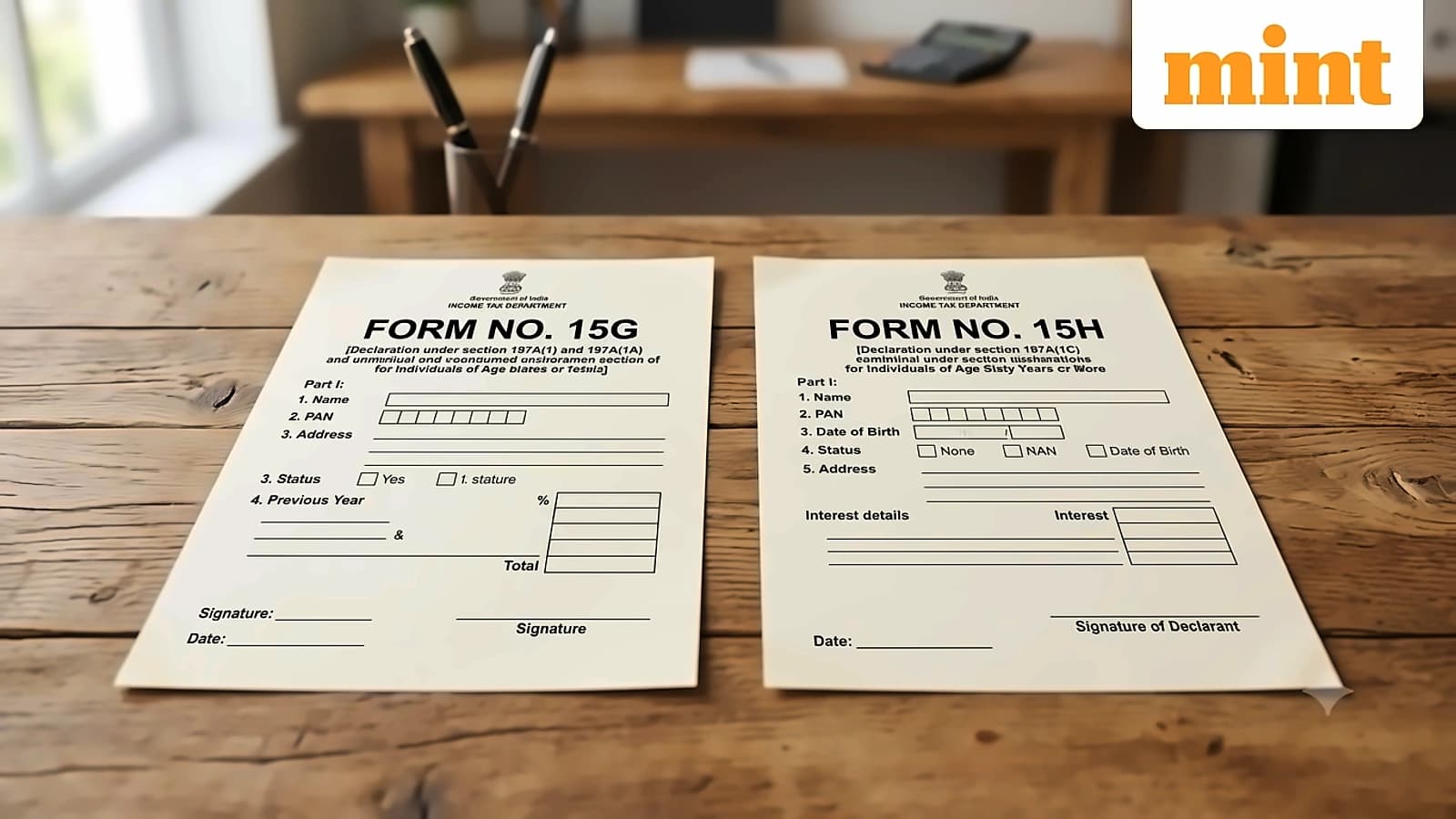
Starting from FY 2026-27, Form 15G and Form 15H have been replaced by Form 121 under the Income Tax Act, 2025. As reported by Mint, Form 121 serves as a unified self-declaration mechanism for taxpayers who wish to avoid TDS on eligible income when their tax liability is nil. For FY 2025-26 and earlier years, taxpayers can continue to use Form 15G or Form 15H depending on their eligibility, but for FY 2026-27 onwards, eligible taxpayers will need to submit Form 121 instead of either of these forms. Forms 15G and 15H are only valid for one financial year, requiring fresh declarations every April to ensure uninterrupted exemption.