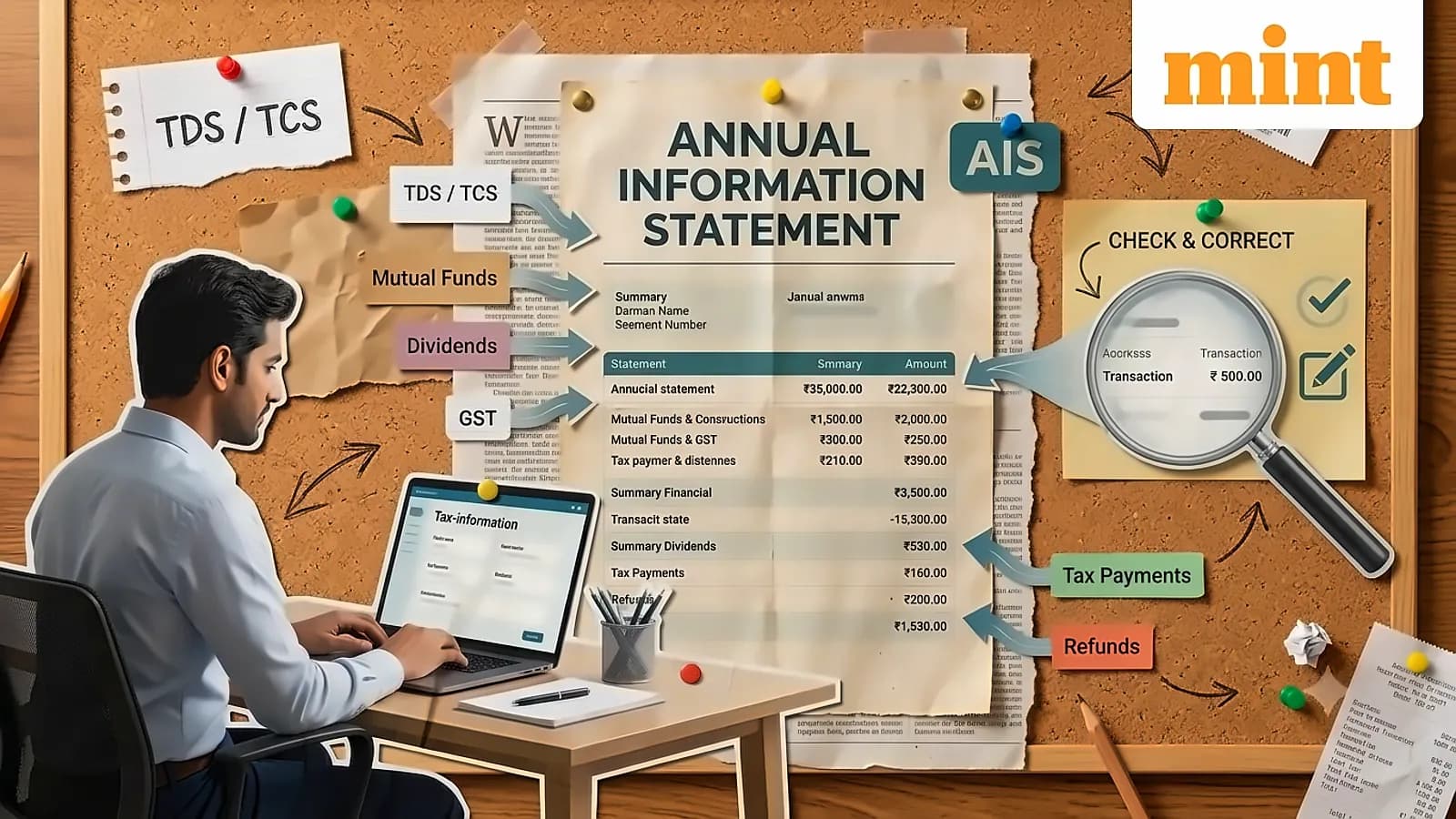
The Annual Information Statement (AIS) serves as a comprehensive financial document that provides taxpayers with detailed information about their tax obligations and financial transactions. According to reports from Mint, AIS is uploaded by the Principal Director General of Income-tax (Systems) or an authorised authority under Section 285BB of the Income Tax Act, read with Rule 114-I of the Income-tax Rules, 1962. The statement consolidates a wide range of information including TDS and TCS details, specified financial transactions (SFT), tax payments, demand and refund records, pending and completed proceedings, and data received from various government bodies and regulatory authorities. It also covers GST returns, foreign remittances, dividend and mutual fund transactions, interest on income tax refunds and details reported by depositories and other reporting entities. As per Mint, AIS only contains information currently available with the Income Tax Department, however, it may not include all transactions related to a taxpayer. Therefore, taxpayers should review all relevant financial details independently and ensure that complete and accurate information is reported while filing their ITR.
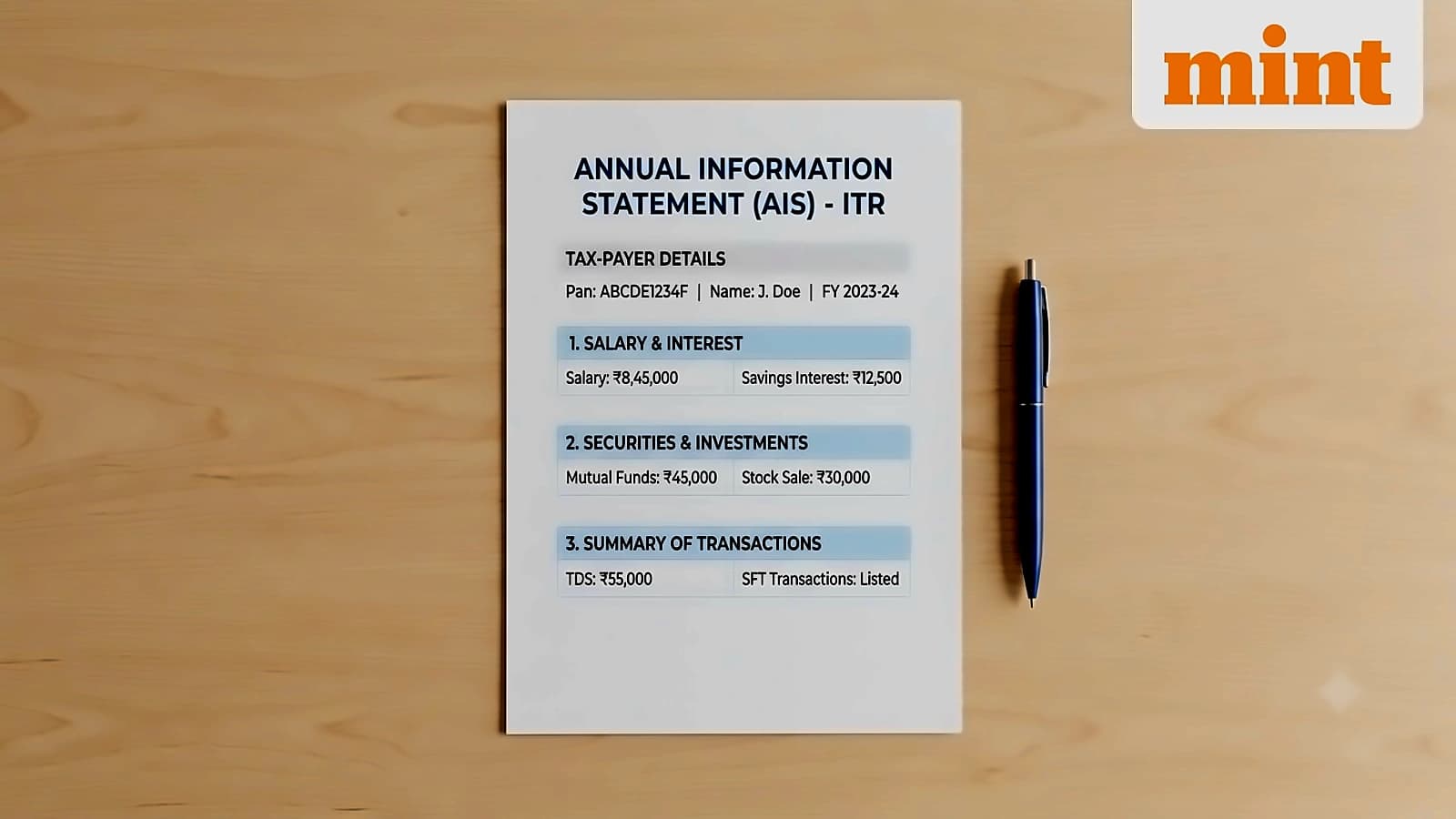
As reported by Mint, AIS is structured into two main sections that present a detailed view of a taxpayer's financial data. Part A covers General Information including basic taxpayer details such as PAN, masked Aadhaar number, name, date of birth or incorporation (for non-individuals), contact information like mobile number and email ID and the registered address. Part B covers Tax and Financial Information including details of tax deducted or collected at source (TDS/TCS), along with related codes, descriptions, and values. This section also covers information reported under Statement of Financial Transactions (SFT) from different entities, tax payments such as advance tax and self-assessment tax, and details of refunds issued or demands raised during the financial year. According to Mint, AIS also includes other reported data like salary-related annexure details, interest on tax refunds, and foreign remittance or currency purchase transactions. Additionally, it includes a Transaction Information Summary (TIS) that presents aggregated information from multiple sources and allows taxpayers to review the data and provide feedback.
According to Mint reports, AIS, Form 26AS and Form 16 serve different purposes and provide different levels of financial information to taxpayers. Form 26AS is a tax credit statement that mainly reflects TDS and TCS details linked to a taxpayer's PAN, with its scope limited largely to tax deducted or collected at source from AY 2023–24 onwards. Form 16 is an employer-issued certificate that provides a detailed summary of salary income and the TDS deducted from it, including a breakup of salary components, exemptions, and deductions under Chapter VI-A, and is specific only to employment income. The AIS is a more comprehensive statement that consolidates a wide range of financial information, including interest, dividends, securities transactions and other income-related activities, along with TDS/TCS details. As per Mint, AIS helps with voluntary compliance by enabling easier pre-filing of returns, while simultaneously improving transparency and reducing the risk of errors.
As detailed in the Mint report, taxpayers can download AIS through a step-by-step process from the e-filing portal. The process begins with visiting the Income Tax e-filing portal, logging in, and navigating to the Services section where you can click on 'Annual Information Statement (AIS)'. After clicking on 'Proceed', users are redirected to the AIS portal showing Taxpayer Information Summary (TIS) with category-wise information along with original and revised values used for return pre-filling. The AIS dashboard displays information in two parts: Part A with basic details and Part B with detailed financial data, and users can download the statement in Excel, JSON, or PDF formats. If downloading a password-protected PDF, users must enter their PAN (in lowercase) + Date of Birth/Date of Incorporation (DDMMYYYY) as the password. According to Mint, Excel download is available category-wise, and the full AIS can be downloaded in PDF or JSON format.