

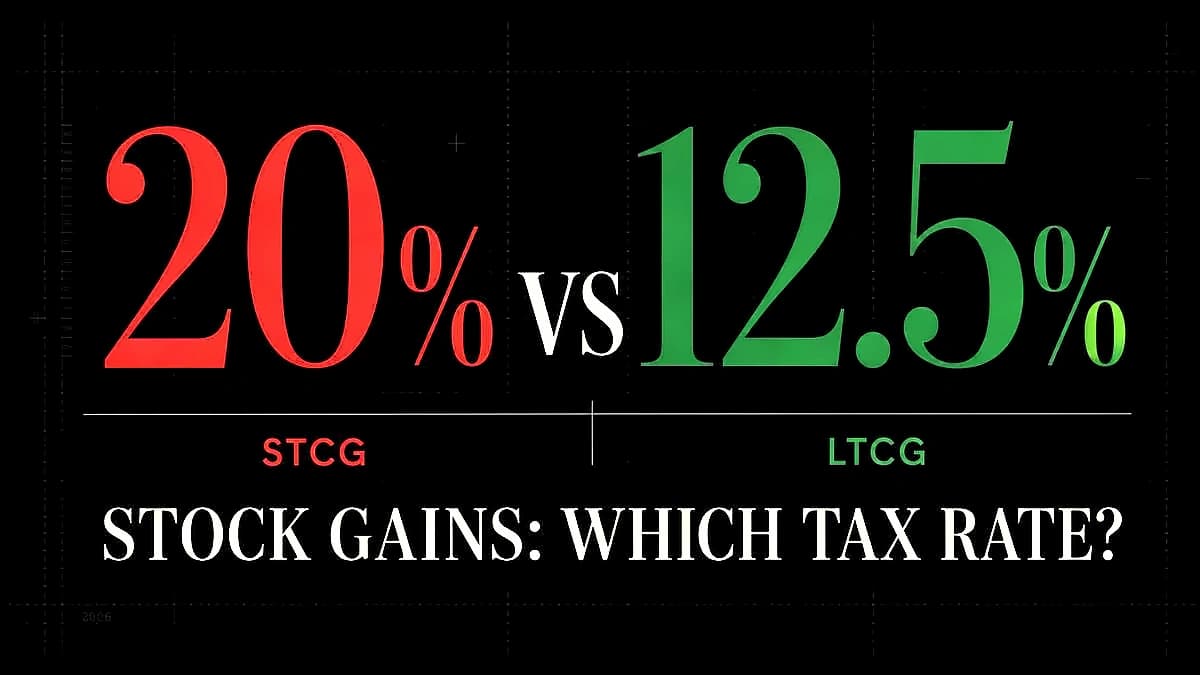

Capital gains tax is levied on profits earned through the sale of capital assets under the Income Tax Act, 1961. According to Business Standard, there are two types of capital gains tax: Long-term Capital Gains (LTCG) and Short-term Capital Gains (STCG). LTCG applies when assets are held for over 12 months for equity and equity mutual funds, or over 24 months for gold and property. STCG applies when assets are held for up to 12 months for equity and equity mutual funds, or up to 24 months for property and gold.
As reported by Business Standard, LTCG is taxed at 12.5% on equity, equity mutual funds and gold, with gains from equity shares and equity mutual funds up to ₹1,25,000 exempt from tax in a financial year. STCG is taxed at 20% on equity and equity mutual funds, while rates for property and gold follow slab rates. For FY27, LTCG rates are 12.5% for equity mutual funds, 12.5% or 20% with indexation for property, and 12.5% for gold.
According to Business Standard, capital assets include land, house, office space, machines, gold, vehicles, shares, mutual funds, and trademarks. Non-capital assets include personal belongings, agricultural land in rural India, National Defence Gold Bonds, 6.5% gold bonds (1977), 7% gold bonds (1980), Gold Deposit Bond issued under the Gold Deposit Scheme (1999), and Special bearer bonds (1991). Capital gains tax applies specifically to the sale of these assets for profit.
As reported by Business Standard, capital losses can be set off against gains from other capital assets in the same financial year, subject to specific rules. Short-term capital losses can be set off against both short-term and long-term capital gains, while long-term capital losses can be set off only against long-term capital gains. Unadjusted capital losses can be carried forward for up to 8 subsequent financial years. Importantly, capital losses cannot be set off against income from salary, house property, or business income.
According to Business Standard, when filing returns, investors should make their own calculations and reconcile them against system-generated reports from demat or mutual fund companies. Choose the correct ITR form for instances of capital gains in overall income, and clearly distinguish short-term and long-term capital gains. Investors should check previous year's carried-forward losses that can potentially reduce current tax liability, and be aware of filing deadlines for potential revised filings.