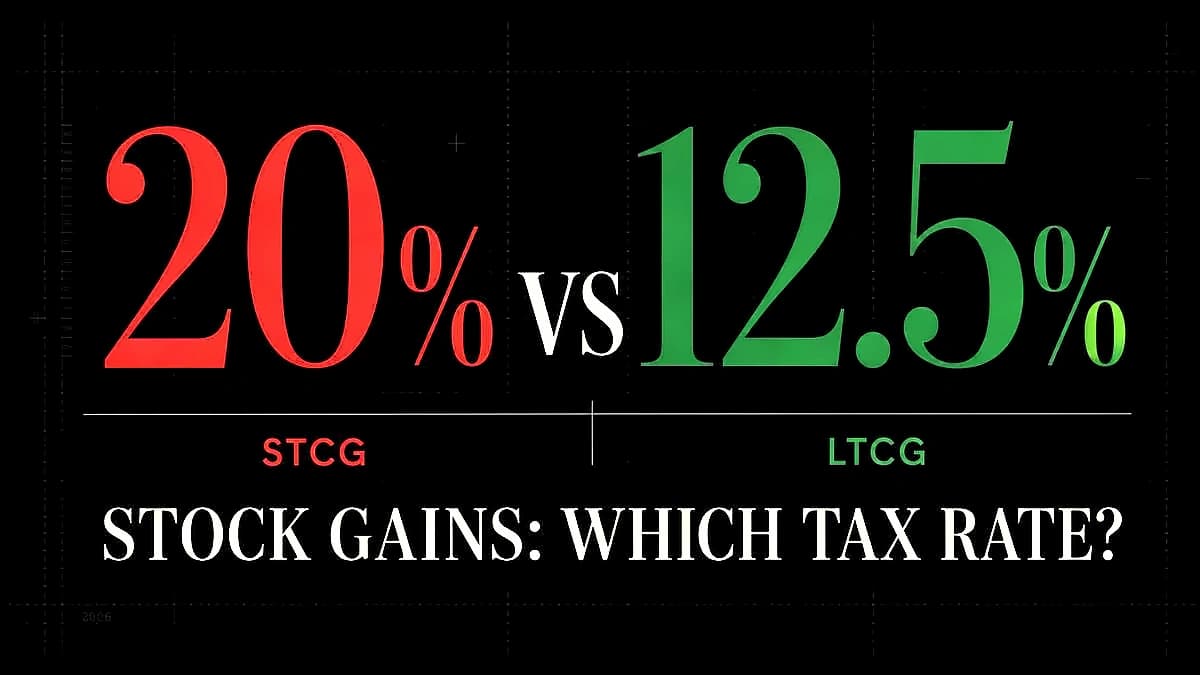
The taxation framework for stock gains in FY 2026-27 maintains the current structure with 20% Short-term Capital Gains (STCG) tax on gains from shares held for less than 12 months, and 12.5% Long-term Capital Gains (LTCG) tax on gains from shares held for more than 12 months. According to the latest tax guidelines, these rates remain unchanged from the previous financial year, providing stability for investors in the equity markets. The comprehensive income tax structure for Assessment Year 2026-27 covers individuals, Hindu Undivided Families (HUFs), companies, firms, co-operative societies, and other taxpayers under the Income-tax Act, 1961, as amended by the Finance Act, 2026.
The tax exemption limit for stock gains in FY 2026-27 stands at ₹1.25 lakh per financial year, as reported by the latest tax guidelines. This exemption applies to both LTCG and STCG, providing relief to investors with moderate gains. The exemption threshold remains consistent with previous years, offering predictability for tax planning purposes. The enhanced Section 87A rebate now provides a maximum rebate of ₹60,000 for individuals with total income up to ₹12 lakh opting for the new tax regime under Section 115BAC(1A).
Investors can utilize tax-loss harvesting strategies to offset gains against losses in the current financial year. According to the tax guidelines, this provision allows investors to set off losses from one investment against gains from another, potentially reducing the overall tax liability. This strategy becomes particularly valuable for investors with mixed investment portfolios across different asset classes.
The filing of Income Tax Return (ITR) for stock gains depends on the total income and investment portfolio. As reported in the latest tax guidelines, investors with gains above the exemption limit must file ITR-1 or ITR-2 forms, while those with diversified investments across multiple asset classes may require ITR-3 forms for comprehensive tax reporting. The choice of ITR form should align with the investor's overall income and investment structure. For individuals opting for the new tax regime, the default new tax regime under Section 115BAC provides lower tax rates with specific slab rates ranging from 5% to 30% depending on income levels.