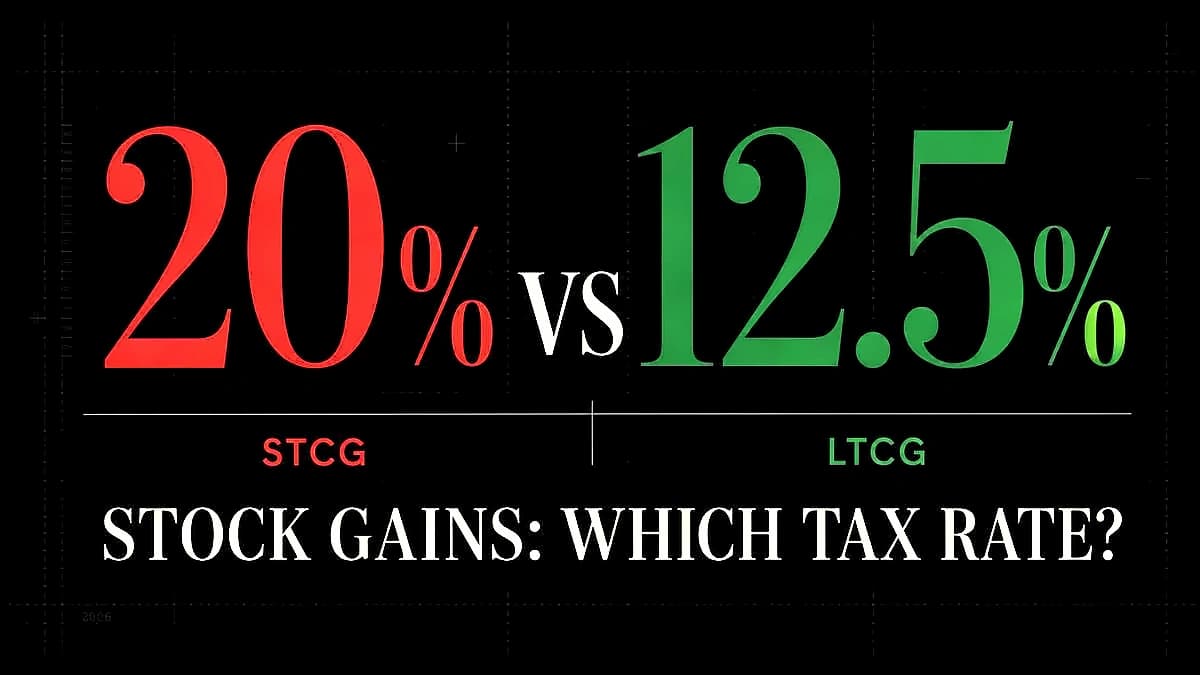
Buying a co-owner's share in jointly owned property creates complex capital gains tax calculations when selling the entire asset. According to Vijay Raundal, Director at Teerth Realties, owning 50% initially and subsequently purchasing the remaining 50% does not mean the property should be treated as one single capital gain. Since the two interests were acquired at different times and at different costs, gains are likely to be computed separately. For immovable property, the holding period of 24 months determines whether the gain is long-term (LTCG) or short-term (STCG).
In a practical example where the first 50% was purchased on 1 August 2022 and the remaining 50% on 1 August 2025, the first 50% has been held for four years and will qualify as LTCG, while the second 50% will be considered as STCG. LTCG on sales after 23 July 2024 is taxed at 12.5% without indexation. As reported by Mint, for each share, the acquisition cost, holding period and purchase consideration will determine the tax treatment. If the taxpayer bought the other 50% later, the original 50% would have a ₹45 lakh gain while the later-bought 50% would have a ₹25 lakh gain, resulting in a total capital gain of ₹70 lakh.
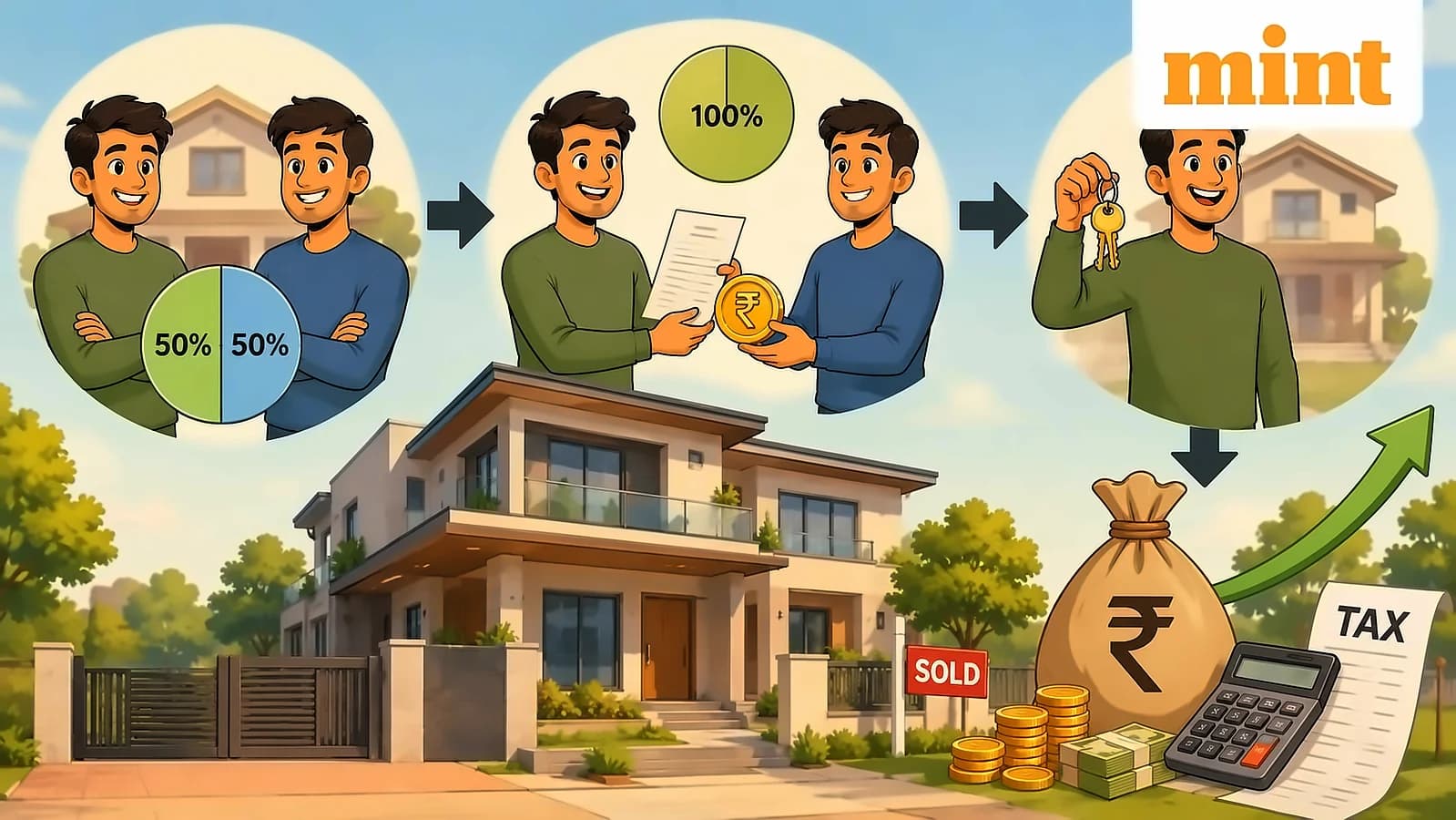
Keshav Mangla from Forteasia Realty noted that the calculation would be simpler if the taxpayer had owned the entire property from the date of acquisition. In a hypothetical case where a property was originally bought for ₹60 lakh with each owner holding 50%, and later the taxpayer bought the sibling's 50% share for ₹50 lakh and eventually sold the entire property for ₹1.5 crore, the total capital gain would be ₹90 lakh if owned from the start, compared to ₹70 lakh if purchased later.
Hardik Shah from Shyam Group Dholera SIR explained that Section 54 exemption provides relief when selling a residential house and reinvesting in another residential house in India. However, the exemption applies to eligible LTCG, not to STCG arising from the recently purchased 50% share. The new residential house must be purchased within one year before or two years after the sale, or constructed within three years after the sale. The exemption is restricted to the amount of eligible capital gain or the amount used for making the investment, whichever is less, and the new house must be held for at least three years.