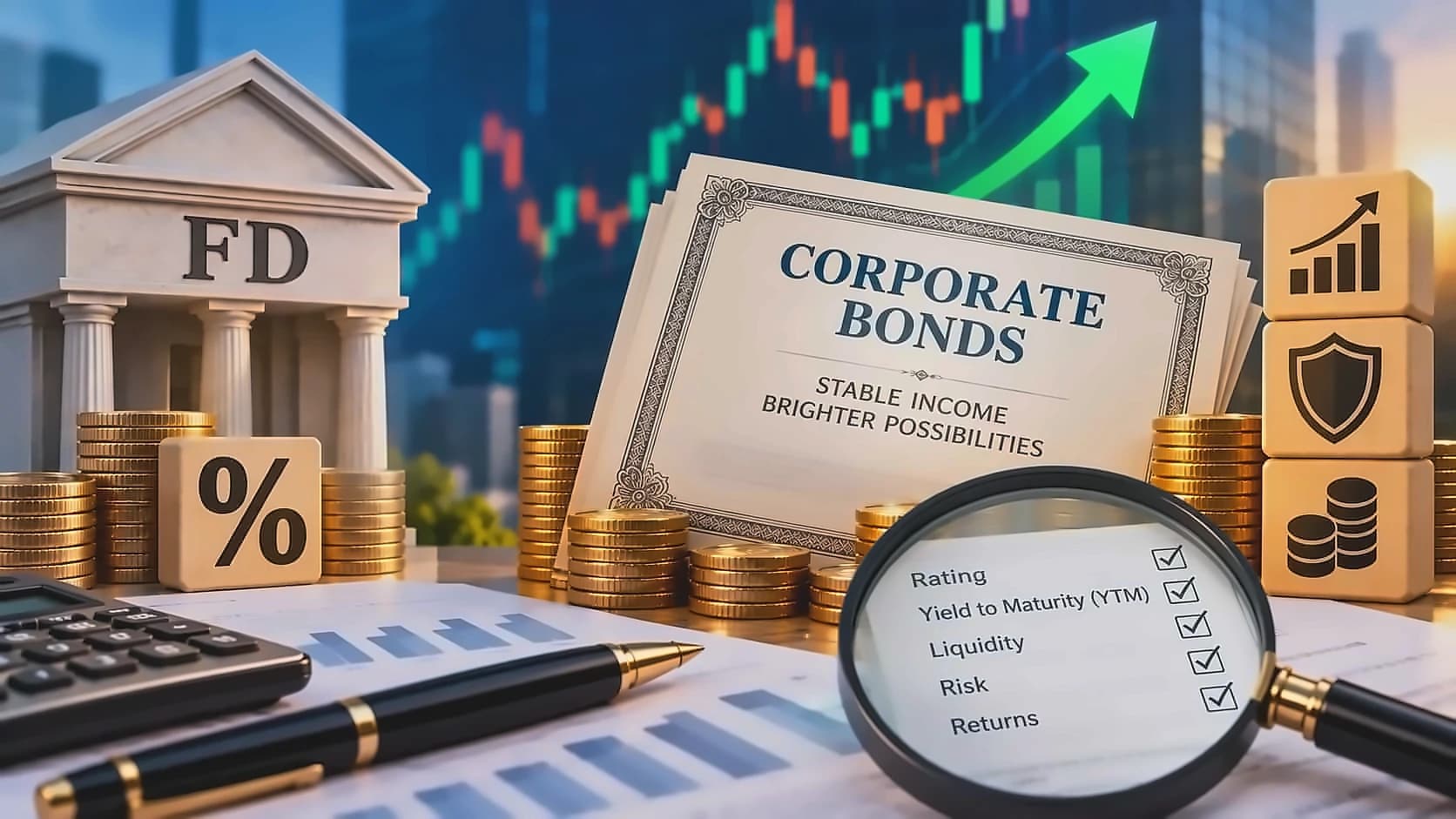
When selecting corporate bond funds, investors should evaluate five critical criteria to ensure optimal performance and risk management. According to recent market analysis, these factors collectively determine the fund's ability to deliver stable, accrual-led returns while maintaining appropriate risk exposure. The selection process should focus on credit quality assessment, duration and yield management, risk-adjusted performance metrics, and fund size considerations to create a well-balanced portfolio strategy.

Credit quality emerges as the primary selection criterion for corporate bond funds. As reported by market analysts, this factor directly impacts the fund's ability to maintain stable returns while managing default risk. The credit quality assessment should focus on the underlying portfolio composition and the fund manager's selection process for issuer-level risk evaluation. This becomes particularly important when comparing funds like iShares 3-7 Year Treasury Bond ETF (IEI) with Vanguard Intermediate-Term Corporate Bond ETF (VCIT), where IEI focuses exclusively on U.S. Treasury securities while VCIT invests in investment-grade corporate debt from industrial, utility, and financial issuers.
Duration and yield-to-maturity (YTM) analysis provides crucial insights into the fund's interest rate sensitivity and return potential. According to investment experts, these metrics help investors understand how the fund's performance will respond to changes in interest rates and market conditions. The duration measurement indicates the fund's sensitivity to interest rate movements, while YTM reflects the expected return over the bond's remaining life. For example, VCIT tracks the Bloomberg U.S. 5-10 Year Corporate Bond Index with about 2,200 holdings, while IEI focuses on U.S. Treasury securities with 83 positions, both targeting the intermediate segment of the yield curve.
Sharpe ratio and expense ratio serve as essential risk-adjusted performance indicators for corporate bond funds. As reported by market analysts, these metrics help investors evaluate the fund's ability to generate returns relative to the risk taken. The Sharpe ratio measures risk-adjusted performance by dividing returns by volatility, while the expense ratio indicates the fund's cost efficiency and impact on net returns. Cost-conscious investors may prefer the Vanguard fund, which features a highly competitive 0.03% expense ratio compared to the 0.15% charged by iShares, with this expense gap of 0.12 percentage points impacting long-term compounding.
Fund size represents a critical factor in corporate bond fund selection, particularly for liquidity and trading efficiency. According to investment experts, larger funds typically offer better liquidity and lower trading costs, while smaller funds may provide more focused management and potentially better risk-adjusted returns. VCIT dwarfs IEI in overall size with nearly $70 billion in assets under management and more than 2,200 individual holdings, compared to IEI's $18.0 billion AUM. The large portfolio size is important because corporate bonds carry more risk than Treasuries, but the reward for taking on this extra risk is a higher payout and more attractive overall return.