According to a recent research framework by DSP Mutual Fund's Rahul Kulkarni, mutual fund selection requires examination beyond traditional metrics like past returns and star ratings. As reported by Mint, investors should focus on how the fund house operates, whether the manager stays true to their strategy, and what the portfolio reveals about the fund's characteristics. The framework emphasizes that consistency matters more than any single number, particularly when evaluating fund performance across different market cycles.
Investors should examine the ownership stability of the Asset Management Company over the last 10 years, as changes may coincide with management or investment philosophy shifts. According to the report, NFO discipline is crucial - assessing how frequently the AMC launches new funds and whether each serves genuine portfolio needs. The framework warns against frequent fund launches every two months, stating this represents marketing activity rather than investment discipline. Additionally, investors should review how the AMC's flagship equity funds behaved during major market corrections, such as March 2020 and the 2018–20 mid- and small-cap crash, to understand whether they bought or sold during volatile periods.
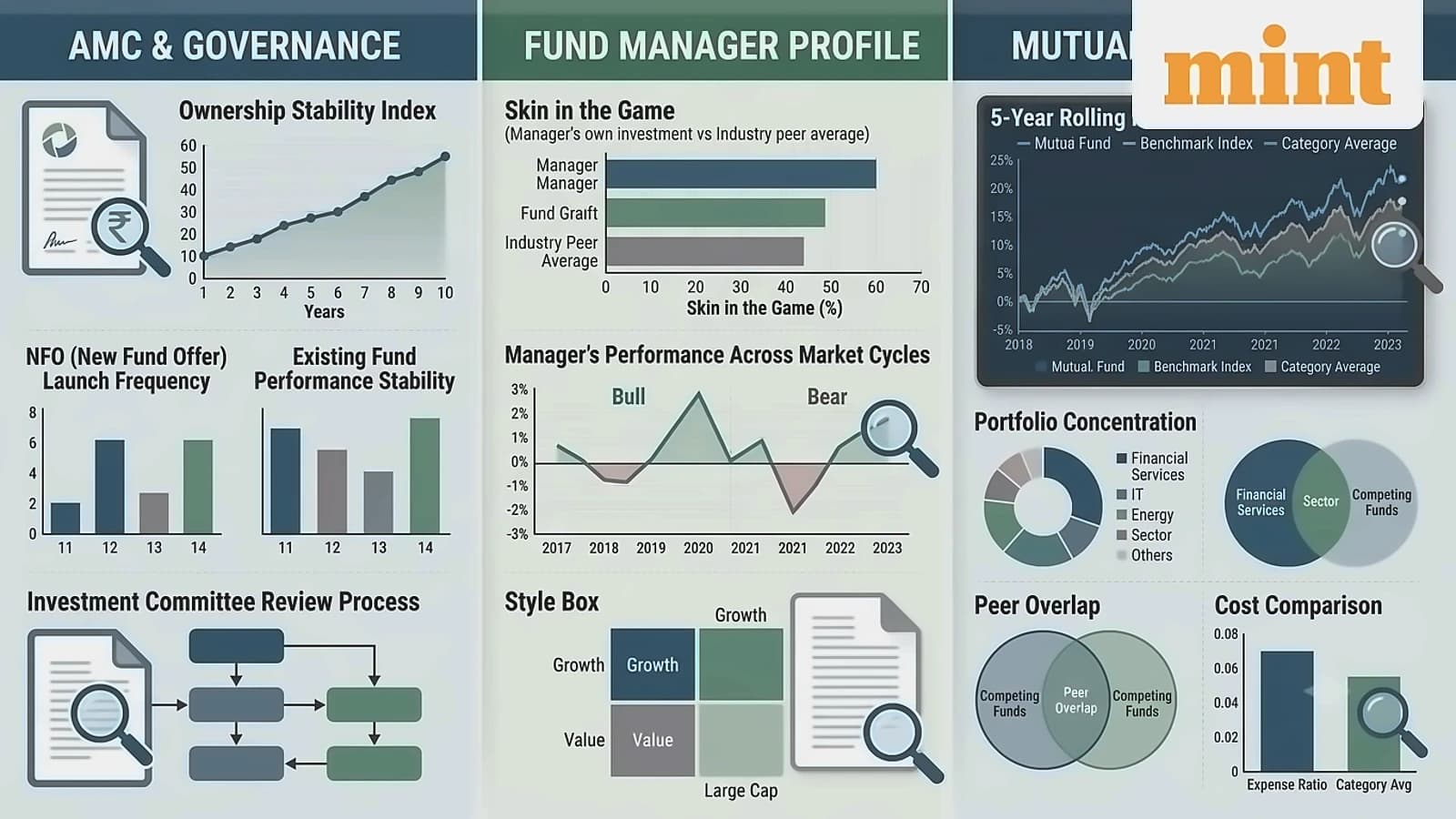
The report emphasizes that fund manager performance should not be viewed in isolation, requiring understanding of the manager's investment style and consistency across different market environments. Investors should assess whether the manager's approach remains consistent or drifts with current market trends. Additionally, the framework distinguishes between style beta versus skill, evaluating how much of the manager's past alpha came from being in a performing style versus actual stock-picking ability. Skin in the game is another crucial factor - checking whether the manager invests their own money in the funds they manage, demonstrating confidence in their investment philosophy.
For fund evaluation, the framework recommends rolling returns analysis - examining what percentage of rolling 3-year periods the fund has beaten its benchmark. According to the report, consistency matters more than any single number, making this metric particularly valuable for long-term investment decisions. Investors should also check the fund's top 10 holdings and sector concentration to understand portfolio dependence on specific stocks or sectors. Peer overlap analysis is crucial, comparing the fund with its 3 largest peers to identify high overlap that could indicate holding many of the same stocks as other category funds.
The report introduces the 'Substitution test' - comparing an active fund with the lowest-cost index fund in the same category to assess whether the active fund justifies its higher cost through differentiated performance. As reported by Mint, if the active fund cannot justify its higher cost through superior performance, investors may consider the lower-cost index option. This analysis framework provides a comprehensive approach for investors seeking to make informed mutual fund investment decisions based on more than just recent returns or ratings.