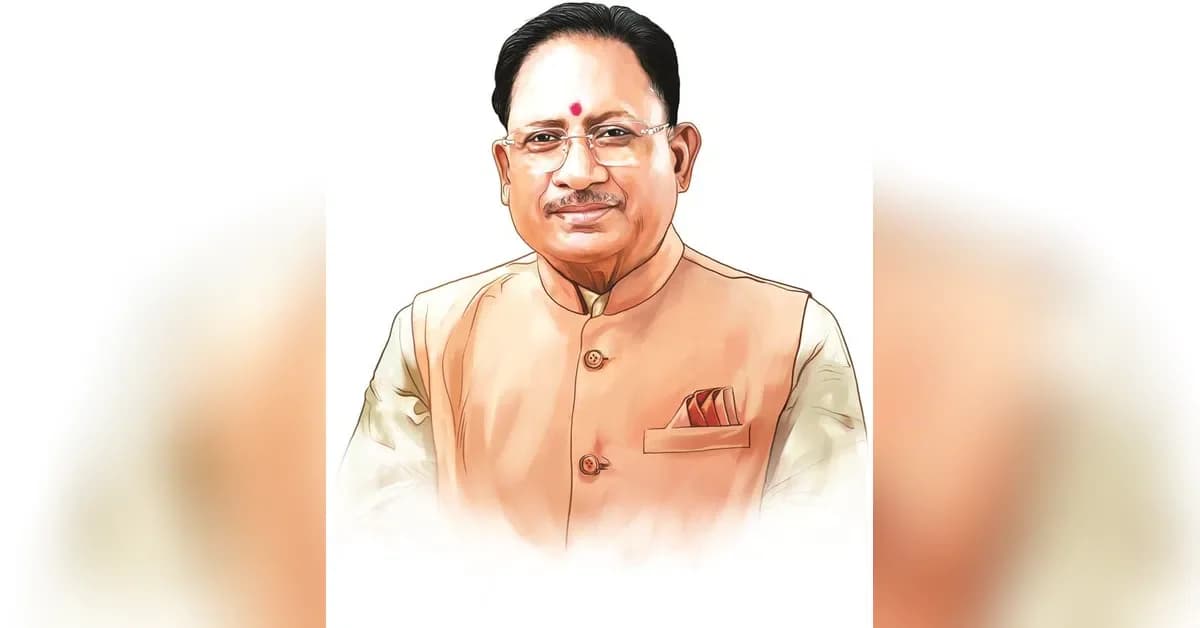
The Chhattisgarh Assembly on Thursday passed the Chhattisgarh Ease of Doing Business Bill, 2026, marking a major milestone in simplifying business regulations and promoting investment in the state. According to reports from The Times of India, the legislation was introduced under the leadership of Chief Minister Vishnu Deo Sai and is set to make Chhattisgarh the first state in the country to implement a risk-based and trust-based business approval system. The Bill seeks to streamline the process of establishing and operating businesses by reducing unnecessary compliance requirements and creating a faster, more transparent and investor-friendly regulatory framework, with a particular focus on supporting micro, small and medium enterprises (MSMEs). As Chief Minister Vishnu Deo Sai stated, "The Chhattisgarh Ease of Doing Business Act, 2026, marks a defining milestone in the state's journey toward creating a transparent, predictable, and highly entrepreneur-friendly economic environment." The legislation was passed with a partial amendment after discussion in the House, with Commerce and Industry Minister Lakhan Lal Dewangan introducing the Bill. The Bill, introduced by commerce and industry minister Lakhan Lal Dewangan, was passed after a discussion and a government amendment replacing the designation of the chief secretary as the "Convener" of the proposed high-level empowered committee with "chief executive officer."

Under the new framework, industries and commercial establishments will be categorised according to their size, investment and risk profile. As reported by The Times of India, low-risk businesses will receive faster approvals through self-certification, self-declaration or certification by authorised professionals such as licensed engineers and architects, while high-risk projects will continue to undergo technical scrutiny and physical inspections. The legislation introduces self-certification and certification by licensed engineers, architects and other authorised professionals for low-risk enterprises, reducing the need for frequent departmental inspections. The Bill also eliminates mandatory annual licence renewals and provides for risk-based approvals, replacing the gruelling process of renewing business permissions every single year with simpler, risk-based compliance tracking. The new Act dismantles the traditional culture of repetitive checking and introduces extensive compliance reliefs, ensuring that businesses are no longer treated with a one-size-fits-all approach. The government also proposes deemed approvals for eligible applications that remain pending beyond prescribed timelines, besides replacing repeated inspections and annual licence renewals with risk-based compliance mechanisms.
The new law brings 43 services offered by eight state departments under the risk-based approval system, according to reports from The Times of India. The Bill includes provisions to add more services in the future with the approval of the Executive Council. MSMEs can obtain water supply permissions through self-declaration and facilitate time-bound registration of societies and firms. Building approvals for eligible businesses can also be secured through self-certification or certification by authorised professionals, further reducing procedural delays. Applications that remain pending beyond the prescribed timeline will qualify for deemed approval through an auto-approval mechanism. For Micro, Small, and Medium Enterprises (MSMEs), everyday necessities are now simplified with water connections granted based on self-declaration, society or firm registrations following a strict time-bound process, and building plans approved instantly via professional certification. The legislation provides for simplified procedures for services such as registration of societies and firms, building approvals and certain water supply permissions for low-risk enterprises. The government said the reforms are intended to create a transparent, predictable and investment-friendly regulatory environment while retaining stringent scrutiny for projects posing higher environmental or safety risks.
To oversee implementation, the government has established a three-tier monitoring mechanism as reported by The Times of India. The structure includes committees headed by the Chief Secretary at the state level and District Collectors at the district level, functioning under the guidance of a council chaired by the Chief Minister. The Chhattisgarh government expects the reform to benefit more than 15 lakh MSMEs by reducing the time and cost involved in setting up and operating businesses while maintaining oversight of high-risk sectors. The government said the reforms are intended to create a transparent, predictable and investment-friendly regulatory environment while retaining stringent scrutiny for projects posing higher environmental or safety risks. The minister also announced that the government would conduct awareness programmes after the rules are notified to familiarise entrepreneurs and industry representatives with the new system. He clarified that additional services could be brought under the Act without fresh legislation, as the empowered committee chaired by the chief minister would be authorised to recommend changes.
The legislation received mixed reactions from political parties. While BJP MLAs such as ex minister Ajay Chandrakar supported the Bill describing it as a landmark reform, opposing it Congress MLA Daleshwar Sahu said the legislation should be introduced only after thorough deliberation and consultation. According to reports from The Times of India, senior BJP MLA and former minister Ajay Chandrakar described the legislation as a reform that would prepare Chhattisgarh for future economic challenges. He said rapid advances in artificial intelligence (AI) were likely to reduce employment opportunities in both government and private sectors, making investment-led industrialisation increasingly important for job creation. Calling the legislation a landmark reform, Chandrakar said it could become a case study in public administration for eliminating red tape through legislative intervention. He also suggested that the government organise a statewide orientation programme after framing the rules so that officials, legislators and entrepreneurs understood the new regulatory framework. Chandrakar further proposed replacing the term "convener" for the chief secretary with CEO arguing that the designation was administratively more appropriate. The government accepted the suggestion and amended the Bill accordingly. Opposing the legislation, Congress MLA Daleshwar Sahu alleged that it had been introduced without adequate consultation and questioned whether it would actually simplify approvals. He argued that the executive bodies proposed under the law had been given limited powers and described the Bill as impractical and unlikely to benefit entrepreneurs. Replying to the debate, Dewangan said the objective was to establish a comprehensive legal framework for ease-of-doing-business reforms instead of making fragmented departmental changes. He said the law would enable simultaneous reforms across departments, reduce delays and improve service delivery.