The Securities and Exchange Board of India (SEBI) is set to evaluate allowing NSE shares to trade on its own platform, raising critical concerns about liquidity and market integrity. A highly placed source confirmed that SEBI is yet to apply its mind to the proposal and will take a view after evaluating all aspects, including the implications for liquidity. The move, once approved, could allow the NSE to trade its shares on its own platform without listing there itself, with the listing needs to be done on other exchange. Market analysts feel that if PTT allowed, there could be possibility of more and more transaction could take place on NSE platform only means more liquidity there, while less on the exchange where it is formally listed. The exchange plans to apply under the 'Permitted to Trade' (PTT) category for its shares, as reported by The Hindu BusinessLine.
The Securities and Exchange Board of India's (SEBI) observations on the proposed National Stock Exchange IPO are awaiting completion of a share allocation process between State Bank of India (SBI) and SBI Capital Markets Ltd (SBICAPS), according to a highly placed source. The development follows a change in the selling shareholder structure for the NSE IPO, with SBICAPS joining SBI as a selling shareholder, splitting the shares that were earlier proposed to be sold by SBI. Under the revised structure, SBI will sell up to 15.97 million NSE shares, while SBICAPS will sell up to 8.78 million shares, with the overall size of the offer remaining unchanged. The share transfer process between the two SBI group entities may take some time, following which the revised shareholding structure will be reflected in NSE's draft red herring prospectus (DRHP). NSE has already updated its DRHP through an addendum to reflect the revised allocation, but the change needs to be completed and incorporated into the DRHP before the IPO application can be processed further by SEBI. When asked about delay in issuance of observation by SEBI on draft red herring prospectus (DRHP) by NSE, the source said that some changes are expected to be completed by one of the existing shareholders. "Once this change is added in DRHP, then it can be processed further," he added.
National Stock Exchange of India Ltd. is seeking approval from the Securities and Exchange Board of India (SEBI) to allow its shares to trade on its own platform after listing them on rival BSE Ltd., according to sources reported by CNBC TV18, NDTV Profit, and The Hindu BusinessLine. The exchange plans to apply under the 'Permitted to Trade' (PTT) category for its shares, as reported by NDTV Profit. Under this framework, NSE shares could trade on the exchange without being formally listed, with their compliance and disclosure obligations remaining unchanged. The PTT route allows securities to be traded on NSE as an additional trading platform while continuing to remain listed on their primary exchange, according to an NSE circular dated May 7, 2026. PTT is different from self-listing, as the Securities Contracts (Stock Exchanges and Clearing Corporations) Regulations, 2018 prohibit a stock exchange from listing on its own platform or on an exchange operated by its associates. Currently, 144 companies listed on the BSE are permitted to trade on the NSE, sources said, indicating the existing framework for such arrangements.
Abhinav Tiwari, research analyst at Bonanza, highlighted the key concern for BSE as the possibility of NSE shares being allowed to trade on NSE itself through the 'permitted to trade' route. "This could reduce the exclusive benefit BSE was expected to receive from NSE's IPO and potentially split trading volumes," he said, as reported by Moneycontrol. "At the same time, BSE is facing pressure from SEBI's CAS and higher STT. These measures have affected derivatives activity. Although BSE reported strong Q1FY27 results, the market is currently focusing more on volumes, regulatory risks and the NSE listing issue," Tiwari added. The move could eventually shift trading volumes and pave the way for the stock's inclusion in NSE's benchmark indexes, as reported by Bloomberg News. There is feeling that if the regulatory framework is amended to allow NSE shares to trade on its own platform, it could raise critical questions regarding market surveillance, conflicts of interest, price discovery and liquidity, as the NSE would effectively serve as both the issuer and the platform operator.
NSE expects to receive SEBI's approval for its draft red herring prospectus (DRHP) by the end of August, according to NDTV Profit, with the exchange targeting an IPO launch in the second half of September. The cross-platform trading strategy could give NSE shares access to liquidity on both exchanges while retaining BSE as the primary listing venue, adding another dimension to what is expected to be one of India's most closely watched IPOs. The arrangement could eventually shift trading volumes and facilitate the stock's inclusion in NSE's benchmark indexes, as reported by Bloomberg News. NSE's listing plans were first initiated in 2016 but were delayed amid regulatory scrutiny related to the co-location controversy. In June, NSE filed its DRHP following receipt of a no-objection certificate from the markets regulator earlier this year to proceed with the IPO. The NSE board subsequently approved the IPO proposal on February 6.
NSE is targeting a valuation of around ₹5.2 lakh crore-₹5.3 lakh crore, while the IPO could be priced in the range of ₹2,100-₹2,300 per share, according to sources reported by CNBC TV18. The proposed IPO comprises an offer for sale (OFS) of up to 148.9 million equity shares, representing around 6% of NSE's paid-up capital. Based on the exchange's unlisted market valuation of about ₹5 lakh crore, the issue size is estimated to be up to ₹30,000 crore. Since the issue is entirely an OFS, NSE itself will not receive any proceeds from the offering. Ten institutional shareholders are expected to sell shares in the IPO, including State Bank of India, Canada Pension Plan, Bank of Baroda, New India Assurance Company and United India Insurance Company. LIC is not selling any stake in the IPO, as reported by CNBC TV18. SBICAPS's inclusion is also significant given its role as one of the lead merchant bankers to the NSE IPO, with the firm now both part of the SBI group entities involved in the revised share allocation and among the bankers advising on the IPO.
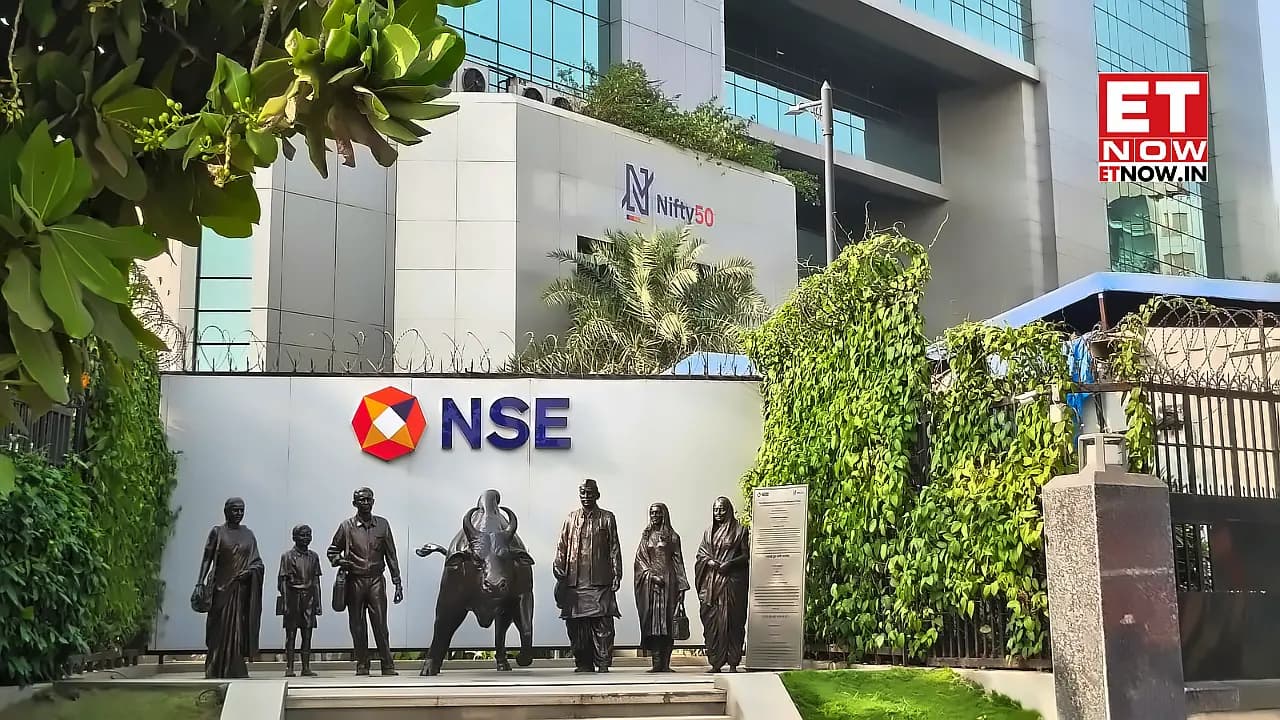
The 'permitted-to-trade' framework allows securities to trade on the NSE without being formally listed, with their compliance and disclosure obligations unchanged, according to NSE's website. NSE revised index eligibility rules in 2019 to allow such securities to qualify for inclusion in the Nifty indexes, India's most broadly followed gauges. Currently, about 250 companies that aren't listed on NSE trade on its platform under the permitted-to-trade category, including Elantas Beck India Ltd., Goodyear India Ltd. and Novartis India Ltd., as reported by The Hindu BusinessLine. Previously, only shares formally listed and traded on the exchange were eligible for index inclusion. Around 260 companies have been listed in the PTT framework over the last one year, according to the latest NSE circular, indicating growing adoption of this trading mechanism. Under the existing system, being available for trading on NSE does not necessarily mean that a company is listed on NSE, as trading on an exchange does not mean the company is listed there, with companies still required to meet disclosure and compliance rules of their primary listing exchange.