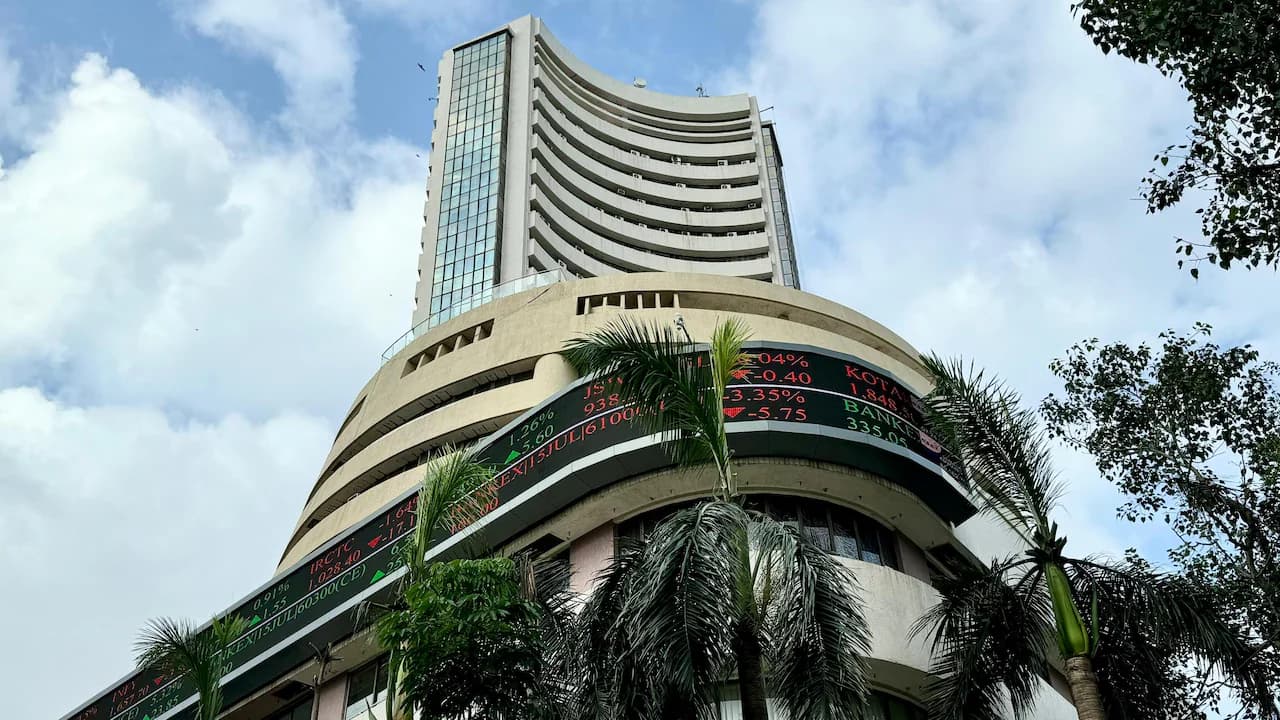
India's stock market duopoly is witnessing a strategic showdown. The National Stock Exchange of India (NSE) is pushing to trade its own shares on its platform through the 'permitted to trade' (PTT) category, even as it prepares to list formally on the Bombay Stock Exchange (BSE). This isn't just about one exchange going public—it's about who controls the rules of the game.
Current SEBI regulations prohibit stock exchanges from self-listing, a rule designed to prevent conflicts of interest where an exchange would regulate itself as a listed entity. NSE must list on BSE or Metropolitan Stock Exchange of India under these rules. But NSE has been lobbying hard for self-listing, arguing that many global exchanges like the Australian Stock Exchange, Hong Kong Stock Exchange, and London Stock Exchange have successfully implemented self-listing through structural separation of regulatory and commercial functions.
The regulatory uncertainty creates a tricky situation for BSE. If SEBI eventually approves NSE's self-trading proposal, BSE's temporary advantage as the mandatory listing venue for exchange IPOs could evaporate.
But this advantage depends entirely on regulatory restrictions remaining in place.
The Permitted to Trade Pathway
NSE has been laying the groundwork for this strategic move since 2019, when it revised its index eligibility rules to include PTT securities. This was a crucial regulatory change that created a potential pathway for NSE shares to eventually enter Nifty indexes without formal self-listing.
Under the PTT framework, securities can trade on NSE without being formally listed on the exchange. Companies admitted under PTT remain listed only on their primary exchange, require no separate listing agreement with NSE, and pay no additional listing fees. Yet they enjoy full surveillance and regulatory monitoring. Currently, about 250 companies trade on NSE under this category, including names like Elantas Beck India, Goodyear India, and Novartis India.
For NSE shares to enter the Nifty 50, they would need to meet five strict criteria: F&O segment eligibility, impact cost of ≤0.50% for 90% of observations over six months, 100% trading frequency, free-float market cap of at least 1.5× the smallest existing constituent, and a minimum six-month listing history. The PTT pathway allows NSE to build this trading history while maintaining BSE as its primary listing venue.
The liquidity premium potential is substantial. Nifty 50 tracks approximately ₹4.9 trillion in passive funds and ETFs. Index inclusion triggers mechanical buying of ₹800–1,000 crore in days. Most price appreciation occurs before formal inclusion as markets anticipate the event. For NSE, this could mean significant demand enhancement for its IPO and sustained support from passive fund rebalancing post-listing.
The IPO Pricing and Valuation Game
The dual-exchange arrangement—formal listing on BSE, trading on NSE under PTT—creates unique pricing dynamics that influence valuation expectations.
The structure provides access to both BSE's established investor base and NSE's superior liquidity.
This market dominance, combined with NSE's technology infrastructure featuring nanosecond response times and high-speed trading capabilities, justifies a significant liquidity premium—potentially 15–25% above single-exchange listing scenarios.
During IPO roadshows across the US, UK, Singapore, Hong Kong, the Middle East, and India, NSE discussed its self-trading proposal with global investors. This discussion indicates strong investor preference for direct access to NSE's superior trading infrastructure and recognition of the long-term value creation potential from index inclusion and passive fund flows. Global institutional investors particularly value execution quality, market access, and liquidity optimization—all areas where NSE holds clear advantages over BSE.
The Strategic Timeline
NSE's IPO timeline interacts complexly with the regulatory approval process for self-listing. SEBI granted a No Objection Certificate on January 30, 2026, establishing a one-year listing window valid until January 30, 2027.
The target IPO launch is mid-September 2026, with listing around September 25, 2026.
However, self-listing approval is a separate regulatory process requiring distinct SEBI approval beyond the IPO. This creates a strategic consideration: NSE is prioritizing IPO completion before pursuing self-listing approval, allowing for regulatory certainty while maintaining strategic flexibility for future platform enhancement. This phased approach balances immediate value realization through IPO completion with long-term strategic positioning through self-trading capabilities.
The sequential processing makes sense from a risk management perspective. Separating the processes reduces complexity and approval timeline risk. It also provides a market testing opportunity—the IPO performance will provide data for the self-listing business case. NSE can then adapt its approach based on market reception and regulatory environment developments.
The Competitive Moat Challenge
NSE's potential to trade its own shares strikes at the core of BSE's competitive moat as the primary listing venue for exchange IPOs. BSE currently leads with 5,144 listed companies compared to NSE's 3,337, and maintains a marginal lead in total market capitalization (₹430 lakh crore vs ₹428 lakh crore). But these advantages face significant disruption from NSE's dual-platform strategy.
NSE's ability to control both the listing venue (through BSE) and the trading platform for its own shares creates unprecedented competitive advantages. The vertical integration enables revenue capture optimization—NSE generates 75% of its revenue from transaction charges compared to BSE's 59% from securities services. With 90%+ market share in cash markets, self-trading could capture substantial transaction fee revenue that would otherwise flow to BSE.
The market quality advantages are equally significant. NSE's automated trading system provides faster execution and reduced impact costs. Its electronic order-driven system improves transparency, and superior surveillance procedures reduce market manipulation risk. These quality differentiators become even more powerful when NSE can direct its own share trading to its superior platform.
The Precedent-Setting Moment
This isn't just about NSE and BSE—it's about setting precedents for India's entire exchange infrastructure. The self-listing proposal could fundamentally reshape future exchange listings and competitive dynamics. If SEBI approves NSE's self-trading framework, it could trigger regulatory framework evolution, market structure transformation, and long-term competitive implications.
BSE's likely strategic responses would include accelerated technology investment to compete with NSE's capabilities, further reduction in transaction charges to maintain volume share, emphasis on niche markets like the SME segment where BSE listed 146 SME IPOs versus NSE's 111, and regulatory advocacy to maintain cross-listing requirements.
NSE's opportunities include market consolidation leveraging its superior platform, product innovation developing new financial products and trading mechanisms, international expansion through NSE IX in GIFT City, and technology licensing to monetize platform capabilities.
The outcome will depend on SEBI's regulatory approach, market acceptance of the dual-platform structure, and both exchanges' ability to innovate and adapt. The successful execution of this strategy could establish NSE as both a market leader in Indian capital markets and an innovator in global exchange self-listing practices, creating significant value for shareholders while advancing the development of India's market infrastructure.
For investors and market participants, the key question isn't just whether NSE will list—but at what valuation and under what structural arrangements. The September IPO will be closely watched not just for its size, but for the strategic signals it sends about the future evolution of India's exchange duopoly.