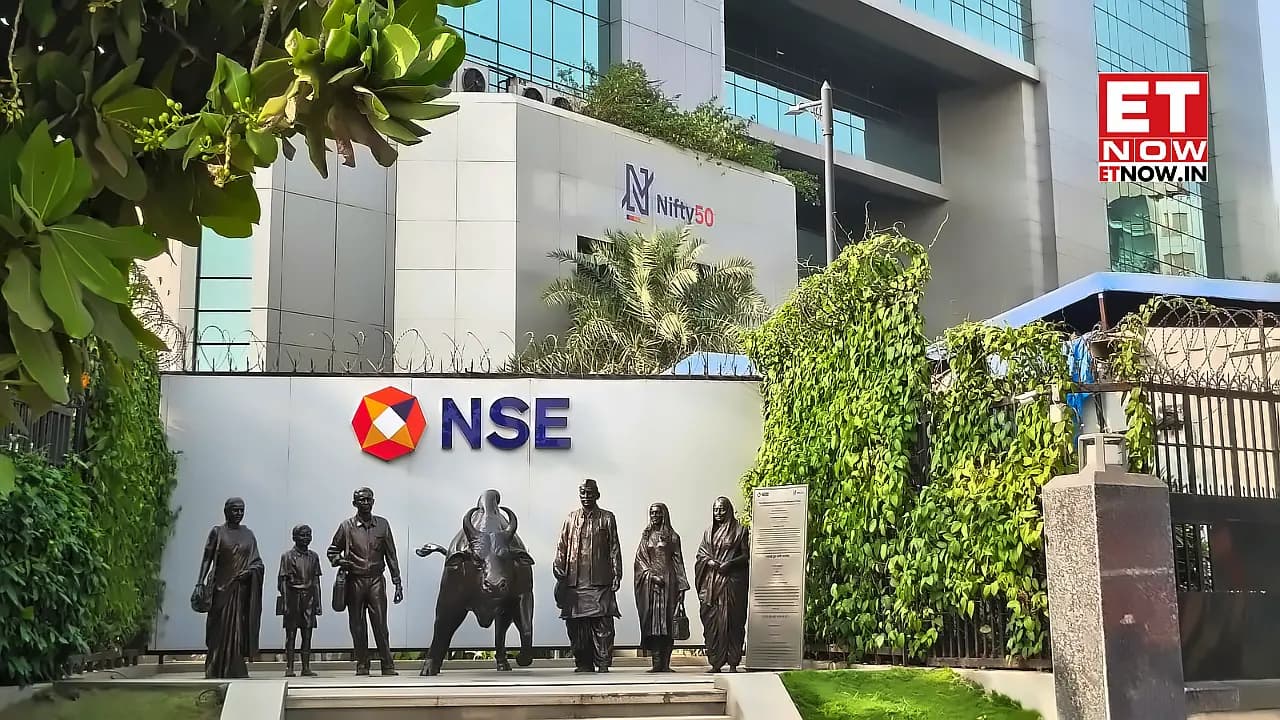
SEBI Chairman Tuhin Kanta Pandey has confirmed that NSE's IPO approval is 'very close' to completion, with the regulator very close to approving the National Stock Exchange's draft red herring prospectus (DRHP) for its initial public offering. According to The Economic Times, Pandey stated 'We are close' when asked about Sebi's approval for the NSE IPO on Thursday, speaking on the sidelines of an event in Mumbai. The IPO is expected to be the largest in the country to date, with an estimated IPO size of close to ₹30,000 crore based on a 6% stake sale involving 148.9 million shares. This development comes as NSE faces significant trading volume challenges, with options turnover falling to its lowest in a year on monthly expiry day, as reported by The Hindu BusinessLine. Investment bankers suggest the IPO may come by mid-September, with the overall offer size remaining unchanged despite some stake allocation changes.
The timeline for public comments on the proposed IPO was extended by 21 days to August 31, 2026, after SBI Capital Markets (SBICAPS) was added as a selling shareholder. The change split State Bank of India's earlier proposed sale of 24.75 million NSE shares between SBI and SBICAPS, without changing the overall issue size. Under the revised structure, SBICAPS will sell up to 8.78 million NSE shares, while SBI's proposed sale has been reduced to 15.97 million shares. SBICAPS is also one of the book-running lead managers to the IPO. The exchange filed its 614-page draft documents with SEBI in June for an offering that will consist entirely of secondary share sales, with NSE's valuation in the unlisted market around ₹5 lakh crore, potentially catapulting it to India's top-ten market capitalization leader-board on listing. The original selling shareholders included SBI, MS Strategic (Mauritius), Canada Pension Plan Investment Board, Aranda Investments (Mauritius), Bank of Baroda, Stock Holding Corporation of India, General Insurance Corporation of India, The New India Assurance Company, National Insurance Company and United India Insurance Company.

NSE completed its settlement payment to SEBI on July 31, marking a significant milestone in the exchange's path to listing. The total settlement amount was ₹1,491.21 crore, comprising ₹1,223.56 crore related to the co-location matter and ₹267.65 crore related to the dark-fibre matter. Following the settlement, NSE and SEBI are also in the process of withdrawing the related case from the Supreme Court. SEBI informed the NSE that it would settle all pending matters, including the co-location and dark fibre cases that have dogged the exchange for years, for ₹1,491.21 crore. The market regulator last month in-principle agreed to settle the applications filed by NSE in co-location and dark fibre matters for ₹1,491.21 crore, making it the largest such settlement by any entity to date. The exchange filed its draft red herring prospectus (DRHP) in June after receiving SEBI's no-objection certificate (NOC) to proceed with the IPO. NSE's listing plans had remained stalled since 2016 amid regulatory concerns, particularly those related to the co-location controversy. The IPO plan gained momentum after SEBI granted NSE a No Objection Certificate (NOC) in January 2026, removing a major regulatory hurdle to its long-delayed listing.
SEBI Chairman Tuhin Kanta Pandey revealed that the regulator will assess the National Stock Exchange's proposal to allow its shares to trade on its own platform if and when such a proposal is received. As reported by The Economic Times, Pandey stated 'We have not thought about it. It is something we need to assess properly. It may take time' regarding the possibility of permitting NSE shares to trade on NSE through the Permitted-to-Trade (PTT) mechanism. Under current regulations, stock exchanges cannot list themselves on their own platforms, meaning NSE's shares are expected to list on BSE. However, market participants have pointed to the PTT mechanism as a possible route for NSE shares to also trade on NSE after the listing, with Bloomberg reporting on 20 August that NSE was planning to allow trading its shares on its own platform by bringing them under the permitted to trade category. Legal experts confirm that while companies can decide which exchange to list on, approval is required for market infrastructure institutions such as stock exchanges. Pandey added that 'We cannot discuss about it at the moment as we have to apply our minds to it', indicating the regulator's cautious approach to this unprecedented proposal.
SEBI Chairman Tuhin Kanta Pandey clarified that the regulator is not considering any changes to the recently introduced closing auction session (CAS), expressing confidence that participation will improve as brokers update their trading interfaces and investors become more familiar with the mechanism. According to The Economic Times, Pandey stated 'We are not looking at any changes right now. And the system is running as it is. Participation will increase. And brokers will enable it in their apps. And people will learn and will come to this market'. CAS is a separate end-of-day auction used to determine the closing price of eligible stocks, with buy and sell orders collected during the auction and matched at an equilibrium price that maximises the number of shares traded. The mechanism has attracted criticism from brokers over low liquidity and price uncertainty, but SEBI introduced CAS for stocks in the equity cash segment that have derivative contracts with the aim of improving price discovery and addressing shortcomings associated with the earlier volume-weighted average price (VWAP) method. On August 19, Pandey had warned that any attempt to 'defame' the newly introduced closing auction session through manipulation will be dealt with sternly by the capital markets regulator, with SEBI passing orders against two entities for manipulation within hours of the warning.