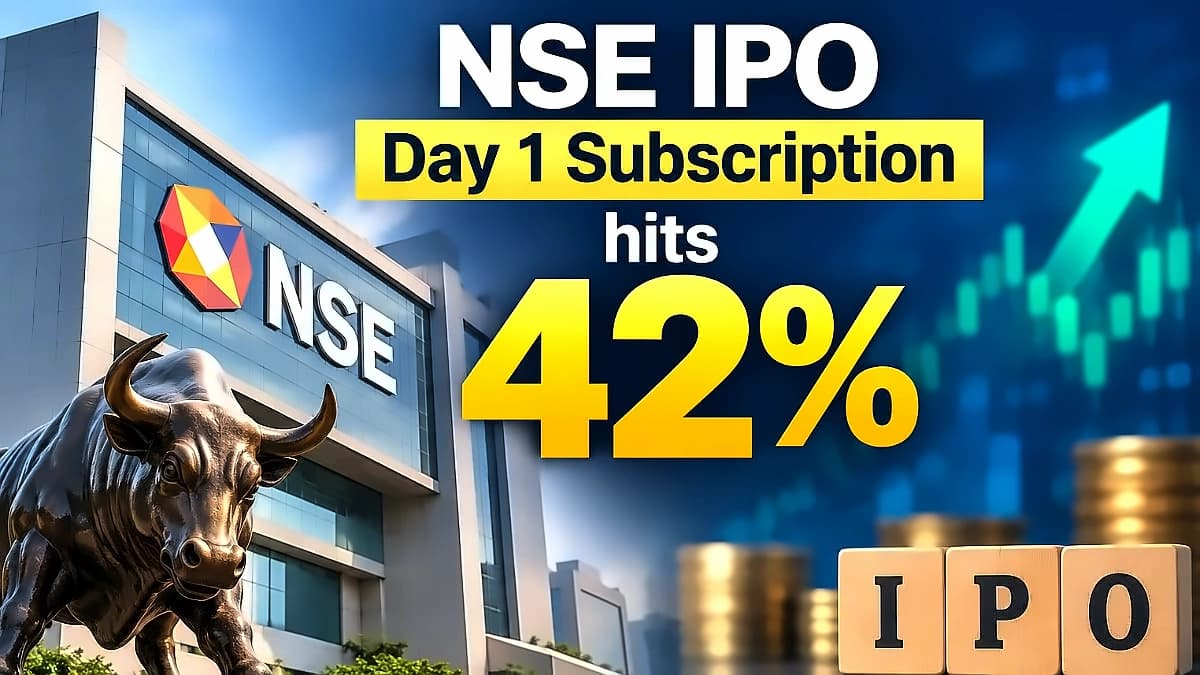
The NSE IPO closed for subscription on September 21 with exceptional investor response, achieving oversubscription of 5.71 times according to latest BSE data. The offer received bids for 50.58 crore shares worth ₹22,562 crore against 8.86 crore shares worth ₹22,568.94 crore on offer, with the retail portion subscribed 1.39 times on the final day. Within the institutional categories, Qualified Institutional Buyers (QIBs) led demand with 12.68 times subscription, while Non-Institutional Investors (NIIs) subscribed 6.55 times. The issue opened on September 17 and closed on September 21, with the final day showing strong institutional participation across all segments. As per The Hindu BusinessLine, the shares are set to debut on BSE on September 24, marking the end of a lengthy journey that included prior regulatory hurdles.
The NSE IPO has delivered India's largest-ever retail allocation in absolute value, with retail investors set to receive shares worth over ₹7,800 crore. According to data on the exchange website, Retail Individual Investors (RIIs) received bids worth nearly ₹11,000 crore, or 1.4 times the ₹7,800-crore portion reserved for the category. Retail investors bid for as many as 6.13 crore shares compared with the 4.41 crore shares reserved for them. However, historical data suggests this represents the third-highest retail bid in India's equity market history, with the relatively lower participation attributed to NSE's unusual ownership structure. Even before the IPO, the exchange had nearly 2.3 lakh public shareholders who collectively owned 67.5% of the company, with no identifiable promoter. This compares with Reliance Power's IPO in January 2008, which received bids worth nearly ₹42,000 crore against a retail allocation of ₹3,078 crore, translating into an oversubscription of 13.6 times.
The NSE IPO's final size of ₹22,562 crore represents a significant reduction from the initially projected ₹30,000 crore, making it India's second-largest IPO rather than the largest. As per LiveMint, NSE MD and CEO Ashishkumar Chauhan explained that merchant bankers advised reducing the price, which led to some investors also reducing their offers. The price band was initially set at 6.2%, but was eventually reduced to 5.11% due to these price adjustments. Chauhan noted that selling shareholders were reluctant to sell at lower prices, as the stock exchange is considered central to India's financial ecosystem. The company's highly profitable nature, with dividend distributions of ₹8,000 crore annually, meant it didn't require additional funds, making the IPO primarily a formality for regulatory compliance.
The NSE IPO represents the fourth mega IPO to alter its original size since FY05, joining an exclusive club of major offerings that adjusted their scale. According to Business Standard, the ₹22,562 crore IPO is the largest among the four mega issues that changed their original size, with the number of shares offered cut by 15.09% from the planned 148.91 million to 126.44 million. The government had previously cut LIC's issue size by 30% in FY23, while Reliance Power slashed its by 80% in FY08. In contrast, ICICI Prudential Asset Management took the opposite approach in FY26, increasing the number of shares offered by 176.8%. Of these three IPOs, only ICICI Prudential Asset Management's shares closed above the issue price on the NSE on Wednesday, highlighting the challenges of managing large-scale public offerings.
The NSE IPO demonstrated robust institutional appetite, with Life Insurance Corp. of India Ltd. emerging as the largest bidder with bids worth about ₹4,500 crore ($470 million) according to sources familiar with the matter. ICICI Prudential Asset Management Co. and Quant Mutual Fund submitted bids of about ₹2,000 crore each, while Norges Bank Investment Management and Mirae Asset Mutual Fund sought roughly ₹1,000 crore each. The bidding pattern underscores strong demand from long-term institutional investors, with Qualified Institutional Buyers (QIBs) bidding for about 12.7 times the reserved portion, while retail investors showed more cautious participation. Goldman Sachs Asset Management, HSBC, Fidelity, Singapore sovereign wealth fund GIC, Abu Dhabi Investment Authority and Eastspring were among major investors in the anchor book, with 37.79 million shares allocated at ₹1,785 per share, raising ₹6,746 crore. The offering was entirely a sale by existing shareholders, meaning NSE itself received no proceeds.
The NSE IPO paid ₹186 crore to 20 advisory banks for its services, representing 0.82% of the total issue size. According to exchange filings, this fee structure remains well below India's market average, despite the IPO drawing strong institutional demand with a 5.7x overall subscription. The total offer-related expenses amounted to ₹392.12 crore, or 1.74% of the ₹22,561.5 crore offer for sale. Banker fees accounted for 47.49% of total expenses, while advertising and marketing expenses were pegged at ₹49.69 crore, or 12.67% of estimated expenses. The 20 merchant bankers included Kotak Mahindra Capital, JM Financial, Morgan Stanley India, Citigroup Global Markets, HSBC Securities, J P Morgan India, ICICI Securities, HDFC Bank, Axis Capital and Motilal Oswal Investment Advisors. The relatively modest fee structure reflects the competitive nature of India's IPO advisory market, with fees on other large listings varying significantly - Hyundai Motor India paid about ₹493 crore to bankers, while Paytm parent One97 Communications and LG Electronics paid ₹323 crore and ₹226 crore respectively.