NSE shares gained over 4.54% on Thursday (September 24) after making a historic debut on BSE, with the stock trading at ₹1,866.05 at 10:15 am, up from its issue price of ₹1,785. The stock opened at ₹1,800 on BSE, marking a listing premium of less than 1% over the IPO price and gained momentum to reach ₹1,866.05, reflecting a 4.54% gain over its issue price. At this level, the National Stock Exchange commanded a market capitalisation of around ₹4.63 lakh crore, making it the ninth-largest listed company in India's stock market. This represents a significant improvement from the near-flat debut when the stock listed at ₹1,800 on BSE, showing strong investor confidence in the exchange's long-term prospects. With a lot size comprising eight equity shares, investors who received the NSE IPO allotment earned a premium of ₹120 per lot, increasing the overall initial investment from ₹14,280 to ₹14,400 per lot.
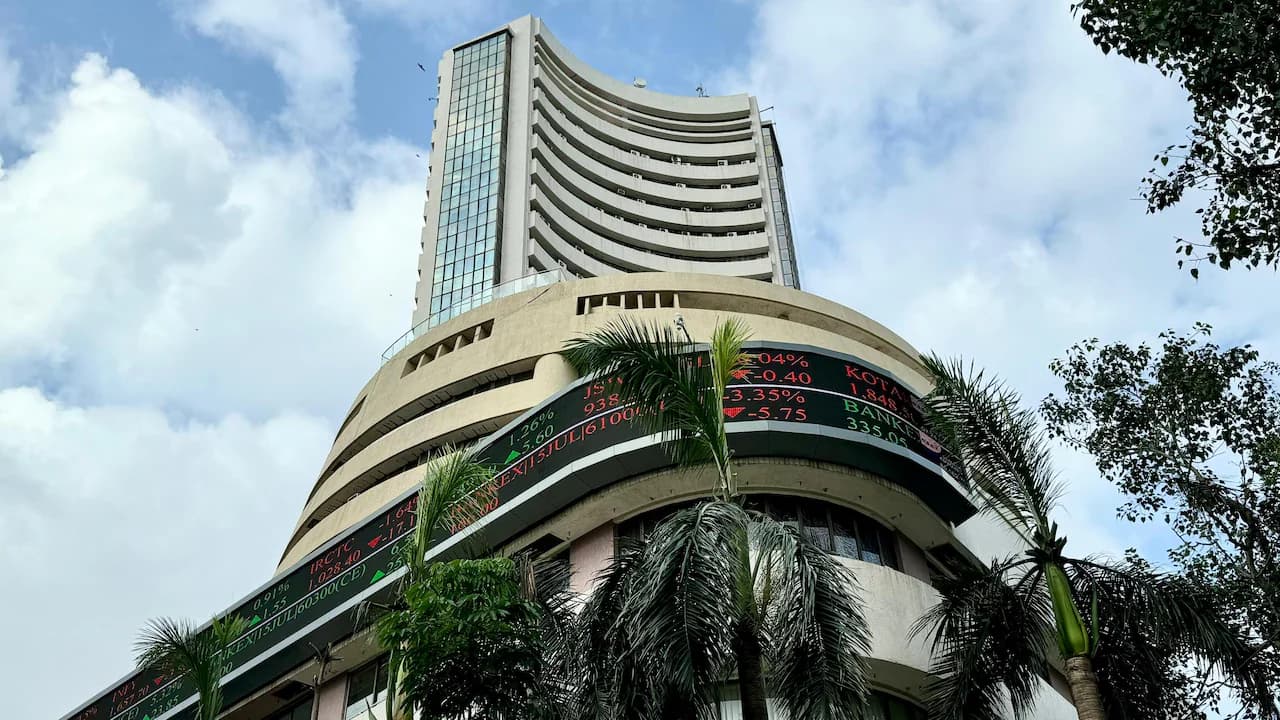
Indian equity markets faced pressure from multiple headwinds including US-Iran tensions, elevated crude oil prices, FPI selling and rupee weakness. FPIs have pulled out around ₹14,116 crore in the first half of September, adding to market pressure. Higher crude prices raise India's import bill and inflation concerns, while a weaker rupee increases input costs. Despite these challenges, Indian broad-based indices closed higher in the closing session, with Nifty 50 at 23,431.35 points (+0.44%) and Sensex at 74,794.61 points (+0.36%). The Nifty Midcap 150 gained 0.55% and Nifty Smallcap 100 rose 0.87%, indicating resilience across market segments.
NSE Managing Director and CEO Ashishkumar Chauhan described the listing as a significant milestone for the institution and India's capital markets. Speaking at the listing ceremony, Chauhan said there is nothing else that represents the aspirations of India's future than NSE, emphasizing that what is good for India is good for NSE. He highlighted that organisations such as NSE are created only once in a generation and stressed the exchange's role in transforming the country's capital markets. Reflecting on his career, Chauhan said after 35 years in the industry, his role at NSE was the 'biggest honour and privilege' of his life and thanked SEBI, the government and other stakeholders for supporting the exchange's listing. Srinivas Injeti, Chairperson of NSE, said the exchange's public listing marked a new chapter in its journey, noting that NSE does not just belong to its employees and shareholders but to the entire country. He emphasized that the market cap is not important, the inherent value is more important, and highlighted that the addition of GIFT IFSC would help further globalise the exchange.
The NSE IPO raised ₹22,562 crore through an Offer for Sale of 12.64 crore equity shares, with the issue priced at ₹1,785 per share at the upper end of the ₹1,700-₹1,785 price band. The IPO received bids for around 50.58 crore shares against 8.86 crore shares on offer, translating into an overall subscription of 5.71 times. Qualified Institutional Buyers (QIBs) generated the strongest response at 12.68 times subscription, while Non-Institutional Investors were subscribed 6.55 times and the retail portion received 1.39 times subscription. The issue generated demand of nearly ₹90,300 crore, with the grey market premium indicating strong investor interest ahead of the listing. Since the issue consisted entirely of shares sold by existing shareholders, NSE itself will not receive the IPO proceeds, with the exchange maintaining its dominant market position.
NSE reported consolidated total income of ₹18,713 crore in FY26, while profit after tax stood at ₹10,302 crore. The board recommended a dividend of ₹35 per share for FY26, subject to shareholder approval. However, FY26 earnings were lower than the previous year, with revenue from operations declining 3.15% year-on-year to ₹16,601.31 crore and profit after tax falling 15.47% from ₹12,187.69 crore in FY25. The decline came as the exchange's derivatives business faced changes in trading patterns and tighter regulatory conditions. Options remained a major contributor to NSE's revenue, making trading volumes and regulatory changes important factors for future financial performance. Despite these challenges, NSE maintains its dominant position in Indian markets with around 93% share of the cash equity market and nearly 75% share of the options market. The exchange's investor base has expanded significantly, with unique investors reaching 129.09 million by March 2026.