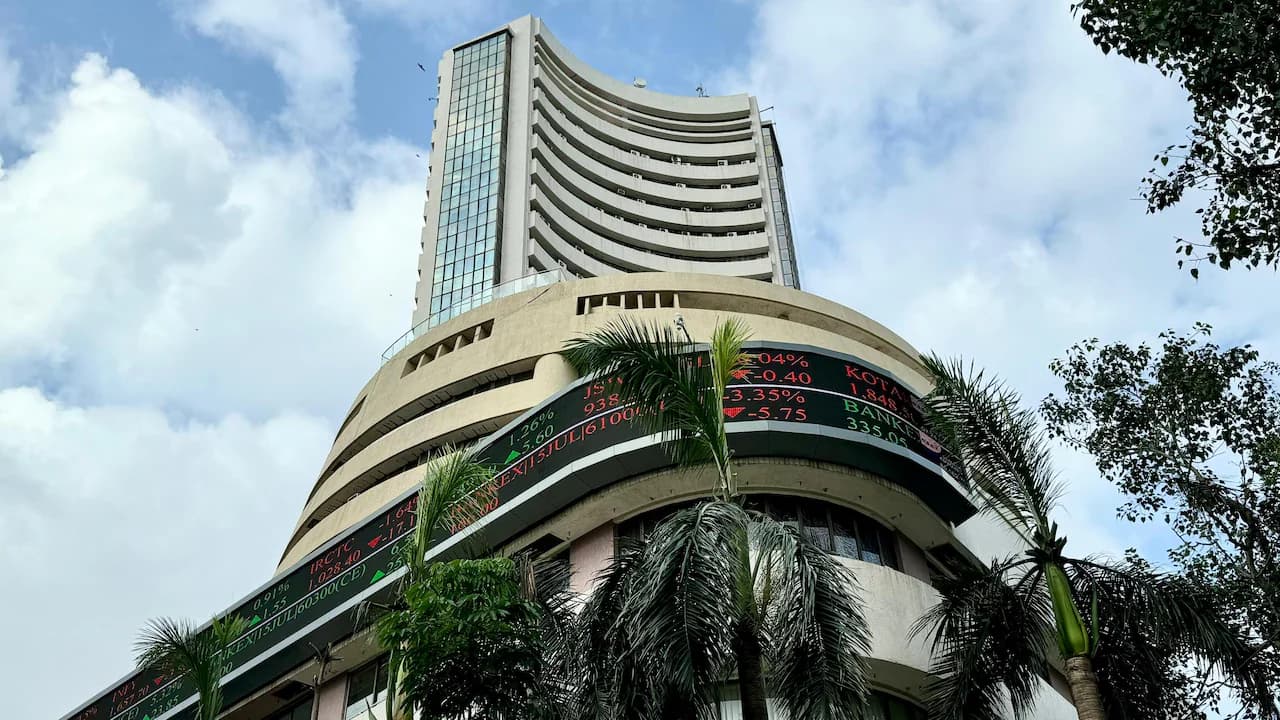
Brokerage firm Macquarie has initiated coverage on five capital market names on Thursday, September 24, with a 'outperform' or 'buy' equivalent recommendation on four of them. According to reports from CNBC TV18, ET Now, and The Financial Express, the five companies include the National Stock Exchange (NSE), Bombay Stock Exchange (BSE), MCX, Billionbrains Garage Ventures (parent company of trading platform Groww), and Angel One. Among these, Groww has the highest upside potential at 37%, while the rest range from 17% to 24%. Macquarie has provided specific price targets for 2026 with NSE at ₹1,965, Groww at ₹260, MCX at ₹3,820, and Angel One at ₹285. The brokerage's latest report, titled 'India Capital Markets: A Powerful $500bn Flywheel', positions these recommendations within India's expanding capital market opportunity through FY30.

According to Macquarie's September 24 report, India's capital markets could be entering another multi-year growth phase as household savings move from cash and deposits into financial assets. The brokerage expects India's investment, wealth and exchange revenue pool to expand at around 16% annually through FY30, creating a larger opportunity for digital brokers and market infrastructure companies. As reported by The Financial Express, nearly 50% of India's financial household savings remain in cash and deposits, with this pool expected to increasingly shift towards market-linked products. Macquarie's central thesis is that India's capital-market growth is moving beyond the initial digital-access phase, driven by three mutually reinforcing factors: financialisation, equitisation and productisation. The brokerage expects India's investment and wealth revenue pool to increase from ₹1.2 lakh crore in FY26 to around ₹2.2 lakh crore by FY30, with retail broking expected to grow at around 17%.
Macquarie's 'outperform' rating on BSE comes with a price target of ₹4,000, indicating an upside potential of 24% from current levels. According to the report, calling it 'The Challenger', Macquarie said that its pivot to index options has made BSE a credible competitor to the NSE. The platform expansion and market share gains create revenue and margin optionality, thereby supporting strong cash generation. MCX received the 'Phoenix' moniker as it recovered from a 'near-death' situation and leveraged its first-mover advantage to dominate commodity trading. Macquarie has an 'outperform' rating on MCX with a price target of ₹3,820 after its recovery from near-death conditions. The brokerage expects MCX to benefit from its near-monopoly position in commodity derivatives and the relatively low penetration of commodity investing in India, forecasting a 19% revenue CAGR for MCX between FY26 and FY30. Macquarie expects MCX's EBITDA margin to remain around 71.5% through FY30, while return on equity is estimated at 47% in FY27.
Calling Groww a 'Disruptor', Macquarie has an 'outperform' rating on the platform with a price target of ₹260, which implies an upside potential of 37%, the highest among the five stocks. As reported by CNBC TV18 and The Financial Express, Macquarie said that Groww's platform-based approach creates flywheel benefits, driving market share gains, higher margins and significant cash generation. The brokerage expects Groww's revenue to grow at a 25% compound annual growth rate between FY26 and FY30, helped by expansion across equities, commodities, margin trading and lending. Macquarie expects Groww's EBITDA margin to rise from 59.1% in FY26 to 69.8% by FY30, while return on equity is projected at around 25% in FY27. The brokerage's stock-picking framework gives Groww the highest score among the five companies at 24, with strong scores for share gains, market position, platform diversification and margin expansion potential. Macquarie estimates Groww's free cash flow to rise sharply as the business scales, with its stock-picking framework giving it the highest score among the five companies.
The National Stock Exchange received its first bullish recommendation on the day of its listing with Macquarie's 'outperform' rating coming with a price target of ₹1,965, which implies an upside potential of 10% from its issue price of ₹1,785. As reported by CNBC TV18 and The Financial Express, Macquarie called NSE 'The Dominator' due to its leading market share, comprehensive suite of services, technology infrastructure and deep liquidity. The brokerage noted that entrenched network effects, industry-leading profitability and cash underpin its positive outlook on the exchange. Macquarie projected 12% annualised revenue growth for NSE over FY26-30, driven by non-transaction revenues and new products, partly offset by modest share losses in cash equities and F&O. The brokerage expects NSE to maintain resilient margins in the mid-77% range through FY30, with return on equity estimated at 35% in FY27. However, Macquarie flagged near-term pressure from the recently implemented Closing Auction System (CAS), which it believes is weighing on trading activity as investors adapt to the new framework.
The only stock among the five where Macquarie does not have a bullish stance is Angel One. According to the report, it initiated coverage on the stock with a 'neutral' rating and a price target of ₹285, implying a negative 3% potential return from current market levels of ₹295. Calling Angel One a 'Transformer' as it transitions from a 'bricks & mortar' broker to a 'bricks and clicks' broker, Macquarie said that it sees several challenges for the stock due to increased competition, high earnings sensitivity to reduced volumes and a higher proportion of float income. Macquarie expects Angel One's client base to grow at a 9% compound annual growth rate between FY26 and FY30, well below its estimate of 17%-18% industry growth. The transaction business accounted for 60% of Angel One's FY26 revenue, and Macquarie expects continued losses in this business as market share comes under pressure. The brokerage's sensitivity analysis highlights the impact of regulatory-driven declines, with under a hypothetical 20% decline in F&O volumes, Angel One's revenue would fall 10%, while EBITDA and profit after tax would decline 29% and 31%, respectively.