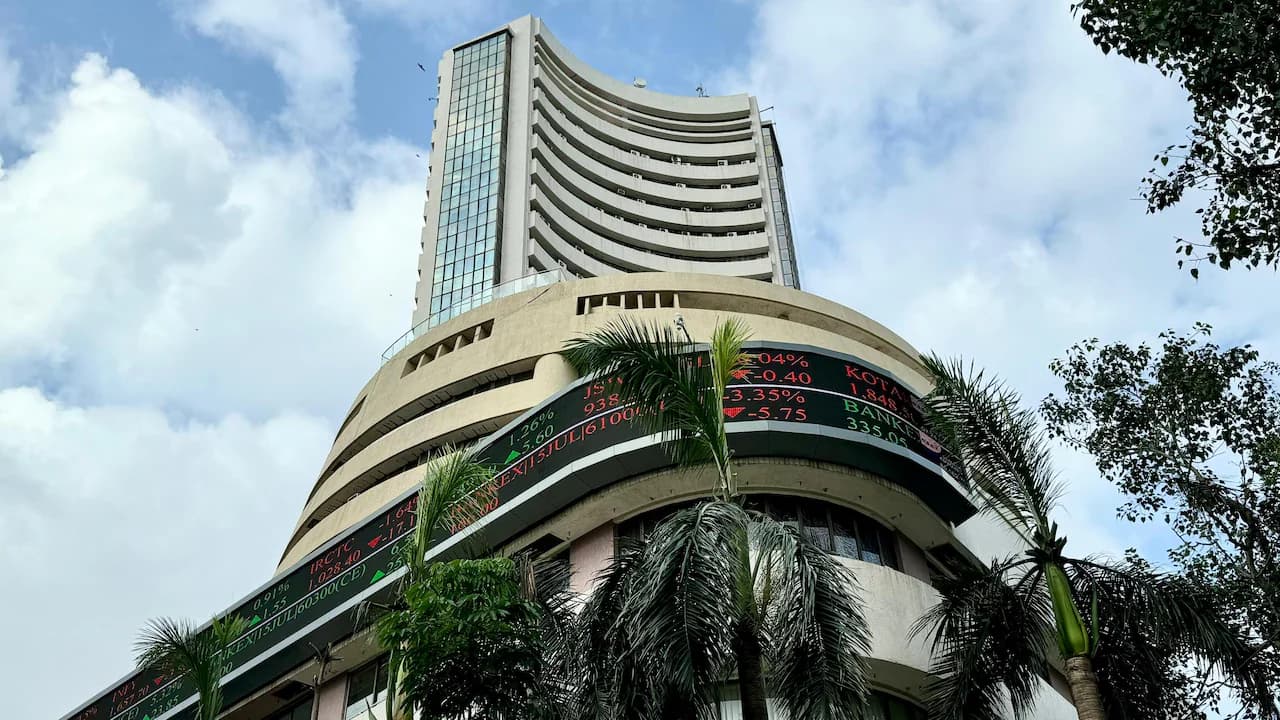
The National Stock Exchange (NSE) IPO has attracted robust institutional participation with over 189 investors participating in the anchor book, as reported by Business Standard. The exchange allocated 37.79 million shares worth ₹6,746.18 crore at ₹1,785 per share, with major investors including Life Insurance Corporation of India (LIC), Government Pension Fund Global, Monetary Authority of Singapore, Abu Dhabi Investment Authority (ADIA), and Societe Generale among the top participants. Despite the anchor book being cut to ₹6,250 crore from the earlier planned ₹9,000 crore, the strong demand reflects positive market sentiment. LIC emerged as the largest anchor investor with 2.24 million shares worth ₹400.3 crore, followed by Societe Generale's offshore derivative instrument desk with 1.77 million shares worth ₹316 crore and Government Pension Fund Global with 1.4 million shares worth ₹250 crore. Offshore investors accounted for 43% of the total anchor book, investing ₹2,883 crore, while domestic institutions received ₹2,494.99 crore or 36.98% through 29 domestic mutual funds across 93 schemes.
Veteran billionaire investor Radhakishan Shivkishan Damani holds a substantial 1.58% stake in National Stock Exchange (NSE) through 3.91 crore shares, according to the exchange's Red Herring Prospectus (RHP). At the upper end of the IPO price band of ₹1,785, his holding is valued at approximately ₹6,980 crore. This position makes him the 13th largest shareholder among 20 investors with at least a 1% stake in NSE, as reported by The Economic Times.
The significant size of Damani's NSE holding creates substantial wealth exposure to share price movements. According to The Economic Times, every ₹10 rise in NSE shares would add roughly ₹39.1 crore to the value of Damani's stake, while a similar decline would wipe out an equivalent amount. This means his wealth could swing by nearly ₹40 crore for every ₹10 move in the exchange's share price after listing.
Domestic institutional participation was particularly strong, with 29 domestic mutual funds investing around ₹2,494.99 crore or 36.98% of the anchor book, as reported by Business Standard. Major mutual fund houses participating included Nippon India Large Cap Fund (₹139.99 crore), HDFC Flexi Cap Fund (₹129.99 crore), SBI Banking & Financial Services Fund (₹99.99 crore), and SBI Mutual Fund through 98 schemes. The anchor book also received participation from major insurers and pension funds, including LIC, SBI Pension Funds, SBI Life, HDFC Life, HDFC Pension Fund, Axis Max Life, UTI Pension Fund, Kotak Mahindra Life, Edelweiss Life, Axis Pension Fund, and HDFC Pension Fund, demonstrating broad-based domestic institutional confidence in NSE's prospects. Insurance companies and pension funds, including SBI Life, HDFC Life and various NPS Trust schemes, took up a further 60.61 lakh shares worth ₹1,081.84 crore.

Despite Damani's substantial holding, Life Insurance Corporation of India (LIC) maintains its position as the largest shareholder in NSE with 26.53 crore shares, representing 10.72% of the exchange. At the upper end of the IPO price band, LIC's holding would be valued at approximately ₹47,351 crore, significantly larger than Damani's stake, as reported by The Economic Times.
The exchange's ₹22,560 crore IPO, comprising only an offer for sale, is scheduled to open for public subscription on Thursday, with the listing expected next week. According to Business Standard, demand for shares in the anchor book was around ₹1.2 trillion, nearly 20 times its size. The shares are currently trading with a premium of nearly 9% in the grey market, indicating strong investor interest ahead of the public offering. As per The Times of India, most existing shareholders of NSE have continued to hold substantial parts of their stakes even after selling shares through the offer-for-sale portion, with nine foreign institutional investors and 11 domestic investors participating in the OFS.