Adroit Industries (India) Limited opens for subscription on September 23, and closes on September 25, 2026. The company has set a price band of ₹126–₹134 per share. The total issue size is up to ₹151 crore; split into a fresh issue of ₹133 crore and an offer for sale (OFS) of ₹18 crore by the promoter entity, Mukesh Sangla HUF. The stock is set to list on both BSE and NSE.
What does Adroit Industries actually do?
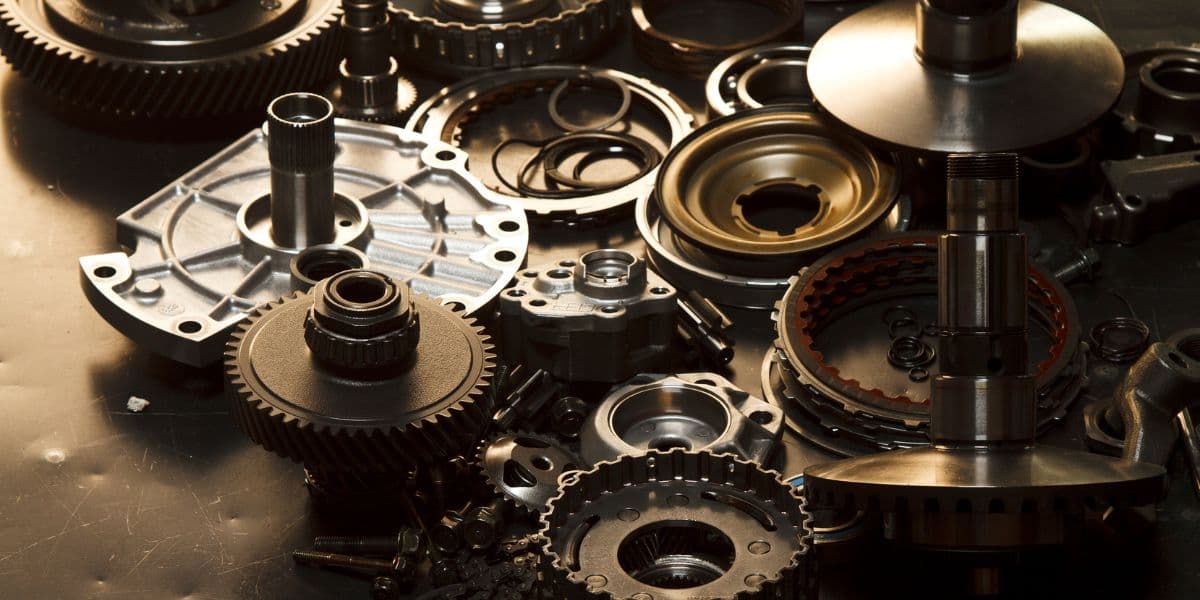
At its core, Adroit Industries makes propeller shafts- the mechanical component that transfers torque from an engine or gearbox to the wheels or axle. These are also called drive shafts or cardan shafts, and they sit inside virtually every commercial vehicle, tractor, construction machine, and industrial drivetrain on the planet.
The company has been in this business since 1966, though the current Sangla family promoter group took over in 2007 and has since transformed it into a focused, export-oriented manufacturer. Today, Adroit operates three manufacturing facilities in Madhya Pradesh- Dewas, Pithampur and the Sanwer Facility, and offers over 5,000 SKUs covering propeller shaft assemblies, yoke components, universal joints, CV double cardan joints, splined stub shafts, and companion flanges.
What makes Adroit stand out is its vertical integration. The company handles everything in-house: from forging and precision machining to heat treatment, assembly, dynamic balancing, and final testing. This end-to-end control is not just a cost advantage; in a safety-critical, quality-sensitive industry like driveline components, it is a genuine competitive moat. Customers in this space don't switch vendors easily; vendor qualification cycles are long, quality standards are exacting, and the consequences of a component failure are severe.
A business built on exports
Here's the most defining characteristic of Adroit's business model: 95.39% of its revenue in FY26 came from exports, spread across 32+ countries and 185 customers. The United States is the single largest market, accounting for 53.76% of export revenue, followed by Colombia (11.62%), Canada (8.88%), and Australia (5.65%).
This export dominance is both a strength and a risk. On the positive side, it reflects genuine global competitiveness; the company has earned its place in international supply chains where quality and delivery standards are unforgiving. On the risk side, it creates meaningful exposure to currency fluctuations, US trade policy, and geopolitical developments that are entirely outside the company's control.
To its credit, the company has been actively diversifying. The US share of exports has come down from 71.93% in FY24 to 53.76% in FY26; a meaningful shift over just two years. But concentration risk remains real, and investors should factor it in.
The financials: a story of improving quality
Adroit's financials tell a clean, improving story across the three years covered in the RHP.
Revenue has grown at a 6.01% CAGR over FY24–26, but the more impressive number is PAT, which has compounded at 34.2% over the same period. That gap between revenue growth and profit growth signals strong operating leverage; the company is extracting significantly more profit from each incremental rupee of revenue.
The EBITDA margin of 27.66% in FY26 is exceptional by any standard in the auto components space, where most peers operate in the 10–14% range. The PAT margin of 18.69% is similarly well above the industry. The balance sheet has also been quietly cleaned up; the debt-to-equity ratio has halved from 0.94x to 0.41x in three years, and the current ratio has improved from 1.18x to 1.53x. These are the hallmarks of a business that is not just growing, but maturing in quality.
One area to watch: debtor days have crept up to 111 days in FY26 from 103 in FY24, and the overall net working capital cycle sits at a hefty 237 days. For an exporter, this is partly structural; international receivables take longer to collect, but it does mean the business is capital-hungry and cash conversion is slow.
Valuation: priced at a slight premium to peers
At the cap price of ₹134, with an EPS of ₹7.48 for FY26, the IPO is priced at a P/E of approximately 17.9x. The floor price of ₹126 implies a P/E of 16.8x.
For context, the three listed peers: Hindustan Hardy, Talbros Engineering, and GNA Axles- trade at a P/E range of 10.7x to 20.85x, with an industry average of 15.78x. At 17.9x, Adroit is asking investors to pay a modest premium of ~13% to the peer average.
Is that premium justified? There's a reasonable case to be made. Adroit's EBITDA margins (27.66%) and PAT margins (18.69%) are materially superior to peers, only one of the three peers (GNA Axles, at 16.09%) crosses 14% EBITDA margin. Adroit’s RoNW of 22.51% is second only to Hindustan Hardy's 25%. The company is also in a clear deleveraging and earnings growth phase. However, its EPS of ₹7.48 is the lowest among the peer set, and the NAV per share of ₹36.84 means the IPO is priced at 3.6x book value; not cheap for a manufacturing business.
The premium is defensible if you believe in the margin story and the global growth runway for propeller shafts (the global market is projected to grow from $32 billion in 2026 to $39 billion by 2030). But it leaves limited room for error, especially given the concentration risks.
Where the IPO money goes
Of the fresh issue proceeds, the company has earmarked ₹19.90 crore for capex at its Dewas facility- which will expand installed capacity from 3,000 MT to 5,500 MT, nearly doubling it. Another ₹43.95 crore will be invested into the subsidiary (Adroit Driveshafts Private Limited) for capex at Pithampur, and ₹24.11 crore will go toward repaying the subsidiary's working capital borrowings with Kotak Mahindra Bank (outstanding: ₹46.97 crore as of August 25, 2026). The rest is earmarked for general corporate purposes.
The capacity expansion is the most compelling use of proceeds- it directly addresses the company's ability to scale revenues. The debt repayment in the subsidiary is also sensible from a balance sheet perspective, though it is worth noting that a meaningful chunk of IPO money is essentially cleaning up subsidiary-level debt rather than funding pure growth.
The red flags you shouldn't ignore
No IPO analysis is complete without an honest look at the risks. Three stand out here.
First, concentration on multiple fronts. The top customer alone accounts for 20.92% of product revenue, and the top 10 customers together represent 60.86%. Add to that the 95% export dependence and the fact that the manufacturing plants are in a single state- Madhya Pradesh, and you have a business that is vulnerable to disruption from multiple angles simultaneously.
Second, promoter-level litigation. Mukesh Sangla, the non-executive promoter director, was earlier hit with a ₹3.78 crore income-tax penalty under Section 271(1)(c); the provision that deals with concealment of income: for Assessment Year 2010-11. The penalty was deleted by the CIT(A), and the ITAT upheld that deletion in March 2022. The Income Tax Department has since appealed the ITAT's order to the Madhya Pradesh High Court, and that appeal remains pending, with the matter last heard in January 2023. The company has also sought a SEBI relaxation regarding another promoter group member. These are not deal-breakers, but they are governance signals that investors in a first-time public issuer should take seriously.
Third, this is a debut. Adroit has never been a listed entity before. There is no track record of quarterly disclosures, investor communication, or listed-entity governance to evaluate. The management team may be operationally strong, but the discipline of public markets is a different game entirely.
The bottom line
Adroit Industries is a genuinely differentiated business- a vertically integrated, export-focused manufacturer with best-in-class margins in a niche, high-barrier industry. The financial trajectory over the past three years is clean and improving, and the capacity expansion funded by this IPO gives it a credible growth story for the next two to three years.
The valuation at ~17.9x FY26 earnings is a modest premium to peers, which is arguably earned by the margin superiority. But the concentration risks- in customers, geographies, and manufacturing locations; are real and not trivial. The promoter litigation adds a layer of governance uncertainty that first-time investors in this stock will need to get comfortable with.
This is not a story for everyone. But for investors who understand niche manufacturing businesses and are comfortable with the export-heavy model, Adroit Industries deserves a serious look.
This AI-generated analysis, based on RHP/DRHP information, is for informational purposes only. Investors should conduct due diligence and consult financial advisors before making investment decisions. Past performance does not guarantee future results, and all investments carry inherent risks including potential loss of principal.