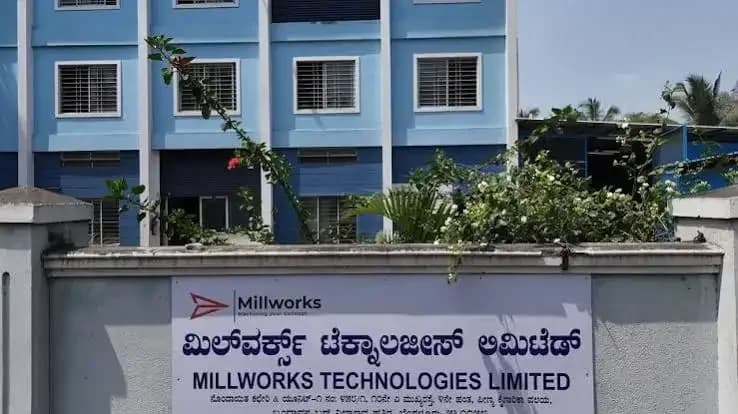
Adroit Industries shares made a spectacular debut on Wednesday, jumping 86.5% to ₹250 on BSE against the IPO issue price of ₹134, while on NSE, the stock opened at ₹235, rising 75.37% from the listing price. The stock closed at ₹248.39 on NSE and ₹248.35 on BSE, retaining gains of over 85% from its debut levels. The strong listing performance validated the market's confidence in the ₹151-crore IPO, which was a book-built issue comprising a fresh issue of ₹98.97 lakh shares and an offer for sale (OFS) of ₹13.50 lakh shares by promoter Mukesh Sangla HUF. The company's market valuation reached ₹1,112.82 crore following the blockbuster debut.
The IPO received strong investor response during its three-day subscription window, with the issue subscribed over 150 times by the end of Day 3. The subscription was led by Non-Institutional Investors at 332.35 times, followed by Qualified Institutional Buyers at 195.04 times and Retail Individual Investors at 99.81 times. The issue received 1,39,22,95,200 bids against 78,72,900 shares on offer, making the total issue subscribed around 176 times. The basis of allotment for Adroit Industries India was finalised on Monday, September 28, with bid finalisation details available on the websites of the National Stock Exchange (NSE), the BSE and Bigshare Services. The IPO was priced at ₹134 per share with a lot size of 111 shares, requiring a minimum investment of ₹14,874 for retail investors.
Chairman and Managing Director Saurabh Sangla revealed that Adroit Industries is planning to double its production capacity as the company focuses on scaling operations, continuing revenue growth and strengthening its balance sheet. According to Sangla, the company is focused on increasing its capacity as revenue generation remains a key priority. Alongside the expansion, Adroit is also looking to reduce its debt burden and build a healthier balance sheet. The company currently has debt of around ₹52 crore, of which ₹24 crore is expected to be repaid soon, as reported by NDTV Profit. This strategic approach demonstrates the company's commitment to operational efficiency and financial stability.
On the company's dependence on the US market and the potential impact of tariffs over the next three years, CMD Saurabh Sangla stated that the company does not expect tariffs to have a significant impact on its business. This reassurance comes as around 95% of product revenue comes from exports, making the company particularly sensitive to global trade policies. The management's confidence in maintaining business resilience despite potential tariff pressures reflects the company's diversified export portfolio and strategic positioning in the global automotive components market.