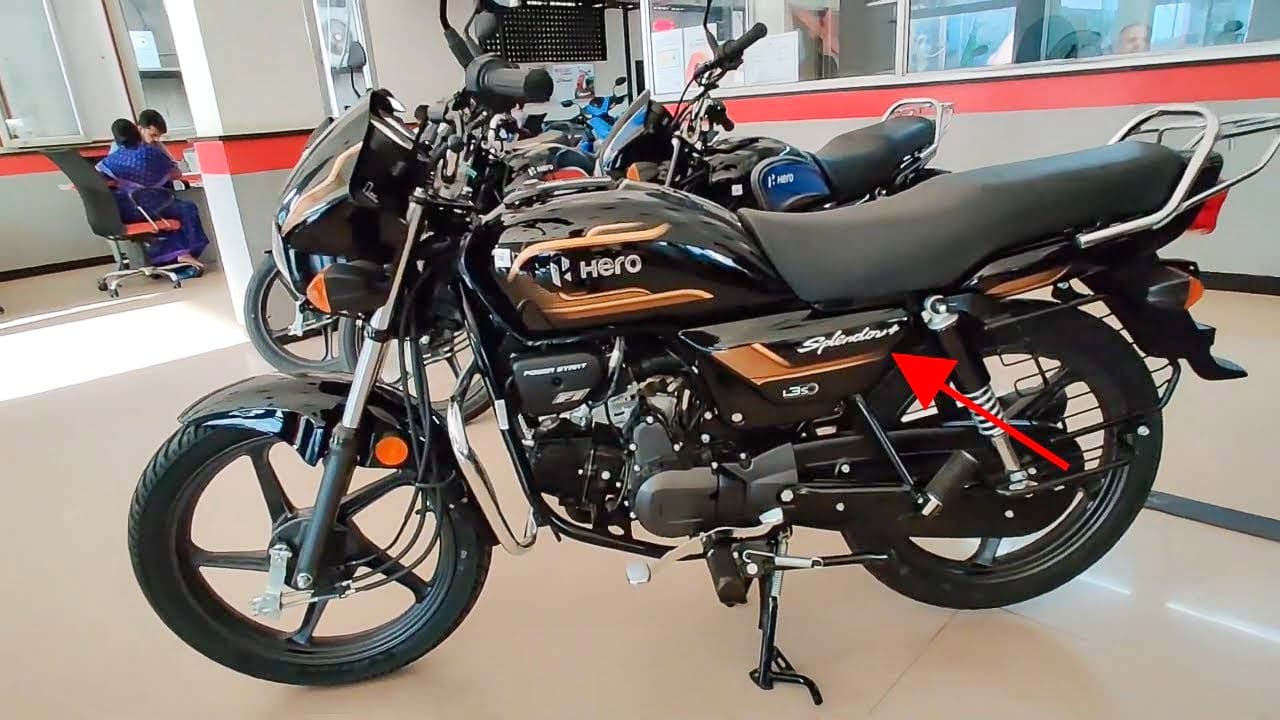
When the Munjal family- the name synonymous with India's two-wheeler revolution; brings a company to the public markets, it commands attention. Hero Motors Limited, the automotive technology arm of the HMC Group led by Pankaj Munjal, opened for bidding on September 16 and closes on September 18, 2026, with a total issue size of ₹1,000 crore. This includes a ₹600 crore fresh issue and ₹400 crore OFS, with the price band set at ₹79–₹84 per share.
But beyond the brand legacy, does the business hold up to scrutiny? Here's a deep dive.
The business: more than just gears
Hero Motors is not your typical auto-ancillary company. It describes itself as an automotive technology company specialising in highly engineered powertrain solutions, and that distinction matters. The company serves OEMs across the US, Europe, India, and ASEAN, operates 6 manufacturing facilities globally, and holds one patent. It also runs an international product development and design centre, a capability that is genuinely rare among Indian auto-component manufacturers.
The business runs through two segments. The gears & transmissions (G&T) segment covers two-wheelers, passenger vehicles, e-bikes, and ATVs, with a particular focus on CVT (continuously variable transmission) technology, EV transmissions, electric motors, and integrated drive units. The bike powertrain (BPT) segment targets the fast-growing micro-mobility space- e-scooters, bicycles, and e-bikes; through its subsidiary Hero EDU Systems Private Limited, which assembles integrated electric drive systems under the 'ESYNC' brand, combining motors, batteries, and controllers into a single unit.
What gives the company genuine credibility is its customer list. Hero Motors counts Ducati, Harley-Davidson, and BMW among its two-wheeler OEM clients. For a company of this size, supplying to the world's most premium motorcycle brands is a meaningful competitive moat; one that signals engineering quality and global certification standards that most domestic peers cannot easily replicate.
The market opportunity: EV tailwinds are real
The addressable markets Hero Motors operates in are large and, in the case of micro-mobility, growing rapidly. The gears & transmissions market was estimated at ₹3,40,000–3,50,000 crore in 2025, projected to reach ₹4,85,000–4,95,000 crore by 2031 at a CAGR of 6–8%. The bike powertrain segment, however, is the more exciting story- currently at ₹31,000–35,200 crore, it is expected to nearly triple to ₹88,000–92,200 crore by 2031, implying a 16–18% CAGR.
This is where the ESYNC brand becomes strategically important. As urban mobility shifts toward lightweight electric vehicles, Hero Motors is positioning itself not just as a component supplier but as an integrated systems provider. That pivot, if executed well, could be a meaningful re-rating catalyst.
Financials: improving, but from a low base
The financial trajectory over the last three years tells a story of gradual recovery and margin expansion.
| Particulars | FY24 | FY25 | FY26 |
|---|
| Revenue from Operations (₹ cr) | 1,064.38 | 1,089.59 | 1,188.35 |
| EBITDA (₹ cr) | 86.27 | 114.00 | 147.78 |
| EBITDA Margin | 8.11% | 10.46% | 12.44% |
| PAT (₹ cr) | 17.03 | 32.79 | 41.16 |
| PAT Margin | 1.60% | 3.01% | 3.46% |
Revenue growth accelerated from a near-flat 0.93% in FY24 to 9.06% in FY26, while EBITDA margins nearly doubled over the same period. PAT has grown ~2.4x in three years. These are encouraging directional signals.
However, context is important. At ₹1,188.3 crore in revenue, Hero Motors is significantly smaller than every single one of its listed peers. UNO Minda clocks nearly 17x the revenue. Even Sona BLW, the closest in scale, is nearly 4x larger. The company is improving, but it is doing so from a relatively modest base.
Peer comparison: the valuation question
This is where investors need to be most careful.
| Company | ROE (FY26) | ROCE (FY26) | Revenue Growth (FY26) |
|---|
| Hero Motors | 8.56% | 19.77% | 9.06% |
| UNO Minda | 17.69% | 28.83% | 17.19% |
| Endurance Technologies | 13.91% | 38.63% | 26.25% |
| Varroc Engineering | 12.64% | 36.53% | 9.03% |
| Sona BLW Precision | 10.26% | 27.09% | 25.48% |
| CIE Automotive India | 11.03% | 24.50% | 1.36% |
Hero Motors has the lowest ROE and ROCE in the peer group. Its revenue growth is mid-table. The industry average P/E stands at 50.20x, with Sona BLW commanding 76.50x and CIE Automotive at the low end at 17.68x.
Hero Motors' IPO, priced at a band of ₹79–₹84 per share, implies a P/E of 68.7x–73.0x on FY26 basic EPS of ₹1.15. At the upper end, that is about 45% above the industry-average P/E of 50.20x and only slightly below Sona BLW's 76.50x, the highest among the listed peers. Sona BLW, however, reported nearly three times Hero Motors' revenue growth rate in FY26- 25.48% versus 9.06%; while its ROCE was also higher at 27.09% versus 19.77%.
IPO structure: read the fine print
The ₹1,000 crore IPO is split into a fresh issue of ₹600 crore and an offer for sale (OFS) of ₹400 crore. Of the OFS, ₹395 crore belongs to O P Munjal Holdings the primary promoter entity- with Hero Cycles Limited offloading the remaining ₹5 crore.
This means nearly 40% of the IPO proceeds go directly to the promoters, not into the business. That is not unusual for Indian IPOs, but it is worth flagging; especially when the company simultaneously plans to use fresh issue proceeds for debt repayment (₹190 crore) and capacity expansion (₹200 crore at its Gautam Buddha Nagar facility).
The remaining proceeds are earmarked for acquisitions and general corporate purposes, capped at 35% of gross proceeds. Critically, none of these deployments have been appraised by an independent agency- a standard risk disclosure, but one that adds execution uncertainty to an already ambitious expansion plan.
Red flags: what deserves investor attention
Customer concentration is the single biggest operational risk. The top 10 customers accounted for 72.89% of revenue in FY26, and this figure has hovered between 73–78% over the past three years. In a B2B business serving global OEMs, some concentration is inevitable; but at these levels, the loss of even one or two anchor clients could materially dent revenues.
Geographic concentration compounds this risk. Europe alone contributed 33.59% of FY26 revenue. With ongoing macroeconomic uncertainty in the Eurozone, potential tariff changes, and the evolving regulatory landscape around EVs in Europe, this exposure is a genuine vulnerability.
Liquidity metrics are tightening. The current ratio has slipped from 1.09 in FY24 to 0.94 in FY26- below 1.0, meaning current liabilities now exceed current assets. The debt service coverage ratio has also declined from 2.66 to 1.75 over the same period. Neither figure is alarming in isolation, but the direction of travel warrants monitoring, particularly as the company takes on capex commitments.
The large OFS is a yellow flag. When promoters use an IPO primarily as an exit vehicle, it raises questions about their conviction in the company's near-term growth trajectory. O P Munjal Holdings liquidating ₹395 crore while the company simultaneously borrows to fund operations is a dynamic that investors should weigh carefully.
What works in Hero Motors' favour
To be fair, the bull case is not without merit. The company's patent and international R&D centre represent genuine intellectual capital that most Indian auto-ancillary peers do not possess. The relationship with Ducati, Harley-Davidson, and BMW is a quality signal that opens doors to future business globally.
The EV transition is a structural tailwind. Hero Motors is not just watching the shift from ICE to electric: it is actively building products for it, from EV transmissions and traction motors to the ESYNC integrated drive system. If the micro-mobility market grows at the projected 16–18% CAGR, the BPT segment could become a disproportionate earnings driver over the next five years.
Promoter holding post-IPO remains strong, and no shares are pledged by the promoters; a governance positive in an environment where promoter pledging has been a recurring red flag across Indian mid-caps.
The verdict
Hero Motors is a well-run, technologically credible company with a clear EV strategy and premium global clientele. The improving financial trajectory is real. But at the time of this analysis, the company is smaller, less profitable, and less capital-efficient than every listed peer it is being benchmarked against.
For investors considering this IPO, the key questions to ask are: what’s the future outlook post listing? How quickly can the company close the ROE gap with peers? And does the EV segment have enough scale to move the needle in the next 2–3 years?
Disclaimer: This AI-generated analysis, based on RHP/DRHP information, is for informational purposes only. Investors should conduct due diligence and consult financial advisors before making investment decisions. Past performance does not guarantee future results, and all investments carry inherent risks including potential loss of principal.