The Ministry of Petroleum and Natural Gas has deployed Tactical Crack Teams to inspect petrol pumps as part of intensified fuel quality monitoring efforts. According to Team Bharat, part of this deployment has already begun with the Ministry agreeing to strengthen fuel quality checks across the country. Fuel quality monitoring will be strengthened to detect moisture, chloride and other forms of adulteration, building upon the existing 8-12 daily tests at more than 87,000 retail outlets that were already being conducted. The enhanced monitoring comes after more than 2,000 fuel samples were tested for chloride and sulphide contamination, with the Ministry stating that "strict action" will be taken if contamination or adulteration is detected at any retail outlet.
Team Bharat has launched a public initiative to combat fuel adulteration, offering citizens a direct channel to report cases of contaminated fuel. As per Team Bharat, citizens with genuine cases of fuel adulteration can now share documented evidence with Team Bharat, which will be taken up directly with the Ministry for appropriate action. The initiative was announced during Team Bharat's second constructive meeting with senior officials from the Ministries of Petroleum & Natural Gas and Road Transport & Highways, which included Praveen Mal Khanooja, Additional Secretary, Ministry of Petroleum & Natural Gas; Mahmood Ahmad, Additional Secretary, Ministry of Road Transport & Highways; and Tehseen Poonawalla, Founder, Team Bharat. Team Bharat promises the citizens of India that, within the next few weeks, working alongside the Ministry of Petroleum, adulterated petrol will be a thing of the past.
The ministry has introduced stringent quality controls for ethanol blended into petrol, with ethanol must comply with BIS IS 15464 standards and meet a minimum purity requirement of 99.6%. According to the ministry's latest statement, every dispatch is accompanied by a certified quality report, while dedicated storage, regular monitoring and tanker-level sampling are used to minimise contamination risks. The ministry further stated that quality checks are conducted before ethanol deliveries are accepted. Between July 2024 and June 2026, 302 tank trucks carrying nearly 10,500 kilolitres of ethanol were rejected for failing prescribed quality standards. This enhanced framework aims to ensure fuel quality remains consistent from the supply point to retail outlets nationwide.
The ethanol story is experiencing a significant political shift as protests are being planned over E20, with the Aam Aadmi Party (AAP) planning a march to the Prime Minister's residence on Tuesday with 100 volunteers to submit a petition backed by 200,000 signatures collected through an online campaign. This development marks a turning point in the ethanol ecosystem, which previously operated under the simple objective of reducing India's dependence on imported crude oil. The controversy represents a potential indication that it may be time to look beyond the obvious investment opportunities in the traditional ethanol value chain.
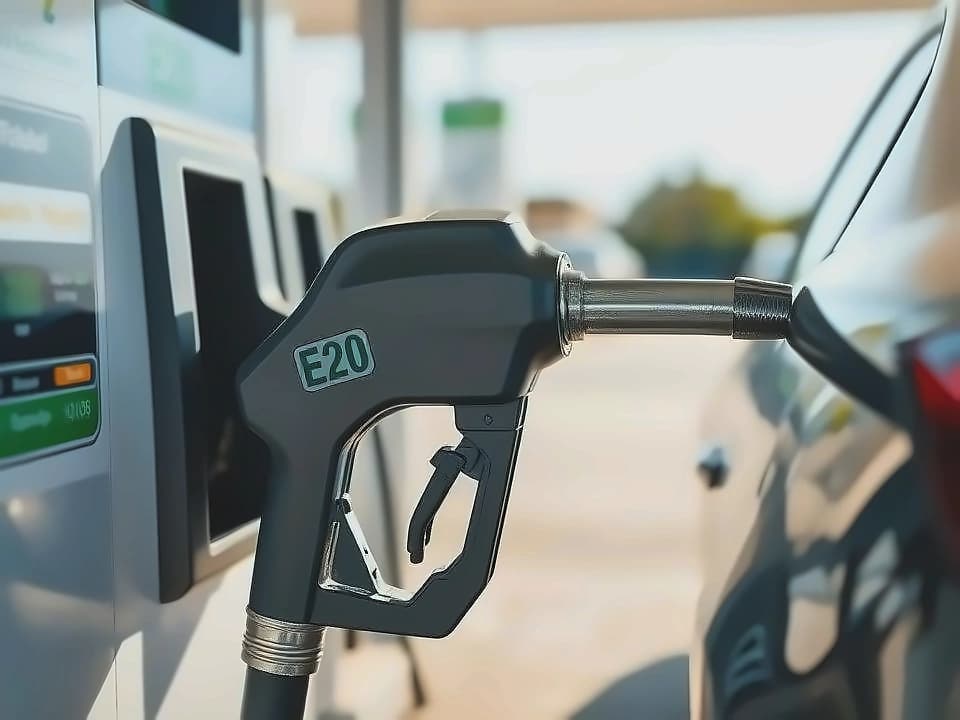
The Ethanol Blended Petrol (EBP) programme, which blends 80% petrol and 20% ethanol, has emerged as a cornerstone of India's energy security strategy. According to Minister of State for Petroleum & Natural Gas Suresh Gopi, the programme can help reduce India's crude oil import bill by roughly $4 billion, or around ₹38,000 crore on an annual basis. For context, India spent $137 billion and $122 billion during FY25 and FY26, respectively, in purchasing crude oil. The programme has been implemented through a phased, scientifically validated process involving NITI Aayog, automobile manufacturers, oil marketing companies, ARAI, SIAM, and other technical institutions.

The EBP programme has demonstrated remarkable technical success with over 20 crore two-wheelers and more than 3 crore petrol cars operating on these blends without any verified evidence of widespread engine failure or abnormal wear attributable to E20 fuel. The programme commenced with a pilot in 2001, with E15+ blended petrol in widespread use for over three-and-a-half years and E19–E20 fuel for over two-and-a-half years. In the latest data from Ethanol Supply Year (ESY) 2014-15 to ESY 2025-26 (up to June 2026), ethanol blending by PSU oil marketing companies has resulted in foreign exchange savings exceeding ₹1.97 lakh crore, crude oil substitution of about 316 lakh tonnes, and reduction of around 952 lakh tonnes of CO₂ emissions.