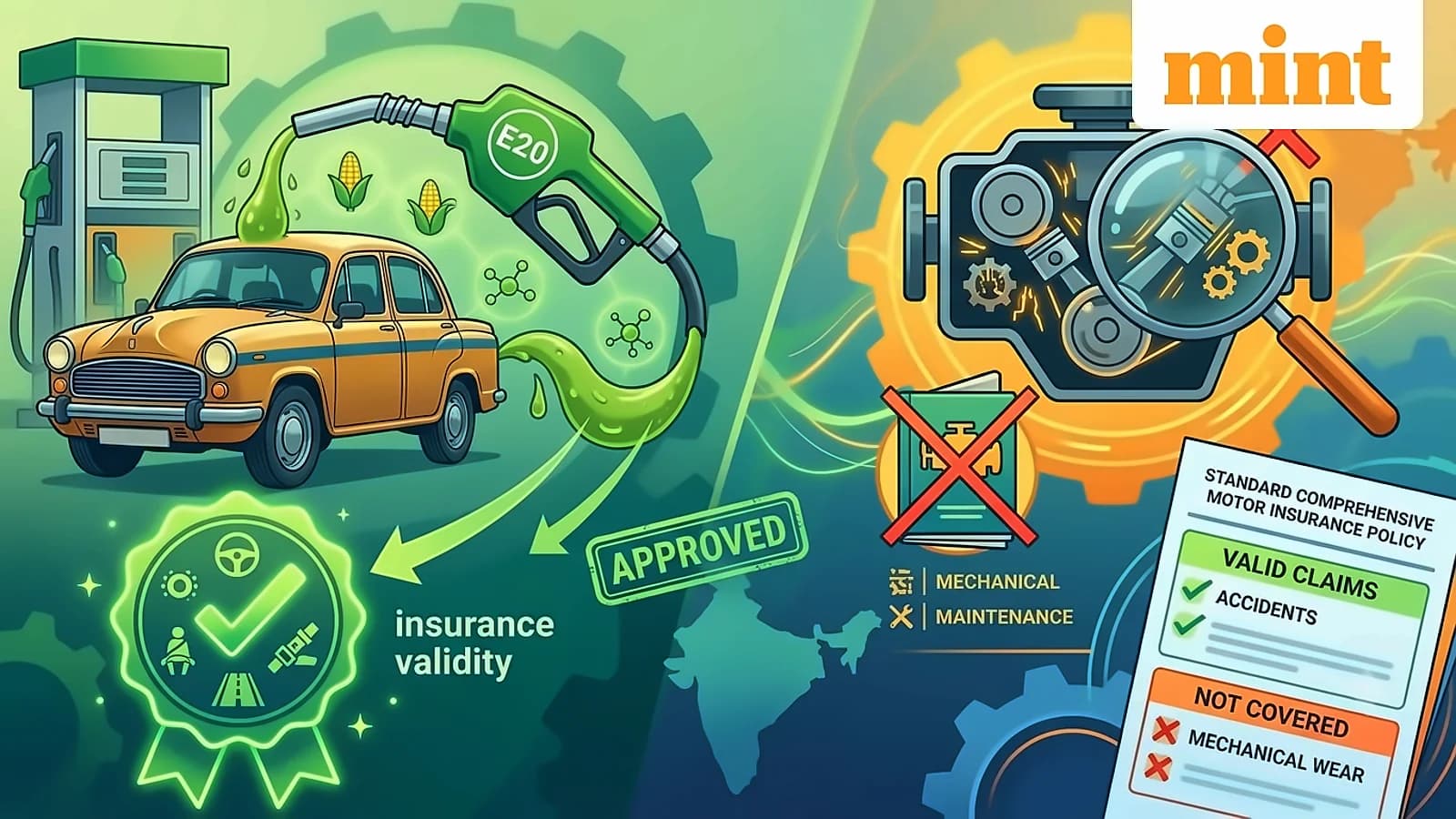
The Government of India has dismissed what it called as 'misleading claims' surrounding the Ethanol Blended Petrol (EBP) Programme, stating there is no verified evidence that E20 fuel has caused widespread engine damage, rendered older vehicles unusable or led to systemic performance issues, according to a Press Information Bureau (PIB) release. The Centre emphasized that E15-plus fuel has been in widespread use for more than three-and-a-half years, while E19-E20 blends have been used for over two-and-a-half years without reports of large-scale engine failures or vehicle breakdowns attributable to ethanol blending. The government noted that around eight crore vehicles visit fuel stations every day, while a leading automobile manufacturer serviced 2.84 crore vehicles in FY26, including about 1.5 crore that were not originally certified as E20-compatible, without reporting E20-related corrosion, abnormal wear or reduced component life. Another manufacturer tracked 1.4 crore E20-operated vehicles and similarly found no ethanol-induced corrosion, while a leading two-wheeler maker reported comparable field experience. The Ministry of Petroleum & Natural Gas has released a comprehensive list of seven claims which it has rejected, seeking to dispel misleading concerns about the ethanol-blended fuel programme. As per Upstox News Desk, the ministry stated that had ethanol blending been causing systemic damage to engines or fuel systems, such failures would have resulted in large-scale warranty claims, service campaigns and widespread consumer complaints, none of which have been reported.
The Centre has officially clarified that E20 (20% ethanol-blended petrol) does not require engine modifications in cars or two-wheelers, including legacy vehicles, as reported by The Economic Times. Road Transport and Highways Minister Nitin Gadkari made this announcement in a written reply to the Lok Sabha, stating that studies have not shown any need to modify car and two-wheeler engines for use with E20 fuel. The minister emphasized that only in case of testing done on BS-III vehicles introduced from April 1, 2005 and manufactured prior to 2016, some rubber parts and gaskets may require replacement, which can be easily managed during routine servicing regime of the vehicle. This clarification comes as the government intensifies its social media campaign to address growing consumer concerns about the ethanol-blended fuel programme. The Ministry has specifically addressed claims that vehicles manufactured before 2023 cannot run on E20 petrol, stating that no abnormal corrosion linked to E20 fuel was observed and no abnormal wear was reported. Minister Gadkari noted that tests for engine durability on a dynamometer and vehicle tests on road have not shown any failures due to E20. According to Upstox News Desk, the ministry emphasized that if E20 really rendered vehicles unusable, India would have witnessed millions of breakdowns, warranty claims and service campaigns. Nothing of that sort has occurred.
On July 4, 2026, a joint press conference was held attended by senior executives from Toyota Kirloskar, Maruti Suzuki, Hero MotoCorp, Hyundai Motor India, TVS Motor Company and Bajaj Auto, who reaffirmed confidence in the programme after extensive testing, as reported by PIB. The government rejected allegations that automobile manufacturers were privately opposed to E20 or were being pressured to support it. Manufacturers said any reduction in fuel efficiency for certain older E10-designed vehicles is generally limited to 3%-5%, while E20 offers benefits such as a higher octane rating, cleaner combustion and improved anti-knock performance. The government noted that manufacturers continue to honour warranties for vehicles using specification-compliant E20 fuel, providing further confidence in its safety and reliability. According to Upstox News Desk, Maruti Suzuki reported no E20-related corrosion or abnormal wear based on service records of 2.84 crore vehicles and said the impact on fuel economy is generally limited to 3-3.5 per cent. Hero MotoCorp said its service data showed no higher incidence of vehicle damage in E20-operated two-wheelers, while Toyota Kirloskar said the fuel had been introduced only after rigorous testing based on internationally recognised standards. The Ministry has addressed claims that manufacturers are being forced to support E20, stating that India's automobile manufacturers are independent, publicly listed companies with legal and regulatory responsibilities towards their customers. Concealing widespread vehicle defects would expose them to warranty claims, product liability, regulatory action and significant reputational damage.
E20 fuel can reduce fuel economy by 2 to 6% depending on the vehicle category and vintage, Minister Gadkari informed Parliament on Thursday, as reported by NDTV. However, the minister emphasized that E20 fuel provides better acceleration, improved ride quality and approximately 30% lower carbon emissions compared to E10 fuel. A joint study by Indian Oil Corporation Ltd (IOCL), Indian Institute of Petroleum (IIP), Society of Indian Automobile Manufacturers (SIAM) and Automotive Research Association of India (ARAI) found that both two-wheelers and four-wheelers complied with applicable emission norms when tested with E20 fuel. Minister Gadkari confirmed that the studies confirmed that even legacy vehicles did not exhibit any significant variations in performance, nor do they show abnormal wear-and-tear when operated with E20 fuel. The minister stated that no issues were reported in parameters such as drivability, startability, metal compatibility and plastic compatibility. According to Upstox News Desk, studies and manufacturers' assessments indicate that fuel efficiency depends on several factors such as driving habits, traffic conditions, tyre pressure and vehicle maintenance. The Ministry has addressed claims that mileage will completely go down, explaining that driving behaviour, traffic conditions, vehicle maintenance, tyre pressure and air-conditioner usage all play significant roles in fuel efficiency, while E20 offers higher octane rating and improved anti-knock properties, cleaner combustion and smoother engine operation.
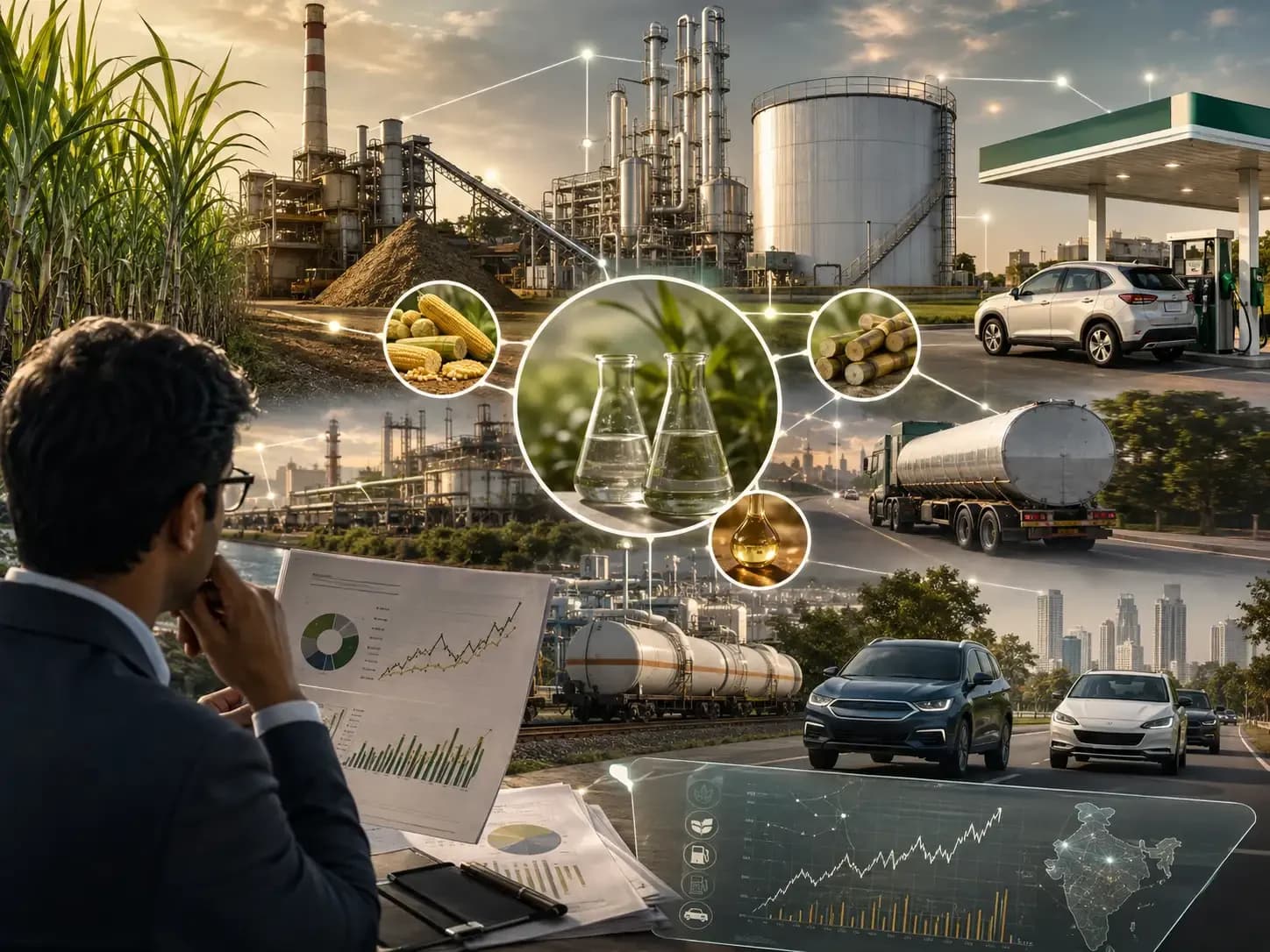
The average ethanol blending in petrol has increased from around 1.53% in 2013-14 to 20% between November 2025 and June 2026, as reported by The Economic Times. Minister Gadkari stated that the Ethanol Blended Petrol (EBP) Programme has been implemented in a phased and scientifically validated manner after field trials and stakeholder consultations. The government noted that the rollout followed scientific validation, stakeholder consultations and infrastructure development involving automobile manufacturers, the Society of Indian Automobile Manufacturers (SIAM), the Automotive Research Association of India (ARAI), component makers and oil marketing companies. The government has launched a nationwide social media campaign involving BJP leaders, ministers and party workers to promote the E20 ethanol-blended fuel programme, with more than 20 crore two-wheelers and over 3 crore petrol cars have been operating on these blends without any verified evidence of widespread engine failure or vehicle breakdown attributable to ethanol blending. The Ministry has addressed claims that 30 crore vehicles will become unusable, stating that there has been no verified evidence of widespread engine failure or vehicle breakdown linked to ethanol blending. According to Upstox News Desk, India's ethanol blending programme began with a pilot project in 2001 and introduced E5 petrol in 2006, with blending levels increasing in phases from around 1.53% in 2013-14 to 20% during November 2025-June 2026, following expansion of production capacity, infrastructure and regulatory mechanisms. The Ministry has rejected the claim that nearly 30 crore vehicles would become unusable, emphasizing that over 20 crore two-wheelers and more than three crore petrol cars have already operated on higher ethanol blends without verified evidence of widespread failures.