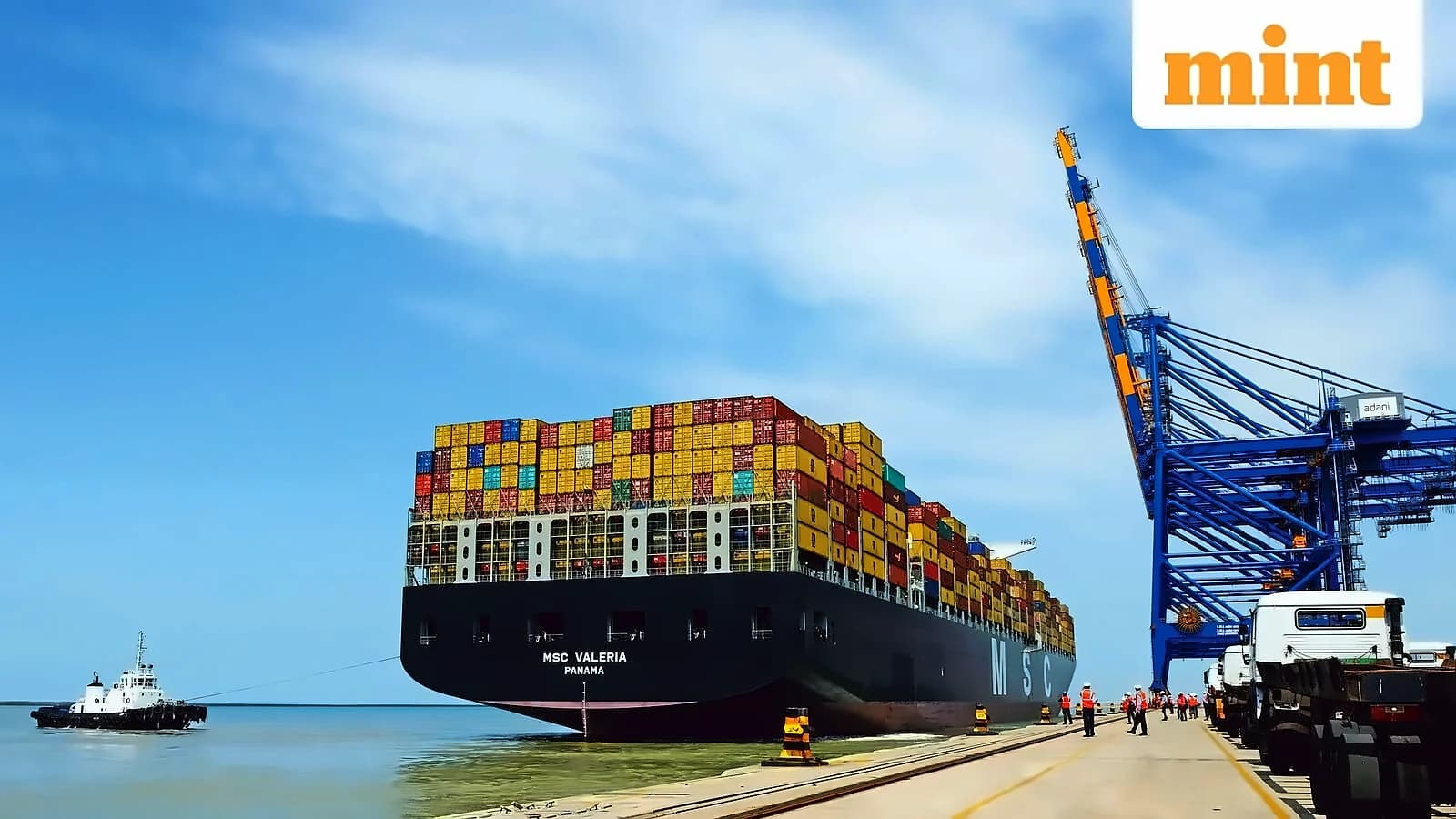
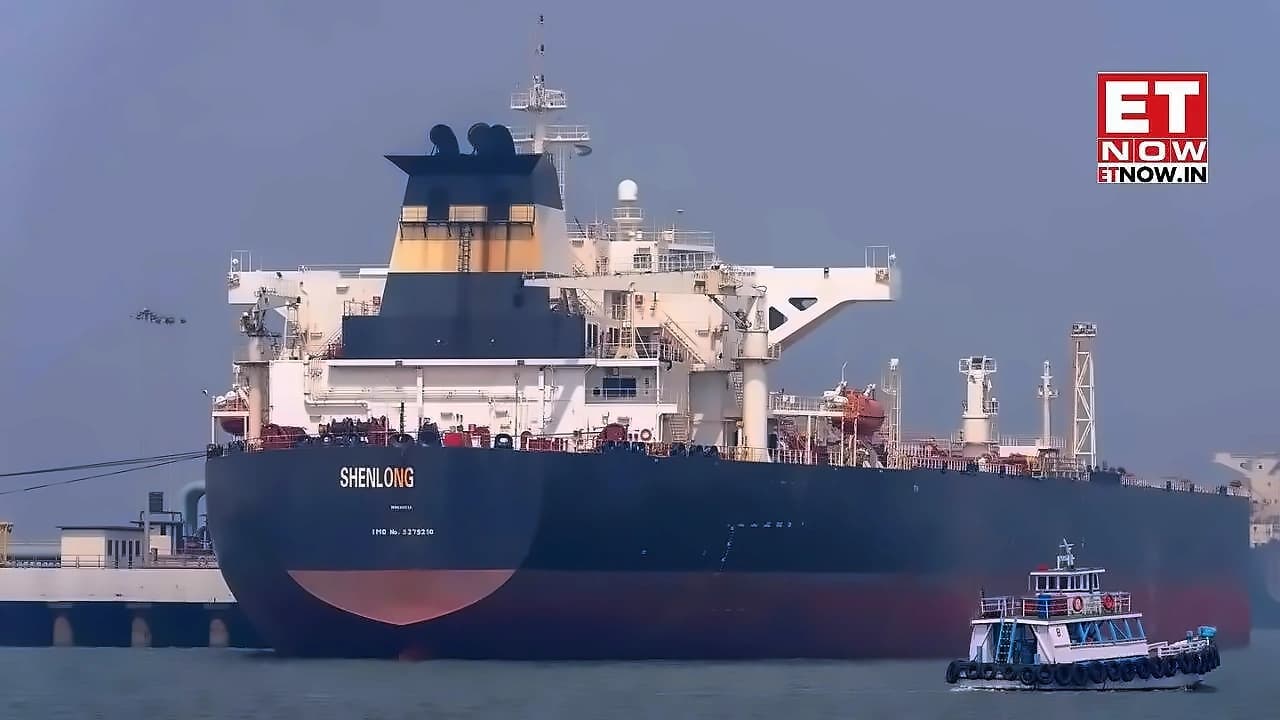
Iranian oil exports have resumed with 20 million barrels leaving port after Tehran and Washington reached a peace deal, marking the end of months of disruption. According to shipping data cited by Bloomberg, a wave of 11 tankers carrying 20 million barrels of crude left the Gulf of Oman port, with vessels previously unable to sail into the Indian Ocean due to a US military blockade aimed at limiting Iran's access to oil revenues. The latest developments show Iran has wasted no time in resuming oil exports, with three very large crude carriers each capable of hauling about 2 million barrels of crude moored at the Sea Island terminal to the west of Kharg. As reported by Business Standard, a picture from the European Union's Sentinel-2 satellite captured earlier Saturday shows two of those vessels already berthed, with the third approaching the jetty, demonstrating the rapid pace of Iran's export resumption. Most of the country's oil exports are shipped to China, but the resumption of exports represents a significant milestone for Iran's energy sector.
The US-Iran conflict has reached a potential resolution with President Trump claiming a new agreement would make the Strait of Hormuz 'permanently toll-free' while suggesting a future US role as 'guardian of the Middle East' in return for 20 percent of regional revenues. According to The New York Times, Trump's remarks follow US military attacks on Iran in late February and subsequent naval blockade after Tehran closed the strait. The President argued these actions had reshaped the Middle East in Washington's favour and strengthened the US position in the region. Several G7 leaders and the European Commission have welcomed the deal, urging swift implementation, freedom of navigation, nuclear safeguards, and renewed efforts to stabilise the Middle East. The United States and Iran have announced a framework agreement aimed at ending a conflict that has continued for more than three months, with both sides confirming that a formal Memorandum of Understanding (MoU) is expected to be signed in Switzerland on 19th June. The proposed agreement includes provisions to end military operations, reopen the Strait of Hormuz and lift the US naval blockade of Iran, while discussions on Tehran's nuclear programme have been deferred to a separate round of negotiations.
Iran has resumed loading crude from its Kharg island export terminal after a break of about six weeks, following the lifting of a US Navy blockade of its ports. According to ship tracking data compiled by Bloomberg, three very large crude carriers are moored at the Sea Island terminal to the west of Kharg, with the island hosting Iran's most critical oil-loading infrastructure accounting for around 90% of its crude shipment. As reported by Business Standard, in the period since May 6 only a single VLCC has been seen moored at either of the island's two jetties in satellite images covering 27 of the 44 days. While international shippers with vessels stuck in the Persian Gulf have been reluctant to transit the Strait of Hormuz amid uncertainty over their safety, Iran has been able to move about 20 million barrels of its crude on tankers that were anchored off the port of Chabahar, near the country's border with Pakistan. The VLCCs are approaching Lavan Island in the southern Gulf after appearing to leave Kharg in recent days, with at least 20 tankers of various sizes anchored east of Kharg, Iran likely has plenty more crude ready to ship out of the Gulf.
Chabahar Port has emerged as the most visible outlet for increased energy shipments since the memorandum of understanding signed on Wednesday, with the port located near Iran's border with Pakistan and outside the Persian Gulf seeing the clearest evidence of additional oil flows. As reported by The Times of India, the deal is expected to revive India's strategic ambitions at Chabahar Port, where it has already invested in creating terminal infrastructure and procuring equipment. In 2024, India signed a 10-year long-term deal to run the Shahid Beheshti Terminal at the port, with investment commitments of $370 million. According to reports, the seventh clause of the deal states that the US 'undertakes to terminate all types of sanctions against Iran in an agreed-upon schedule as part of the final deal', which could mean that India would be able to resume its operations at the port. However, experts caution about the fragility of the deal, with Harsh Pant from Observer Research Foundation noting that 'the political environment could get vitiated and risk the stability of the commitments' once Trump's voter base realises the deal is more favourable for Iran.
Iran's Ambassador to India, Dr Mohammad Fathali, has confirmed that Tehran is well-positioned to meet India's energy requirements following the new US-Iran agreement. Speaking to ANI, Fathali stated that 'Iran Can Again Become One Of India's Main Oil Suppliers' if sanctions are fully removed and normal conditions return. 'India needs reliable, stable, and affordable energy supplies. Iran has significant capacity to meet these needs. If sanctions are lifted and the situation returns to normal, there is no doubt that Iran can once again become one of India's main oil suppliers,' he emphasized. The ambassador noted that energy cooperation between the two countries has a long and successful track record, with India historically being one of Iran's most important oil customers. He expressed hope that after the complete lifting of sanctions, not only will Iran's oil exports to India resume, but bilateral trade and joint investment will also surpass their previous peaks.
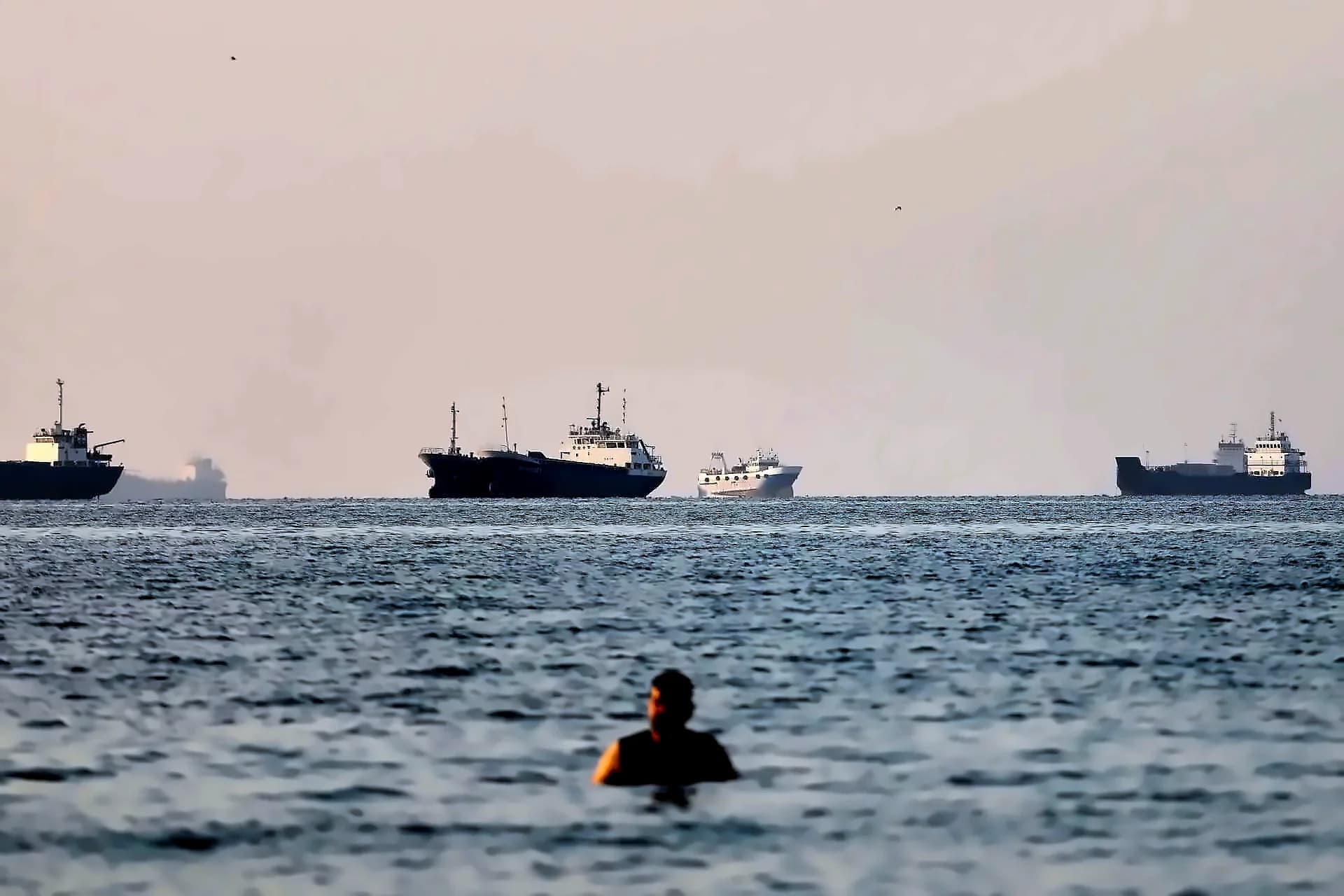
The US-Iran conflict has significantly reshaped India's import landscape during April-May 2025. According to reports from The Times of India, Oman jumped from 30th position to 10th as the largest source of imports, driven by a 3.8 times increase in imports to $3.4 billion. This dramatic shift was primarily attributed to India's search for alternative energy sources, with the blockade of the Strait of Hormuz making Oman a crucial gateway to the Persian Gulf region. In contrast, UAE slipped to fourth place from its previous position, while Russia returned to second spot followed by the US. Prime Minister Narendra Modi has welcomed the understanding reached between the United States and Iran on ending the conflict in West Asia, expressing hope that implementation will help restore peace and stability in the region and ensure freedom of navigation and commerce. Industry bodies like The Confederation of Indian Textile Industry (CITI) has welcomed the announcement with CITI Chairman Ashwin Chandran saying the uncertainty had placed considerable pressure on the predominantly MSME-driven textile and apparel industry, where businesses often operate on thin margins and have limited capacity to absorb prolonged financial shocks.