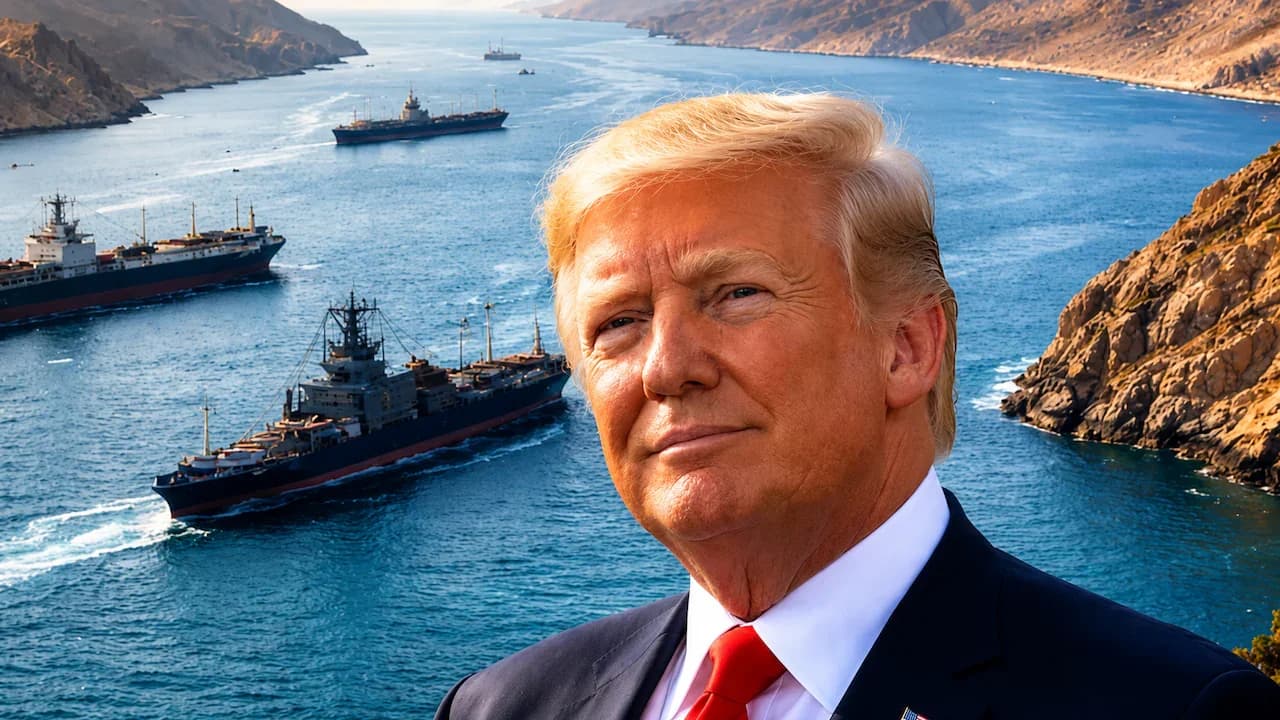
The 14-point memorandum signed between the US and Iran has triggered an unprecedented oil supply surge that threatens to overwhelm Asian refiners. According to Vortexa data, around 40 supertankers, capable of carrying approximately 80 million barrels of crude, are sitting in the Persian Gulf and ready to cross the Strait of Hormuz at a moment's notice. The actual tally may still be higher, with some vessels possibly turning their satellite transponders off. Oil prices fell sharply in early Thursday trading as markets reacted to the peace deal, with Brent crude futures dropping 89 cents or 1.12% to $78.66 per barrel and US West Texas Intermediate falling 98 cents or 1.28% to $75.81 per barrel. The crude cargoes could reach India in about a week and East Asia in roughly three weeks, as reported by traders familiar with the matter. Latest market data shows oil trading below $80 per barrel as Trump signals the Strait of Hormuz is now open for commercial traffic.

A further boost to the oil supply surge comes from Iranian crude, with Kpler estimating around 72 million barrels of Iranian crude remain stranded on tankers west of Chabahar and could enter the market if Washington eases restrictions under the agreement. Iranian exporters have already begun positioning for higher shipments, with several tankers leaving the strait this week. The 14-point memorandum signed virtually by US President Donald Trump and Iranian President Masoud Pezeshkian on Thursday outlines steps to restore commercial movement through the Strait of Hormuz and release Iran's frozen assets. The agreement provides $300 billion for reconstruction and begins a 60-day negotiation process covering sanctions relief, economic cooperation and Iran's nuclear programme.
The oil and shipping industries are witnessing increased activity in the Strait of Hormuz following the US-Iran agreement. Bloomberg reported that 21 VLCCs are currently signalling routes toward Asia, including five bound for China, while another five are heading toward ship-to-ship transfer hubs near Malaysia and Singapore. At least three vessels were seen moving toward the Strait of Hormuz at normal cruising speeds on Friday. Ships carrying nearly 10 million barrels of oil either emerged outside the strait or were sailing through it on Thursday, including the Saudi-owned VLCCs. However, maritime trade group BIMCO warned that significant safety and security risks to shipping remained, despite the US-Iran agreement to permit transits. The exact tally of vessels and their cargoes may change as more information comes to light, with some ships having turned off their transponders for security reasons.
Further evidence of confidence returning to the market came from the United Arab Emirates, where Abu Dhabi National Oil Co. (ADNOC) has instructed customers to resume lifting crude from its export terminals at Das and Zirku islands inside the Persian Gulf. According to a separate Bloomberg report, the company told long-term buyers that cargoes remain available for loading and warned that failure to take delivery could constitute a breach of contractual obligations. ADNOC also indicated it could provide affiliated vessels if customers were unable to secure their own tankers. The developments are being closely watched by oil traders, refiners and shipping companies worldwide, as a sustained reopening of Hormuz could unlock tens of millions of barrels currently stranded in the Gulf, easing concerns about supply shortages that have driven sharp volatility in oil prices.