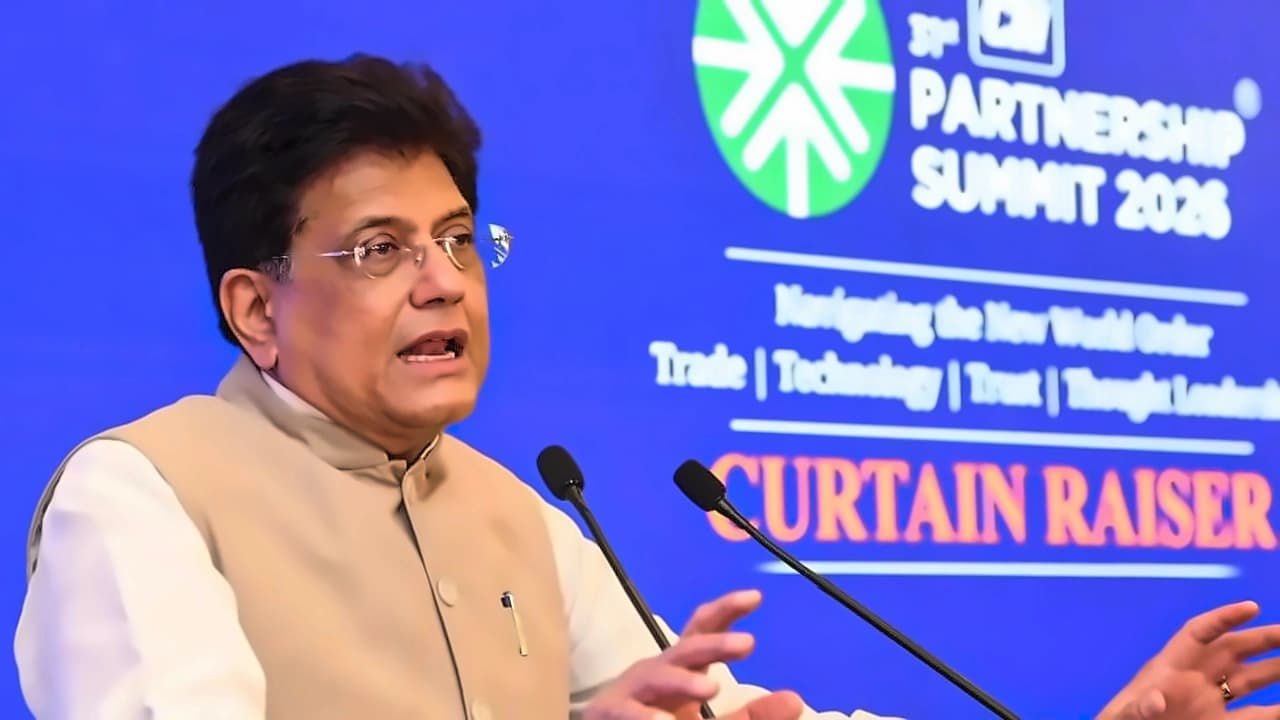
India has intensified its opposition to the US Trade Representative's proposed tariff plan, with Joint Secretary Brij Mohan Mishra participating in the USTR public hearing on July 8 to challenge the forced labour allegations. According to the latest hearing transcript, India strongly expressed concerns at the USTR's determination and questioned the basis of the proposed tariffs. "India would like to highlight its concerns with the USTR's report and findings against India," Mishra stated, emphasizing that India takes the elimination of forced labour seriously as a constitutional obligation and as a matter of international law and principle. The Indian official argued that "the USTR has not satisfied the relevant legal standards under Section 301(d) of the Trade Act" and that "a mere absence of a forced labour import prohibition without evidentiary basis of other statutory requirements cannot be construed as unreasonable under Section 301." India has stated that the adopted methodology is particularly flawed as the determination is based on case studies of a handful of economies and relied on broad trade patterns, with the report presupposing that an economy's imports flagged for forced labour are exported to the US without providing any sector- or country-specific evidence and actual linkages with forced labour. "In conclusion, it is submitted that the USTR reconsider the imposition of tariff in light of the identified inconsistencies in the report in the Federal Register notice," Mishra added, requesting that "any trade problems be addressed within the framework of the India-US bilateral trade negotiation, not through unilateral measures such as this investigation."
According to the latest SBI Ecowrap report, India should avoid making early concessions in its ongoing trade negotiations with the United States and instead remain patient as Washington's bargaining position evolves. The report argues that the US administration has increasingly adopted a negotiation strategy built around uncertainty, using ambiguity as leverage across issues ranging from tariffs and NATO to Iran, China, Greenland and India. "US Administration is using uncertainty as a bargaining instrument across NATO, Iran, tariffs, Greenland, China and also India," the report stated. In game-theory terms, Washington is "preserving incomplete information about the 'type' of bargaining" and forcing negotiating partners to decide whether to concede, wait, test or counter-escalate. India's best strategy, according to SBI Research, is to wear down the opening position, keep the conversation warm, avoid public escalation, make limited and reversible offers, and wait for US administration first demand to run into US market costs, China-balancing needs and alliance fatigue. The report identified China as the country with the strongest counter-leverage against the United States, noting that Beijing's control over critical minerals, rare-earth magnets, manufacturing capacity, export controls and global supply chains forces Washington to calibrate its negotiating approach more carefully.
Indian industry bodies have intensified their opposition to the US Trade Representative's proposed tariff plan, with The Confederation of Indian Industry (CII) urging the USTR not to impose any tariff or non-tariff measures on Indian industry. The Federation of Indian Chambers of Commerce and Industry (Ficci) sought reconsideration of the proposed duties in light of India's legal safeguards, industry compliance mechanisms and the potential impact on bilateral trade. Ficci argued that the absence of a specific legislative mechanism cannot, by itself, establish that goods exported from India are produced using forced labour or that Indian supply chains pose a heightened risk. According to The Economic Times, industry bodies said the existing India-US Trade Policy Forum should be used to address concerns instead of imposing tariffs. Ficci stated that applying a uniform tariff across all imports does not distinguish between supply chains that may warrant heightened scrutiny and those that already operate within well-established compliance systems. CII too has submitted that the proposed 12.5% additional tariff is neither supported in the evidence presented, nor likely to advance the stated policy goal, with the chamber noting that "the USTR report does not establish that India's policy framework burdens US commerce."
The Indian government has made a comprehensive defense against the USTR's forced labour allegations, arguing that the proposal falls short of legal requirements. Brij Mohan Mishra, joint secretary in the ministry of commerce, questioned the basis of the proposed tariffs and highlighted what India sees as inconsistencies in the US framework during his appearance before a USTR panel on Wednesday. According to The Times of India, India's nine-page submission contended that the USTR has neither undertaken a country-specific assessment nor demonstrated a direct causal relationship between India's import policies and adverse impact on US businesses. The government emphasized that addressing forced labour in global supply chains requires robust domestic labour law enforcement and effective due diligence frameworks that incorporate both risk mitigation and remedial measures. Commerce and industry ministry maintained that the USTR had failed to satisfy the legal requirements laid down under Section 301(d) of the US Trade Act, arguing that the proposal does not provide sufficient evidence to establish that the absence of import prohibitions distorts market conditions or harms business profitability. India has stated that the USTR has not undertaken an economy-specific analysis of laws and practices across the 60 investigated economies, instead issuing a sweeping determination that all such approaches are inadequate without considering the specific measures being implemented by the economies.
Major American companies have submitted formal warnings to the USTR expressing concerns about the tariff impact, with Intel stating that the practical effect would be to make it more expensive to build in America than to build elsewhere, which runs directly counter to the administration's goal of expanding domestic manufacturing. IBM, Dow Chemicals Thailand, and GE Appliances have also argued against the move, with Dell Technologies cautioning about the importance of leveraging policy tools that achieve the administration's goals without rapidly increasing production and end-user costs. Ford has backed exemption for the four product categories already facing up to 50% tariff under Section 232, arguing that additional section 301 tariffs would impose "excessive and overly burdensome costs on US auto manufacturing without contributing substantially to the elimination of practices related to forced labour." Poornima Shenoy, FICCI's representative in the US, said the proposed tariffs would increase costs throughout the supply chain, noting that "an additional tariff will increase costs not only for Indian exporters, but also for US manufacturers, importers, retailers and ultimately American consumers." She emphasized that American companies have built long-standing sourcing relationships with Indian suppliers because they provide quality, reliability and full compliance, and higher tariffs for these established supply chains will raise costs for businesses that already follow compliance standards.
The United States Trade Representative (USTR) has announced plans to impose additional tariffs of up to 12.5% on 60 countries, including India, according to reports from The Times of India. This represents a significant escalation in trade policy that has drawn immediate concern from major American corporations. The latest submissions reveal that several major US companies, including Intel, IBM, Dell, Honeywell Aerospace, Ford, GE Appliances and De Beers, have urged the USTR to reconsider this proposal, warning that the move will push up costs for consumers and businesses across the board. According to the USTR, the consultation attracted 365 submissions from companies, trade associations and individuals, underscoring growing concern within the American business community about potential unintended consequences. Between Tuesday and Thursday, the USTR is conducting public hearings on its investigation into alleged forced labour practices, with the July 24 deadline for the temporary 10% additional tariff drawing closer. The USTR launched two separate Section 301 investigations on March 11 and 12, 2026, covering concerns related to forced labour and excess industrial capacity. On June 3, it issued its findings in the forced labour investigation and proposed additional tariffs on 54 economies. The proposal includes a 10% tariff on imports from Canada, Ecuador, the European Union, Indonesia, Mexico, and Pakistan, and a 12.5% tariff on imports from 54 other economies, including India and China. The measure remains a proposal and has not yet been finalised, with the USTR considering these comments and testimonies before taking a final decision on the proposed tariffs. Indian exports to the US are already subject to a temporary 10% reciprocal tariff, making the proposed 12.5% duty an additional source of pressure during ongoing bilateral trade negotiations.
Several Indian companies have joined the opposition to the proposed tariff structure, with Reliance Industries, Alok Industries, Shahi Exports and solar manufacturers challenging the proposal, as reported by The Times of India. Gujarat-based exporters including Parth Foods, Hanumant Foods, Maruti Exports and Rajdhani Dehydration, which supply dehydrated onions and garlic to US buyers, have also opposed the additional tariff, arguing that it would increase costs for American consumers including manufacturers of seasoning products. India and the US continue negotiations in finalising the first phase of the India-US bilateral trade agreement, with tariffs on Indian goods reduced to 18% but later coming down after the US Supreme Court ruled that Trump's reciprocal tariffs are illegal. While acknowledging that the trade deal is almost finalised, Commerce minister Piyush Goyal has said that India will agree only if it gets a competitive advantage over its peers. Trade experts believe the Section 301 probe launched on many countries is a pressure tactic by the US to get trade deals on its terms. SBI Research concluded that India should maintain its negotiating position, preserve the bilateral relationship and leverage its growing economic and strategic importance while waiting for a more favourable bargaining environment to emerge, rather than yielding to pressure for quick trade concessions. Making submissions on behalf of Agricultural and Processed Food Products Export Development Authority (APEDA), Shreyans Gupta, First Secretary in the Embassy of India in Washington, DC, said that the export promotion body objects to the USTR's observations on the import of rice allegedly made with forced labour into India and requested exemption for Indian rice from the proposed duty, noting that "the overall value of rice imported into India in relation to the value of rice exported from India to the US is not even three per cent."