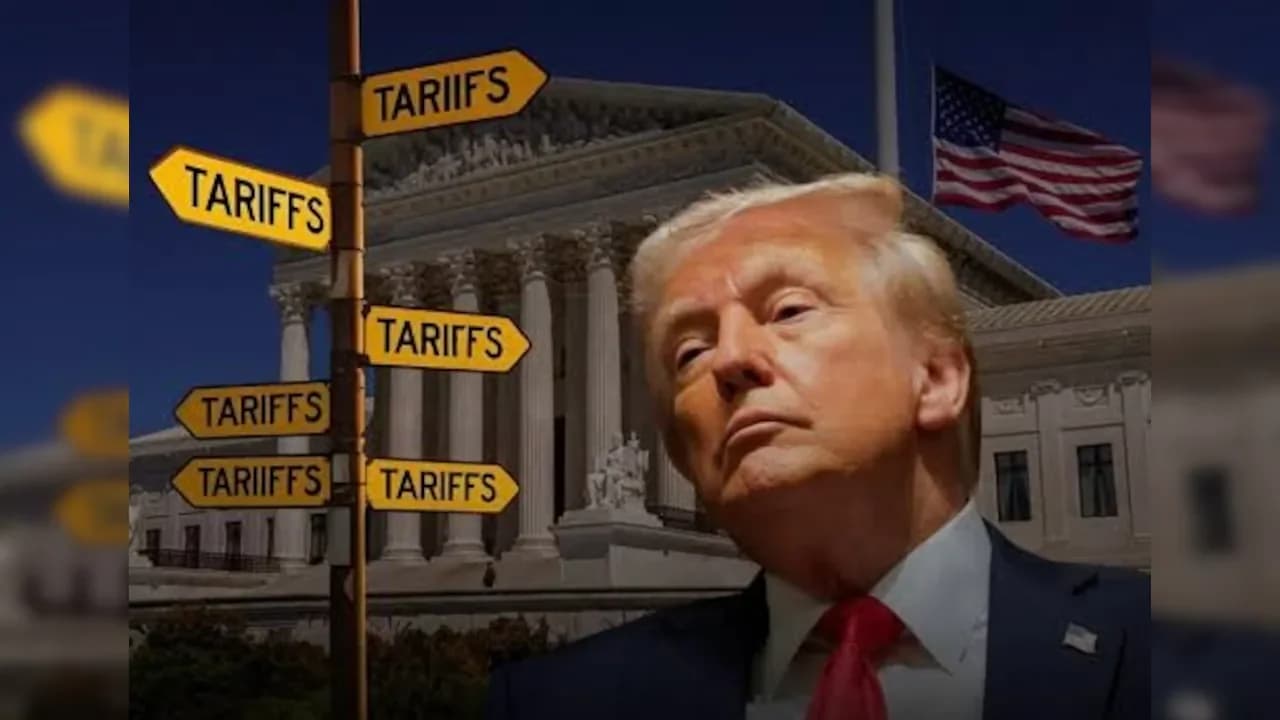
The Trump administration's new Section 301 tariffs on forced labour concerns may face legal challenges due to preferential treatment of recent trade partners, according to the Global Trade Research Institute (GTRI). As reported by Business Standard, the New Delhi-based think tank argues that Washington is offering different tariff treatment to countries with identical Section 301 determinations, effectively using the law to preserve commercial benefits of recent trade agreements rather than applying it uniformly across countries. Section 301 of the US Trade Act of 1974 is designed to address unfair trade practices by trading partners that harm US commerce, with any tariffs imposed under the provision expected to reflect the specific violation and be applied consistently across countries. However, the Trump administration is using this provision in a way that departs from its traditional purpose, creating different tariff outcomes for countries facing the same legal finding and exposing the policy to potential legal challenges. The legal battle has already begun, with two US companies filing a lawsuit challenging the tariffs in the US Court of International Trade, as reported by Business Standard.
The constitutional legitimacy of the Section 301 tariffs faces significant scrutiny from legal experts. According to the Peterson Institute for International Economics (PIIE), the US Constitution vests tariff policy authority in Congress, not the president, creating a fundamental legal challenge. PIIE Senior Fellow and former deputy director-general of the World Trade Organization Alan Wm Wolff stated in a blog that "Congress did not delegate authority of such breadth to the president. If they were challenged in court, the Supreme Court would likely overturn them." The constitutional concerns are compounded by the USTR's differential treatment approach, where countries with identical forced labour findings receive vastly different tariff treatment based on recent trade agreements. This departure from traditional Section 301 usage represents a significant departure from established legal precedent and could form the basis for successful constitutional challenges.
Under the July 23 determination, the European Union and Taiwan face a combined MFN and Section 301 tariff ceiling of 10 per cent, while Japan, South Korea and Switzerland are subject to a 12.5 per cent ceiling. According to GTRI, countries that received the same Section 301 forced labour determination are now subject to different tariff treatment depending on whether they entered into a trade agreement with the US over the past two years. For instance, a product attracting a 6% MFN tariff would face a total duty of 16% if imported from India, compared with 10% if imported from the European Union. The same principle applies to Japan, South Korea and Switzerland, where the combined tariff is capped at 12.5%, while countries without comparable trade agreements generally pay the MFN tariff plus the full Section 301 duty. The USTR's differential treatment approach, where countries with identical forced labour findings receive vastly different tariff treatment based on recent trade agreements, further weakens the legal footing of these tariffs.

Despite receiving the same Section 301 forced labour determination, India faces different treatment compared to the European Union. As noted by GTRI Founder Ajay Srivastava, most Indian exports covered by the measure are subject to the applicable MFN tariff plus the full 10 per cent Section 301 duty, while EU exports pay only enough additional duty to bring the total tariff to 10 per cent. The disparity highlights the preferential treatment granted to countries with recent US trade agreements, with the US trade-weighted average MFN tariff at only about 2.2 per cent, limiting commercial gains for partner countries. GTRI said the differing tariff treatment for countries covered by the same Section 301 legal finding suggests that the levy is now being determined largely by the existence of a recent trade agreement with the United States rather than the underlying violation. The Indian commerce ministry is currently awaiting the US to devise a framework that offers India a meaningful competitive advantage over competing nations before concluding the bilateral trade agreement.
The legal challenges extend beyond the current forced labour investigation to future Section 301 actions. According to GTRI, the USTR has also initiated a Section 301 probe into India and several other economies over alleged excess capacity, with findings awaited. GTRI Founder Ajay Srivastava noted that "tariff action relating to the excess capacity investigation will be even more susceptible to judicial overturn." If the Section 301 tariffs are eventually struck down, it would mark the second judicial setback for Trump's tariff strategy, following the US Supreme Court's February invalidation of reciprocal tariffs imposed under the International Emergency Economic Powers Act. As reported by PIIE's Alan Wm Wolff, "After originally presenting tariff measures as responses to a national emergency and next as remedies for balance-of-payments problems, officials now characterise their latest effort as a tool to press other countries to intensify their efforts against forced labour." The think tank warns that "the first two approaches failed to achieve the administration's objective of lasting worldwide US tariffs, and the third will probably fail as well."