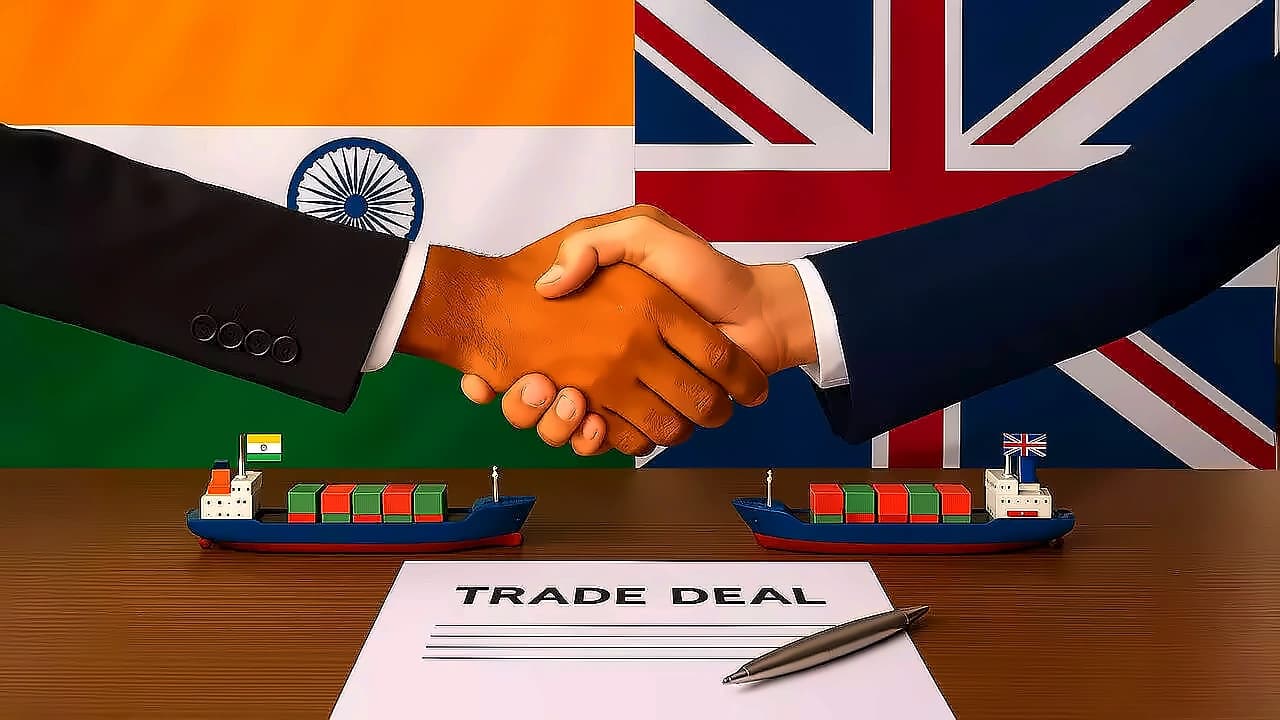
House of Lords member Sonny Leong has provided crucial reassurance to India regarding the UK's commitment to the Comprehensive Economic and Trade Agreement (CETA), stating that 'We have no intention of undermining the benefits of the trade deal for any specific sector'. Speaking in the British Parliament during discussions on steel import restrictions, Leong emphasized that 'most of the imports do not even meet the quota. So until it hits the quota, the 50 per cent (tariff) does not come in'. The UK Secretary of State for Business and Trade met India's Commerce Minister Piyush Goyal on Tuesday in New Delhi to discuss bringing the FTA into force as quickly as possible, with both sides reviewing progress under the trade pact signed in July last year. According to The Times of India, India and the UK on Tuesday agreed to resolve the gaps so that the bilateral trade agreement can be implemented at the earliest. Commerce Secretary Rajesh Agrawal confirmed that 'Engaged in extensive discussions with UK Permanent Secretary Ms. Amanda Brooks on India-UK CETA implementation. Took stock of progress and worked through the sticking points, while exploring new pathways under India-UK CETA Global Trade Economic Partnership aligned with Viksit Bharat'. Also Read
The number of Indian-owned companies in the UK has experienced unprecedented growth, reaching 1,912 firms in 2026, representing a 60% year-on-year increase from 1,197 companies in 2025, according to the latest India Meets Britain Tracker 2026 from Grant Thornton UK, developed with the Confederation of Indian Industry and India Global Forum. These businesses generated a combined turnover of £105.77 billion, up from £72.14 billion in the previous year. Even after adjusting for methodological changes, the increase stood at 49.5%, the strongest annual rise since the tracker began in 2014. The growth was accompanied by rising tax contributions and employment, with Indian-owned firms paying £378 million in corporation tax during the year and collectively employing more than 203,500 people across Britain. The expansion comes as India and Britain seek to strengthen economic cooperation following the signing of the India-UK Comprehensive Economic and Trade Agreement (CETA) in July 2025, with bilateral trade between the two countries reaching £47.9 billion, up 10% year-on-year.
Britain's steel safeguard measure and carbon border adjustment mechanism (CBAM) have emerged as major issues delaying the implementation of the CETA agreement, with steel imports currently well below proposed quota thresholds. From July 1, 2026, the UK will limit tariff-free steel imports, reducing overall quota volumes by 60% compared to the existing steel safeguard mechanism, with imports exceeding the quota attracting a 50% tariff. However, as per Leong's parliamentary statement, 'most of the imports do not even meet the quota. So until it hits the quota, the 50 per cent (tariff) does not come in'. According to The Times of India, India wants the issue to be resolved as Britain's safeguard measures on steel are coming in the way of rolling out the trade deal, which will lower tariffs and ease access for businesses. The measure applies to steel products that can also be manufactured in the UK, with earlier safeguard measures having imposed import quotas but the new framework reducing those quotas further. Tory peer Andrew Sharpe expressed concern that the steel measures risked jeopardising the implementation of the trade deal with India and called for the government to reverse the 'steel tariffs outright, saving the landmark deal'. The steel trade measure is being put in place to address a 'serious threat' posed by global overcapacity to the UK's domestic steel-making capability, with 70% of UK steel imports coming from overseas and 60% from the EU, while India contributes only 5% of the market. Under the Comprehensive Economic and Trade Agreement (CETA), India has committed to cut tariffs on Scotch whisky from 150% to 75% immediately, and to 40% over the next 10 years.
UK Trade Secretary Peter Kyle is scheduled to visit India on Tuesday to meet Commerce and Industry Minister Piyush Goyal and resolve the trade agreement deadlock. According to the UK government statement, Kyle will seek to advance the trading relationship already worth £48 billion ($56.5 billion). As global conflicts including the continued blockade of the Strait of Hormuz are causing economic shocks across the world's biggest economies, advancing the UK's vital economic partnership with India has become a key priority. The visit comes as Indian authorities express frustration with the UK's new measures imposed after the trade deal was finalised last year, with government officials pointing to the contrast with the European Union, which had offered to protect India's interests given the changes on the anvil. The steel safeguard measures and the UK's planned Carbon Border Adjustment Mechanism (CBAM) have become sticking points in the CETA implementation, with both issues expected to figure prominently during the ministerial discussions. Kyle stated that 'The UK-India FTA is the biggest and most economically significant bilateral trade deal the UK has agreed since leaving the European Union. It covers 30 chapters - including standalone chapters on gender, innovation, environment, and labour - making it one of the most comprehensive trade deals that India has ever signed'. According to The Times of India, Engaged in extensive discussions with UK Permanent Secretary Ms. Amanda Brooks on #IndiaUKCETA implementation, with Commerce Secretary Rajesh Agrawal noting that 'Took stock of progress and worked through the sticking points, while exploring new pathways under #IndiaUKCETA #GlobalTrade #EconomicPartnership aligned with #ViksitBharat'. Also Read
The financial performance of Indian businesses in the UK showed remarkable strength, with 66 businesses reporting annual revenue growth of at least 10%, achieving an average growth rate of 61%, significantly higher than the 42% recorded last year. Prime Focus International Services led with 1,283% growth, followed by Zydus Pharmaceuticals UK at 320% and Rizing Limited at 275%. The 66 fastest-growing companies generated £6.13 billion in combined turnover and paid £25.02 million in corporation tax, while employing 14,763 people and reporting £280 million in capital expenditure. According to economic think tank GTRI, India's exports worth USD 775 million to the UK could be impacted by Britain's decision to impose a carbon tax on products such as iron and steel, aluminium, fertiliser and cement from 2027. India's exports of iron and steel and related products to the UK stood at USD 893.4 million in 2025-26, forming a significant part of the country's total merchandise exports to Britain, which amounted to USD 13.4 billion. Despite rising regulatory and labour cost pressures, Grant Thornton noted that the UK remained attractive for Indian businesses seeking stability, institutional depth and access to high-value sectors such as digital technologies, life sciences, financial services and clean energy. New Delhi may consider rebalancing some of the tariff concessions offered to British products under the agreement, including on Scotch whisky, if its concerns over steel safeguards and CBAM are not adequately addressed, according to government sources cited by PTI. There are some concerns that aspects of the bilateral trade deal may have to be renegotiated as a result of the UK's steel tariffs coming in from July, with reports suggesting that New Delhi might be reconsidering the significant slashing of Scotch whisky tariffs - from 150% to 75% immediately and down to 40% in the longer term.
Indian companies now employ 203,549 people in the UK, representing a 60.6% increase from the previous year, highlighting the increasing role of Indian capital in supporting the UK economy. Tata Motors-owned Jaguar Land Rover remains the largest Indian employer in Britain with 44,103 employees, followed by Tata Steel Europe with 19,600 workers and Borelli Tea Holdings with 5,040 employees. The Technology, Media, and Telecom (TMT) sector dominated in terms of sector focus, accounting for 33% of companies and driving growth for the 13th consecutive year, with companies like LTIMindtree, Wipro, and Prime Focus leading the segment. The report noted that 26% of firms in the tracker were new entrants, suggesting Indian businesses continue to view Britain as a long-term investment destination even as geopolitical tensions, energy costs and tighter immigration rules complicate expansion. The Technology sector followed at 15%, while Pharmaceuticals and Chemicals accounted for 14% and Automotive 9%. While London remains the preferred destination for Indian businesses, its dominance is gradually declining as companies increasingly establish operations across other parts of Britain. The capital now hosts 38% of Indian-owned businesses, generating £2.26 billion in revenue, compared with more than half between 2018 and 2021. The South of England accounts for 27% of firms, while the Midlands and North host 11% and 12% respectively, with Wales accounting for 3%. Companies in northern England generated £2.60 billion in revenues despite accounting for a relatively smaller share of firms, driven largely by manufacturing businesses. As part of the trade pact, India has agreed to reduce customs duties on UK whisky and gin from 150% to 75% immediately, with the tariff declining further to 40% by the tenth year of implementation. Scotch whisky brands such as Johnnie Walker, Chivas Regal and The Glenlivet are among the leading premium spirits sold in the Indian market. Lord Sonny Leong stressed that 'We have signed a legal treaty with India that underpins the trade deal, and the liberalisation of whisky is a clear part of that. We will adhere to that and support the Scottish Whisky Association to ensure that India meets its obligation'.
While London remains the preferred destination for Indian businesses, its dominance is gradually declining as companies increasingly establish operations across other parts of Britain. The capital now hosts 38% of Indian-owned businesses, generating £2.26 billion in revenue, compared with more than half between 2018 and 2021. The South of England accounts for 27% of firms, while the Midlands and North host 11% and 12% respectively, with Wales accounting for 3%. Companies in northern England generated £2.60 billion in revenues despite accounting for a relatively smaller share of firms, driven largely by manufacturing businesses. The sharp rise in Indian-owned firms comes as the India-UK economic relationship deepens after the signing of the Comprehensive Economic and Trade Agreement (CETA) in July 2025, with tariff reductions across most goods categories expected to be phased in from April 2026. However, concerns about Britain's new tariff-free steel import limitations have been voiced at the World Trade Organization by India, Brazil, Turkey, Japan, South Korea, Switzerland, and Australia. Additionally, Britain has suggested enforcing border controls connected to carbon, opening a new tab on imports of goods like iron and steel, aluminium, cement, and fertilisers on January 1, 2027. According to Grant Thornton's 2025 International Business Report, 99% of Indian firms with a UK presence were planning to expand and nearly 90% of those not yet in the UK intending to establish a base there. The UK Government stated that it remains committed to providing the certainty and stability businesses require to achieve growth during difficult economic periods. Foreign Secretary Yvette Cooper arrived in India on Thursday for talks with External Affairs Minister S Jaishankar, with the ministers expected to have covered the FTA coming into force, with Jaishankar posting on social media that they 'reviewed ongoing progress in our cooperation focusing on trade, technology, supply chains, defence, climate, education and people to people ties'.