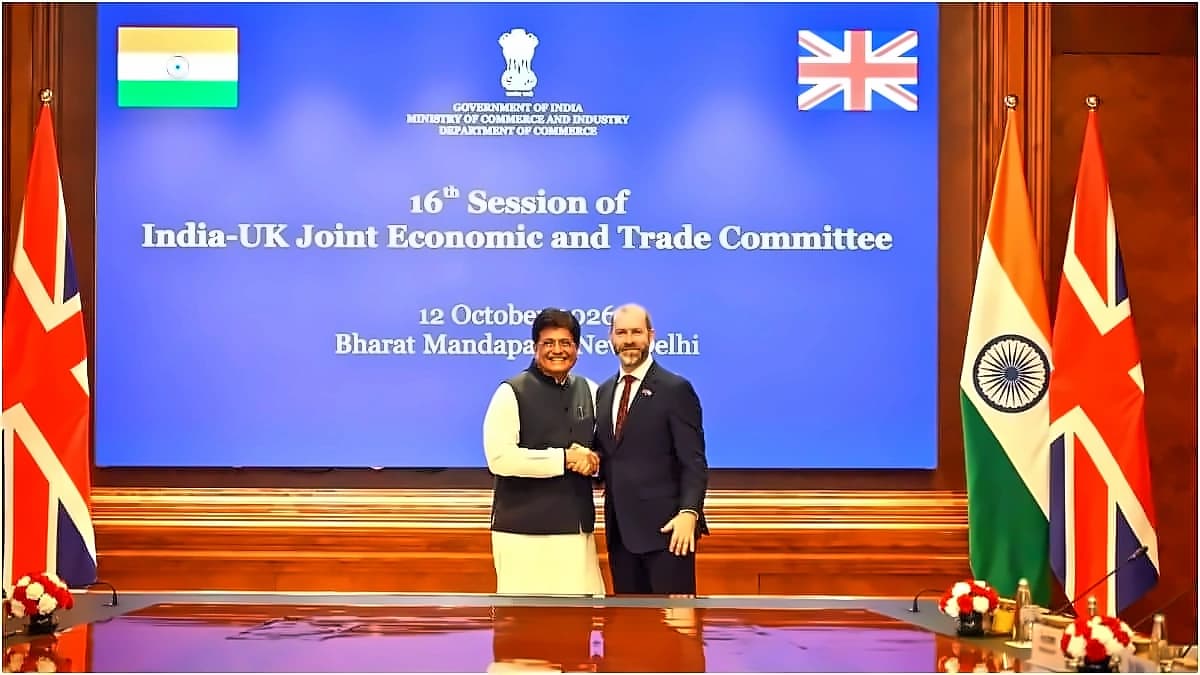
The Comprehensive Economic and Trade Agreement (CETA) between India and the United Kingdom (UK) came into effect on 15 July 2026, marking a major milestone in bilateral economic and trade relations. The agreement aims to increase bilateral trade to USD 100 billion by 2030 from the current level of around USD 55–60 billion, while promoting trade, investment, supply chain integration, employment generation, and long-term economic cooperation. Under the agreement, Indian exports in sectors such as textiles and apparel, leather products, footwear, gems and jewellery, plastics, and other labour-intensive industries will receive zero-duty access to the UK market, enhancing their global competitiveness.
India-UK CETA provides preferential duty treatment for qualifying goods in transit, with specific rules governing the application process. According to reports from Business Standard, the concession is available provided the goods qualify as originating in the UK and the tariff item is covered by notification no. 29/2026-customs. The date when the vessel left Felixstowe is not decisive for determining eligibility, as Rule 20 of the Rules of Origin permits preferential treatment for originating goods arriving in India on or after July 15. This framework becomes particularly significant as CETA enters its operational phase, providing immediate benefits for qualifying goods.
The origin declaration process follows specific procedural requirements as outlined in the rules. As reported by Business Standard, Rule 16(6) permits the proof of origin to be completed before or at the time of importation. The UK exporter can complete the origin declaration and transmit it simultaneously to the designated CBIC email address and the ICEGATE-registered email address. After authentication, a Unique Reference Number will be issued, which must be quoted in the bill of entry.
The customs duty refund process includes specific timeframes and documentation requirements. According to Business Standard, a claim for concessional duty after importation, with refund, is possible under Rules 16(7) and 21. Where the declaration is completed after importation, it must state 'completed retrospectively' and explain the delay. The revised entry itself is treated as the refund application under Section 27, with the claim remaining subject to one-year limitation under Section 27, acceptance of the corrected transaction value and unjust enrichment.