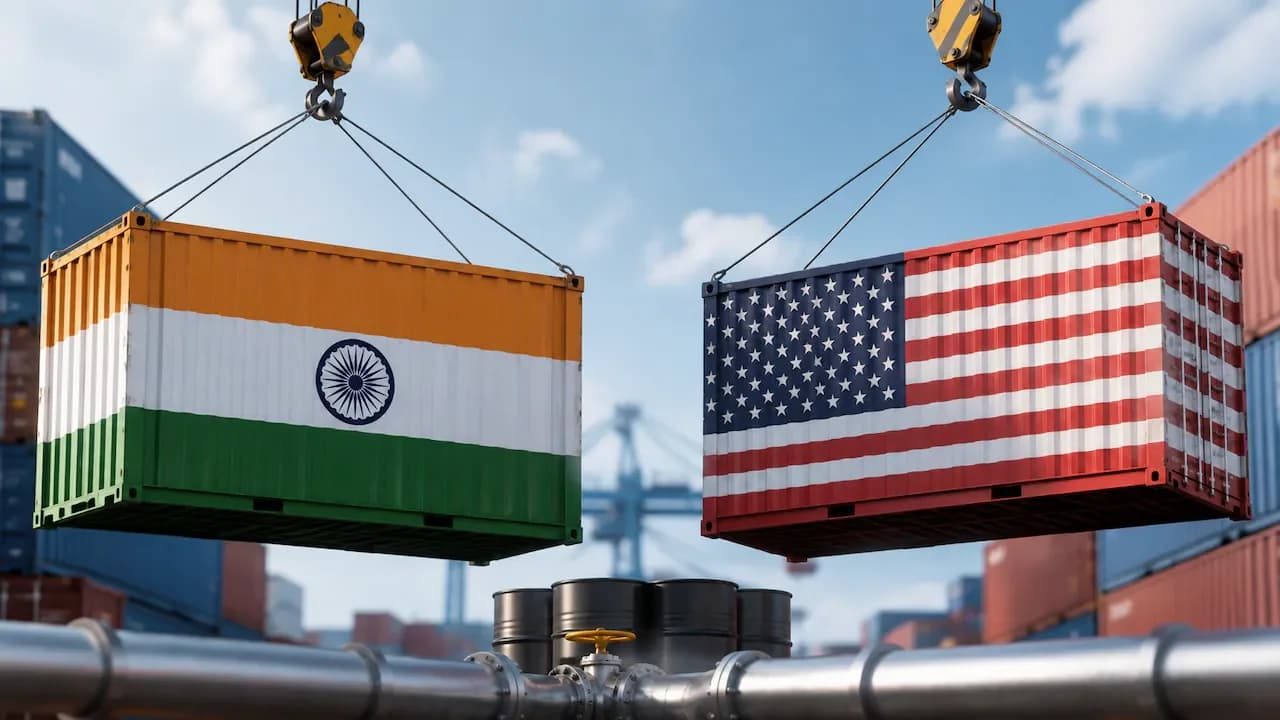
The Lindsey O. Graham Sanctioning Russia and Iran Act of 2026, which cleared the US Senate with an overwhelming 86-11 vote in early August, now faces significant delays as the House resumes work after a five-week recess. According to latest reports from The Times of India, House Speaker Mike Johnson indicated on Thursday that the bill may not even be brought to the floor for a vote before the November 3 midterm congressional elections. Johnson cited limited working days in Washington over the next two months and opposition from senior Democrats on the foreign affairs and tax-writing committees as key obstacles. The speaker also pointed to 'pockets' of unease among House Republicans, stating 'We all believe in sanctioning Russia, but you have to have the right formula if you are passing a bill'. House Foreign Affairs Committee Chairman Brian Mast is examining the bill partly to determine how it could affect gas prices, noting that forcing India and other purchasers of Russian crude to seek oil from alternative suppliers could put upward pressure on prices.
President Trump's latest announcement on 100% tariffs on generic medicines from 2028, potentially rising to 200% by 2029, poses significant threats to India's pharmaceutical sector. As reported by NDTV Profit, pharmaceuticals represent the second largest product category in India's export basket to the US, accounting for about 13% of total exports in 2025-26. The US is the largest export market for all major Indian pharmaceutical companies, with Dr. Reddy's Laboratories and Zydus Life Sciences having close to 50% of their sales to the US in 2023-24. Trump's policy requires companies to reshore production to the US or face these escalating tariffs, forcing Indian pharmaceutical giants like Sun Pharmaceutical Industries with 21 subsidiaries in 2025-26 to reconsider their global manufacturing strategies. Latest reports indicate that Indian companies, including pharmaceutical companies have already announced their plans to invest over $19.1 billion to increase production capacities in the US to escape the 100% tariff in 2028.
Chadha also urged the government to ensure that the US provides assurances of no additional tariffs in the future as part of the US-India Bilateral Trade Agreement terms. As reported by NDTV Profit, he emphasized that any trade deal, if and when signed, should ensure 'definite duty advantage' for India. These requests come as Commerce Minister Piyush Goyal prepares to visit the US to attend the G-20 trade ministerial meeting from September 30 to October 1, where he will also meet with US Trade Representative Jamieson Greer to advance trade negotiations. US Ambassador to India Sergio Gor recently claimed that the US-India trade agreement is on the verge of finalisation, stating 'almost everything' about the agreement was done 'in principle'. However, even as Gor expressed confidence, two initiatives taken in Washington in just over a month have brought yet another round of tariff war at India's doorstep.
The US represents the largest market for Indian engineering goods, making any additional levy a potential blow to the sector's competitiveness. The meeting was chaired by Additional Secretary and India's Chief Negotiator for the US trade deal, Darpan Jain, and was held to discuss exporters' concerns ahead of Goyal's visit. The EEPC Chairman specifically highlighted that the US is India's largest market for engineering goods, making tariffs a major competitiveness threat to the sector. India's engineering exports to the US stood at ₹1,64,000 crore ($19.6 billion) in FY26, representing a 2.3% year-on-year growth, as reported by NDTV Profit. Latest data shows that India's imports from the US dropped from 13% in April 2025 to 3% in June 2026, potentially triggering Trump's action against India's energy sourcing strategy.
India faces significant exposure to the proposed Russia sanctions framework as the second-largest buyer of Russian crude oil in July 2026, valued at over $7.3 billion, or about 37% of Russia's global exports. According to Indian government data, India's dependence on Russian crude oil increased from 30% to nearly 43% of its total imports between January and June 2026. The proposed legislation targets the five largest importers of Russian crude oil or natural gas with 100% tariffs, making India a clear target despite Trump's earlier withdrawal of 25% tariffs imposed in August 2025. In February 2026, after the US and India reached a framework for an Interim Agreement as a step towards finalising the trade deal, President Trump announced that the 25% tariffs imposed on India in August 2025 for importing Russian crude oil was withdrawn. However, after the conflict in West Asia, India's dependence on Russian crude increased to record levels, and simultaneously, its imports from the US dropped from 13% in April 2025 to 3% in June 2026, which Trump would surely have viewed as a trigger for action against India.
Business groups have raised significant objections to the legislation, with the Retail Industry Leaders Association, US Chamber of Commerce, and National Foreign Trade Council joining forces to express concerns. According to The Times of India, Ellen Jackson, director of government affairs at the Retail Industry Leaders Association, stated 'We continue to remain concerned that a piece of the bill could have unintended consequences for consumers by authorizing new, expansive tariffs on other countries, who are our trading partners and allies'. The opposition is particularly strong among Democrats, with Representative Gregory Meeks, the senior Democrat on the House Foreign Affairs Committee, stating he could not back legislation that would give the president tariff powers 'that he doesn't have'. Representative Brad Schneider also objected to the tariff provision, saying 'I'm not prepared to give any president, but in particular this president, more unfettered authority over tariffs'. The legislation has also received criticism from the US Chamber of Commerce and the National Foreign Trade Council, which represents trade-dependent companies including ExxonMobil Holdings Corp., General Electric Co., Ford Motor Co., and Pfizer Inc.