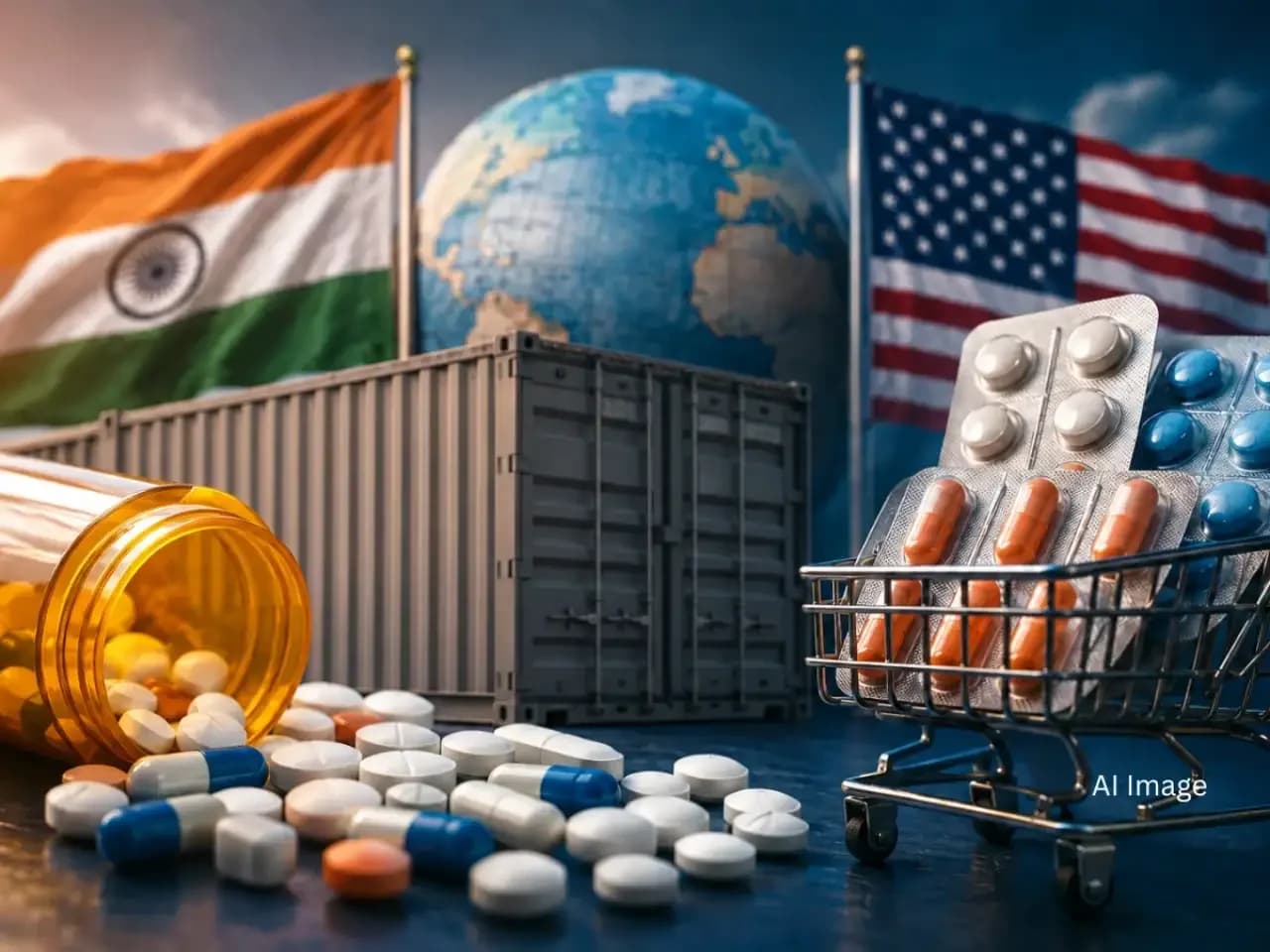
President Donald Trump has pledged to impose 100% tariffs on companies making off-patent medications by 2028, rising to 200% a year later unless they move production to the US. According to reports from Business Standard, this threat faces formidable commercial and political obstacles that may prevent full implementation. The tariffs are designed to force manufacturers to relocate production from India and other countries to American soil.
Generic medicines operate on high volumes and low margins with average EBITDA margins of around 22% for Asia's five biggest players, significantly less than the world's top five innovative drugmakers. As reported by Business Standard, off-patent medicines account for more than 90% of US prescriptions but only a fraction of spending due to their low prices. Healthcare analyst Spencer Perlman estimates that the threatened tariffs could increase total prescription-drug spending by roughly 8% to 15% if imposed.
Rather than rushing to establish new manufacturing facilities, major Indian pharmaceutical companies like Sun Pharmaceutical Industries Ltd. and Dr. Reddy's Laboratories Ltd. are advised to bid their time according to the analysis. The report suggests that these duties may never fully materialize due to the crucial role generic medicines play in the healthcare system. The threat of tariffs could ultimately be borne by American patients and the wider healthcare system, potentially leading to drug shortages.
India's pharmaceutical industry was born from a 1970 decision to abolish pharmaceutical product patents, encouraging domestic companies to master reverse-engineering Western medicines. By the time India restored product patents in 2005, these companies had spent three decades building expertise and scale for off-patent drug exports. The US embraced generics after a 1984 law opened the door for FDA approval on shorter timelines, ultimately making India the world's pharmacy. Some Indian firms like Sun Pharmaceutical and Aurobindo Pharma Ltd. have invested in US manufacturing for higher-margin treatments, but these are commercial decisions rather than tariff response strategies.