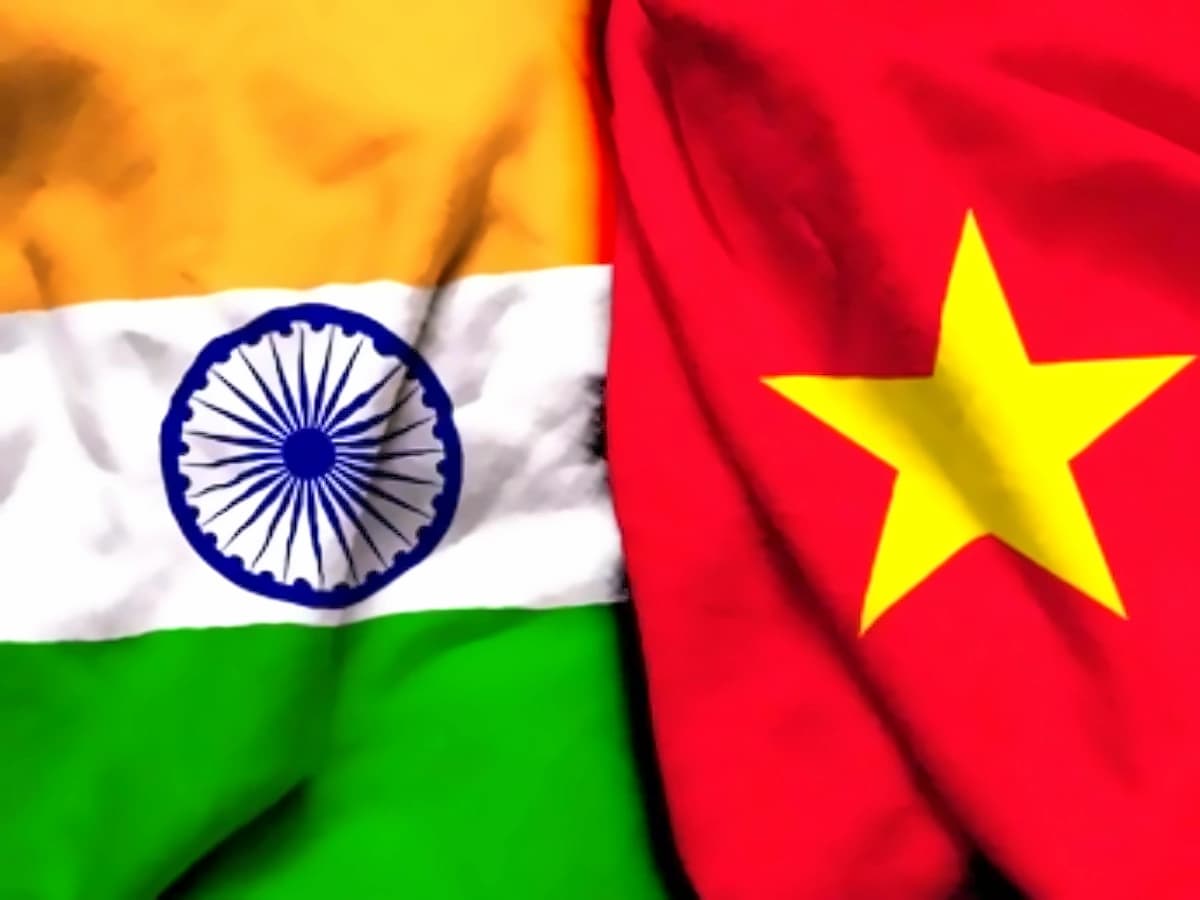
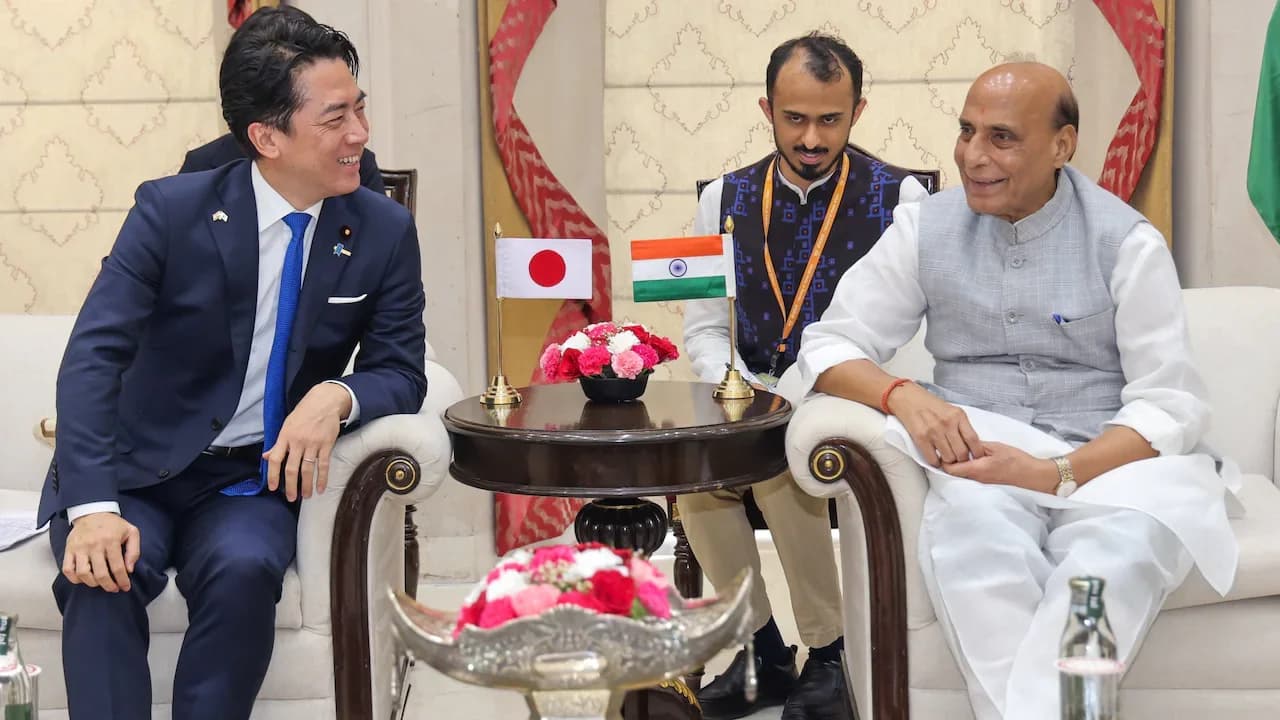
Following the recent high-level bilateral meeting between Prime Ministers of India and Vietnam on the sidelines of the BRICS Summit, Defence Secretary Rajesh Kumar Singh on Sunday held a meeting with Vietnam's Deputy Minister of National Defence, Senior Lieutenant General Nguyen Truong Thang to enhance bilateral ties. According to the defence ministry, the parleys focused on strengthening the bonds of friendship, advancing regional security, and deepening the bilateral Enhanced Comprehensive Strategic Partnership. The discussions centred on accelerating joint initiatives, technology sharing and defence industrial collaboration, with both sides reaffirming their shared commitment to expanding maritime and defence ties to ensure a peaceful, stable, and rule-based regional security architecture. The interaction underscores the growing momentum in defence ties between India and Vietnam, building directly on the strategic vision set forth by both Prime Ministers at the BRICS summit.
India and Vietnam have agreed to significantly deepen their defence cooperation through joint production of military hardware during the 19th India-Vietnam Joint Commission Meeting (JCM) on trade, economic, scientific and technological cooperation. According to reports from the Ministry of External Affairs (MEA), External Affairs Minister S Jaishankar and Vietnam's Foreign Minister Le Hoai Trung discussed ways to deepen cooperation across several sectors on Monday. The talks focused on speeding up joint initiatives, sharing technology and expanding collaboration between defence industries, marking a notable shift from traditional military exchanges to building a more durable ecosystem. As per the MEA, in a productive and outcome-oriented discussion, the two ministers reviewed the full spectrum of bilateral relations under the India-Vietnam Enhanced Comprehensive Strategic Partnership. The latest engagement also reinforced both countries' preference for ASEAN-led mechanisms and a rules-based regional order as tensions in the Indo-Pacific persist.
The two countries have decided to expand bilateral trade by building stronger supply chains and widening market access for Indian products. As reported by the MEA, the cooperation areas identified include expanded market access for Indian marine and agricultural products and pharmaceuticals. In May, India and Vietnam elevated their ties to an enhanced comprehensive strategic partnership and set a USD 25 billion annual trade target by 2030. The enhanced partnership framework encompasses multiple sectors including air connectivity, nuclear energy, space cooperation, and heritage conservation. Other areas identified for deeper cooperation include port and air connectivity; nuclear energy and space sector; heritage conservation; cooperation in standards for seafarers; capacity building, and people-to-people ties. The talks focused on speeding up joint initiatives, sharing technology and expanding collaboration between defence industries, marking a notable shift from traditional military exchanges to building a more durable ecosystem.
During their talks, the two sides deliberated on the prevailing situation in West Asia and South China Sea, a region that has witnessed increasing Chinese military muscle-flexing. According to the MEA, there have been growing concerns over China's sweeping claims of sovereignty over all of the South China Sea, a huge source of hydrocarbons. Several countries in the region including Vietnam, the Philippines and Brunei, have counterclaims, and India and many other democratic countries have been pressing for peaceful settlement of disputes and adherence to international law, especially the UNCLOS (UN Convention on the Law of the Sea). The strategic value of the India-Vietnam partnership has been shaped in part by developments in the South China Sea, where China's growing influence has fuelled territorial disputes with Vietnam. Defence cooperation with India offers Hanoi an additional strategic relationship that does not depend on alliance politics but still contributes to deterrence, maritime awareness and operational capacity. The two sides also underlined the importance of close coordination in international forums, especially under the ASEAN Defence Ministers' Meeting Plus framework, with collaborative mechanisms such as the ADMM-Plus Experts' Working Groups seen as useful for building collective security arrangements and preserving regional stability in the Indo-Pacific.
In his opening address at the meeting, Jaishankar emphasized that Vietnam is a key partner in India's Act East Policy, vision MAHASAGAR as well as in its outlook of the Indo-Pacific. As reported by the MEA, Vietnam is equally an important partner in the framework of India's Comprehensive Strategic Partnership with ASEAN. Prime Minister Narendra Modi announced the vision MAHASAGAR or 'Mutual and Holistic Advancement for Security and Growth Across Regions' for India's engagement with the Global South during his visit to Mauritius in March last year. The conversation came soon after the two prime ministers held discussions on the margins of the BRICS Summit, giving the defence track added political momentum. The emphasis on rules and stability reflects the wider strategic environment in Asia, where sea lanes, contested waters and competing security claims continue to shape defence planning for countries such as India and Vietnam.
Last year, the two sides inked a pact to set up a framework for submarine search, rescue and support mechanism and signed a letter of intent (LoI) to strengthen bilateral defence industry collaboration. In May, Defence Minister Rajnath Singh met his Vietnamese counterpart, General Phan Van Giang, in Hanoi, reviewing the broader partnership and discussing cooperation in maritime security, defence industry ties, training and regional stability. The two ministers also reviewed the broader partnership and discussed cooperation in maritime security, defence industry ties, training and regional stability. Those discussions provided the backdrop for the latest official-level meeting, which appears designed to convert political intent into a more structured defence agenda. In May, Singh said India had signed a deal with Vietnam for the supply of BrahMos missiles and was in the final stages of a similar agreement with Indonesia. That disclosure pointed to the growing place of defence exports in India's strategic outreach, particularly in Southeast Asia, where governments are looking to diversify suppliers and strengthen deterrence capabilities. The next Defence Policy Dialogue will be held in India on the sidelines of Aero India 2027, with the scheduled meeting suggesting that defence engagement is no longer being treated as an occasional exchange but as a recurring institutional track with a fixed calendar and broader policy ambition.