India has officially signed a Letter of Offer and Acceptance (LOA) for the purchase of Javelin anti-tank guided missile systems through the US Foreign Military Sales process, marking a milestone in bilateral defence cooperation and demonstrating the enduring partnership between the US and Indian Armed Forces. The signing represents the final step in the deal process, with US Ambassador Sergio Gor emphasizing that this agreement reflects a defence partnership that is growing deeper, more capable, and more consequential. The ambassador noted that the Javelin agreement demonstrates the depth of US support for the Indian Army and creates new opportunities for defence industrial cooperation between the two countries, with tremendous potential for future cooperation that strengthens the defence industrial bases of both countries. The deal comes nine months after the US government notified the US Congress about the sale of 100 shoulder-launched Javelin anti-tank guided missiles and other equipment for $45.7 million to India. Gor announced the development on Friday, calling it "big news" and asserting that it would open the door to co-production possibilities of Javelin missiles, stating that "The engagement between our two nations is at record-high levels."
Tata Advanced Systems Limited (TASL) has signed a memorandum of understanding with Javelin Joint Venture (JJV) to explore co-production of the Javelin All Up Round (AUR) in India, according to a joint media statement released by the firms. Under the agreement, TASL has been selected by the Javelin Joint Venture (JJV) as its "prime partner for future in-country co-production efforts" to establish a "final assembly and integration facility for the Javelin AUR" and "component production capabilities" in India. The proposed arrangement would involve sub-assembly kits produced at Lockheed Martin's facility in Troy, Alabama, and guidance electronics units manufactured at Raytheon's facility in Tucson, Arizona, being shipped to India for final assembly and integration. As per Business Standard, Sukaran Singh, chief executive officer and managing director of Tata Advanced Systems Limited, stated that "This initiative brings critical assembly expertise and knowledge transfer into India's defence industrial ecosystem, while strengthening self-reliance. Local assembly of the Javelin All Up Round will enhance operational readiness and ensure timely access to proven, combat-ready capability for the Indian Armed Forces." The partnership comes just two weeks after the defence ministry published its sixth Positive Indigenization List (PIL) seeking to localize over 400 items, including light tanks and electronics, worth over ₹3,000 crore.
The cost of the deal was not disclosed by Indian authorities, but the US State Department had estimated in November that the missile system and related equipment could cost $45.7 million when it approved the possible sale through the country's Foreign Military Sales process. According to the US Defense Security Cooperation Agency, India is likely to procure 100 FGM-148 Javelin rounds and 25 Javelin Lightweight Command Launch Units under the agreement. The package includes comprehensive support equipment such as trainers for launch units, missile simulation rounds, operator manuals, lifecycle support and spare parts, along with other logistics and support equipment and services. With the signing of the LOA, India becomes a customer of the Javelin system, an advanced, medium-range, fire-and-forget anti-tank guided missile used by the US Army, US Marine Corps, and numerous international customers. The shoulder-mounted missiles are produced by the Javelin Joint Venture, a partnership between US-headquartered defence and aerospace majors RTX Corporation and Lockheed Martin. The deal, which will be through the Foreign Military Sales (FMS) route, will allow the armed forces to bypass the convoluted and long procurement process for contracts.
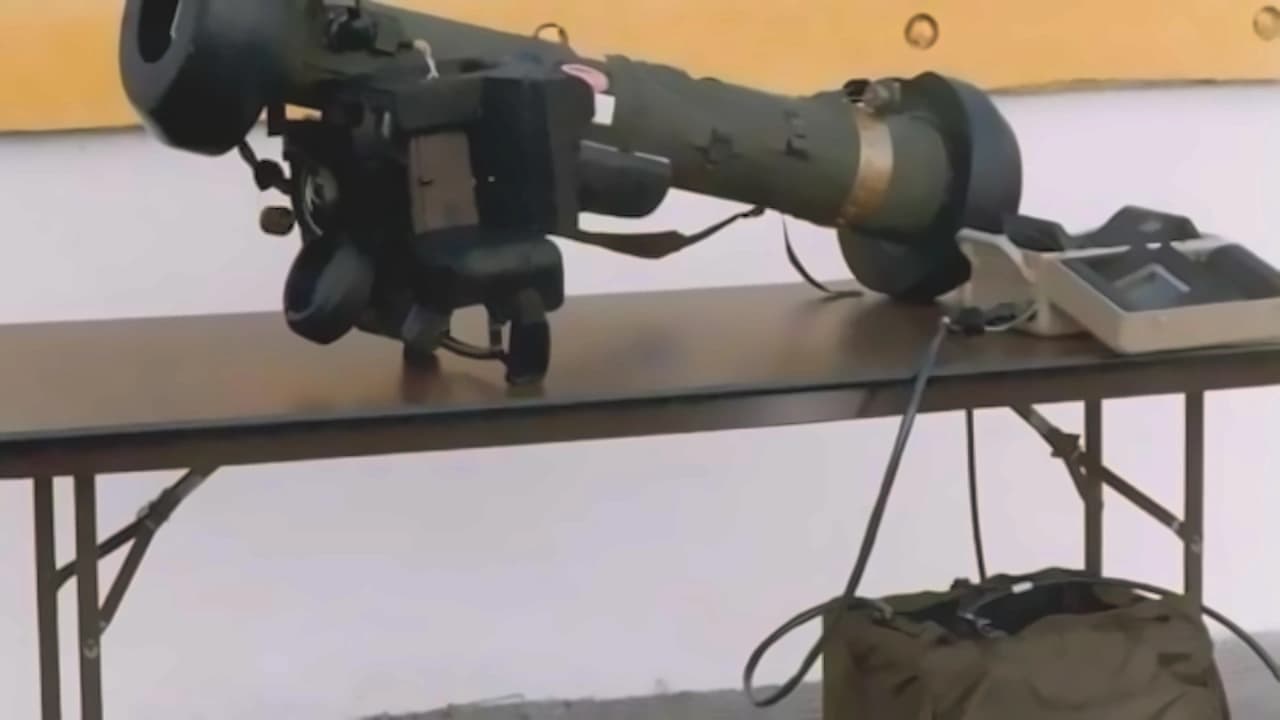
The Javelin system is an advanced, medium-range, fire-and-forget anti-tank guided missile used by the US Army, US Marine Corps, and numerous international customers, designed for use against a wide array of targets, including armoured vehicles and fortified positions. It is primarily intended to engage tanks and other armoured systems, but can also be used against bunkers. The system comprises two components: a reusable Lightweight Command Launch Unit or Command Launch Unit, and a round contained in a disposable launch-tube assembly. The Javelin is produced by the Javelin Joint Venture, a partnership between US-headquartered defence and aerospace majors RTX Corporation and Lockheed Martin. The system's fire-and-forget capability allows operators to fire and immediately relocate or take cover, making it highly effective against armoured threats. The FGM-148 Javelin system costs around $178,000 and locks onto the target's heat signature before launch using its infrared seeker. What makes the Javelin exceptional is its ability to strike tanks from above, where their armour is the weakest - the missile climbs to an altitude of 150 meters, then dives onto the target from above. An infantry soldier carrying a Javelin system on his shoulder can destroy a battle tank in under 15 seconds, while a battle tank costs around $4 million. The system's base model has a maximum range of 2,500 metres, while the more advanced FGM-148F system can fire missiles up to a range of 4,750 metres.
The signing of the LOA is expected to open the door for future collaboration and potential co-production opportunities between US and Indian defence industries, as confirmed by the US Mission in India. This co-production aspect represents a significant opportunity for both countries to deepen their defence industrial partnership and enhance technological collaboration in the defence sector. US Secretary of War Pete Hegseth had confirmed the two countries were moving ahead on the co-production of Javelin anti-tank guided munitions at the Shangri-La Dialogue in Singapore in May. The agreement is structured through the Letter of Offer and Acceptance (LOA) process, which is a government-to-government agreement used by the US government to transfer defence materiel and services to foreign governments and international organisations through the Foreign Military Sales process. The landmark signature further strengthens the US-India Major Defence Partnership by demonstrating the depth of ongoing US support to the Indian Army and opening discussions on mutually beneficial co-production and additional opportunities to strengthen the defence industrial bases of both countries. The deal comes months after Defence Minister Rajnath Singh and his US counterpart Pete Hegseth signed a 10-year framework to deepen bilateral defence relations. The Javelin Joint Venture has produced more than 55,000 Javelin missiles and over 12,000 reusable Command Launch Units so far, demonstrating the system's proven combat effectiveness.
The acquisition of the anti-tank ammunition has a long history that stalled after India first announced its plans to buy the system in 2010. The deal was eventually shelved due to the cost and the US hesitation in allowing trials of the weaponry, even as India bought small quantities of Israeli anti-tank missiles and started developing its own indigenous missiles in the intervening years. The purchase of the defence equipment from the US underlines the growing defence partnership between the US and India, with defence ties between the US and India having continued to evolve and become an important pillar in ties. In October last year, the two countries signed a 10-year Defence Framework Agreement to deepen military cooperation, share technology, enhance intelligence sharing, and bolster strategic alignment in the Indo-Pacific. The deal comes at a time when US President Donald Trump has been pushing for countries, including India, to buy more from the US to address trade defits. The Indian Army's requirement for an advanced ATGM emerged in the early 2000s, when it was using the ageing French-origin Milan-2T and Soviet-era 9M113 Konkurs-M systems, which were no match for third-generation ATGMs like Javelin. When the Indian forces ultimately acquire the Javelin system, it will bring to a close one of the longest-running defence procurement chapters in recent years.