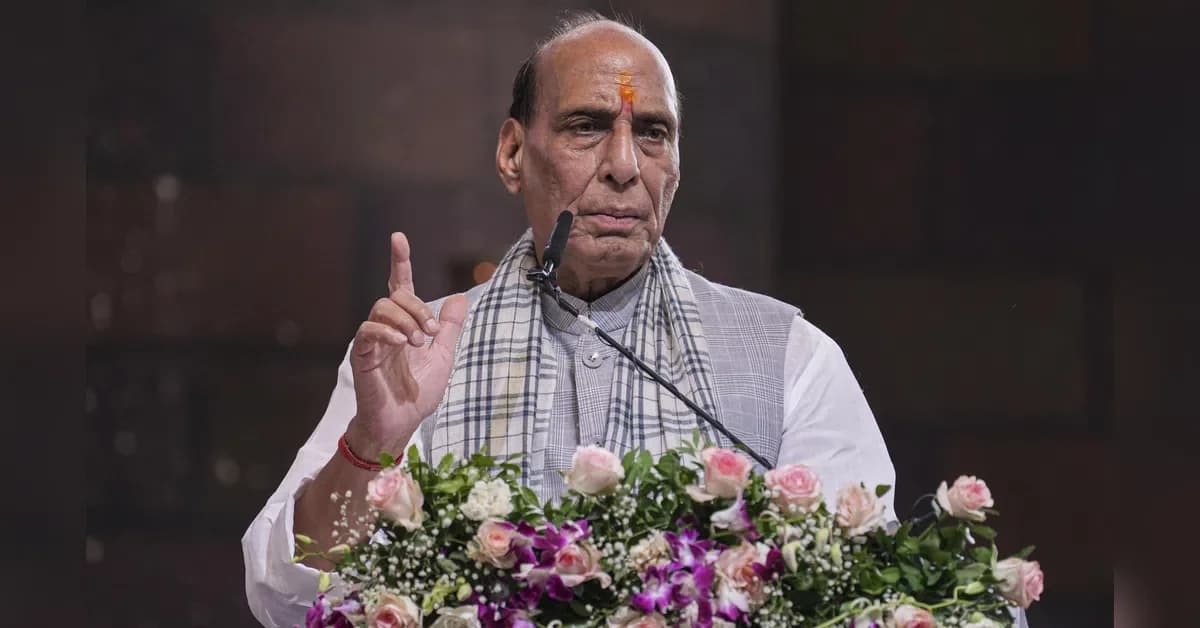
Defence Minister Rajnath Singh on Thursday approved a "revised delegation of financial powers for the defence services," enhancing the spending authority and operational efficiency of field commanders to expedite procurement and project execution. As reported by Business Standard, the Ministry of Defence stated that the revised financial powers, which also cover medical and works projects, have been enhanced by up to 100 per cent and, in some cases, more than doubled. The move is expected to strengthen the operational efficiency of field commanders and enable faster execution of contracts and projects. The revised delegation will facilitate procurements of more than ₹1.25 trillion through the revenue route, as per current-year budgetary allocations, as per the Defence Ministry statement. The increase, according to sources, is from the existing limits wherever applicable, with the revision necessitated by expansion in force levels, increased expenditure on operations and sustenance, and higher budgetary allocations.
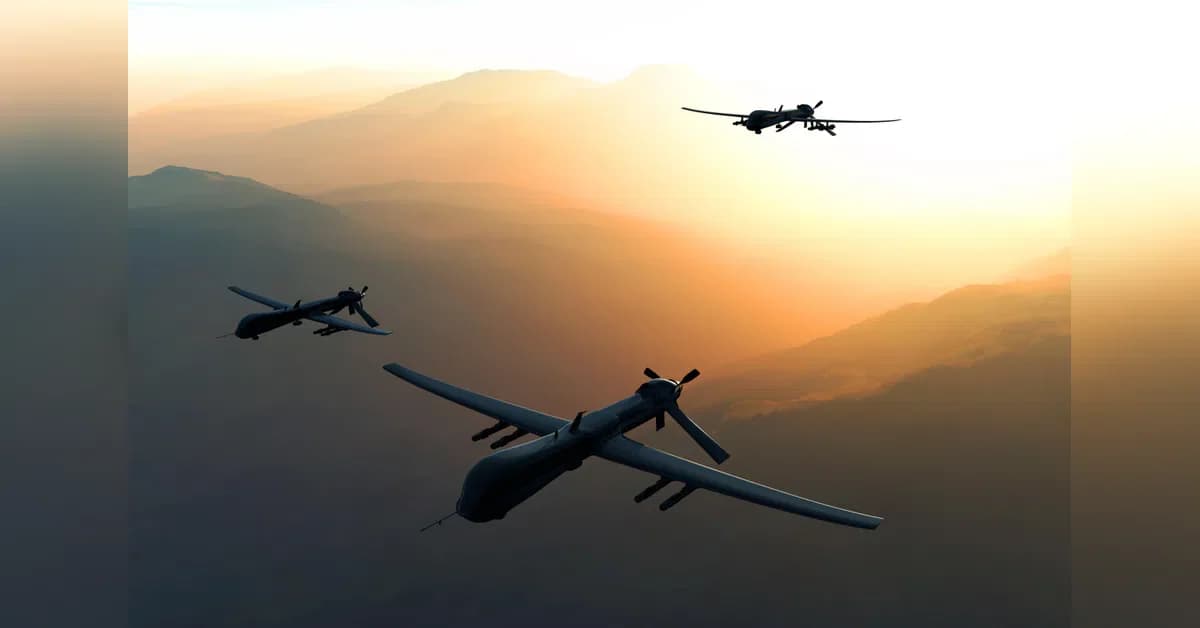
The defence ministry approved a proposal worth about ₹2.38 trillion rupees ($24.85 billion) in March to buy transport aircraft, missile systems and "remotely piloted strike aircraft," or armed drones, without giving a spending breakdown. The push follows India's confrontation with Pakistan last year in May, when both countries deployed a large scale of unmanned aerial vehicles for the first time, highlighting the offensive potential of low-cost drones. According to Reuters, Shah indicated the new orders may follow a fast-track procurement route designed to meet urgent operational needs, with deliveries probably needed within 24 months. The ongoing conflicts in Ukraine and Iran have further sped adoption globally, driving down costs and reshaping battlefield tactics. Ramesh Chandra Padhi of IG Defence noted that "drones are force multipliers on the modern battlefield," with the Indian army following emergency procurement to expedite large-scale drone induction.
India has more than 600 firms making drones and components, with more than 100 focused on defence applications, as reported by Reuters. The companies range from large players such as Adani Group, Larsen & Toubro and Tata Advanced Systems to startups like ideaForge, Newspace Research and Asteria Aerospace. They work on building reconnaissance, logistics, loitering munition, precision-strike and critical component systems. The government has expanded schemes such as Innovations for Defence Excellence (iDEX) to fund prototypes and enable smaller firms to win initial orders and upscale production, reshaping India's drone industry as better order visibility and policy support unlock funding and partnerships. According to Reuters, Shah's Drone Federation India represents more than 550 companies and works closely with the government, indicating the growing scale of the domestic drone manufacturing sector.
New Delhi has started relying on emergency procurement powers and swifter efforts under the Defence Acquisition Procedure, compressing timelines to months instead of years. The government has prioritised domestic manufacturing while streamlining typical slow defence procurement processes. According to Reuters, the changes are reshaping India's drone industry, with better order visibility and policy support unlocking funding and partnerships. The defence ministry has opened more areas of procurement to startups and private firms, eased testing norms and pushed the armed forces to add systems through repeat and interim orders that let companies refine products rapidly. Venture investment and tie-ups with larger defence firms have picked up, with companies ramping up manufacturing and research to fill rising military demand. Industry executives say these policy changes are transforming the drone sector by improving order visibility, attracting investment and encouraging partnerships between startups and larger defence firms, with companies now scaling manufacturing and research capabilities to meet rising military demand.
The DFPDS-2026 framework includes significant enhancements to financial powers, with special financial powers delegated to Army/Air Force/Naval commanders increased substantially along with a 100 per cent increase in the total ceiling to meet urgent operational requirements. As per the release, financial powers delegated for indigenisation and Research & Development within the military ecosystem have been doubled to boost Aatmanirbharta in defence by minimising dependency on Foreign Original Equipment Manufacturers. The framework will drive domestic self-reliance by engaging private startups and MSMEs, while a doubling of financial powers for works projects will guarantee much faster infrastructure development. New provisions have been included to promote Joint Service procurement by the Lead Service with higher delegation than normal procurement, with many new Competent Financial Authorities introduced to decentralise procurement of goods and services. The revised delegation comes after financial powers were last notified in 2021, with the revision necessitated due to expansion in force level and increased expenditure on operations. The ministry said the revised delegation, coupled with the updated Defence Procurement Manual notified in October 2025, is expected to accelerate decision-making and ensure timely availability of critical resources for the armed forces.
The Indian Navy is expected to induct five new warships over the next two months, marking one of the biggest additions to the Indian Navy's fleet in recent years. The five vessels, built at an estimated cost of around ₹15,000 crore, have been constructed by three state-run shipyards -- Mazagon Dock Shipbuilders Limited, Garden Reach Shipbuilders & Engineers and Cochin Shipyard Limited. According to reports, Mazagon Dock has built the 'Mahendragiri', an Alpha-class warship, while Garden Reach Shipbuilders has constructed three vessels, including a shallow water craft, a survey vessel and a frigate. Cochin Shipyard has built one vessel that is also expected to join the Navy fleet. Market participants believe the latest policy measures and the upcoming induction of new naval assets underline the government's continued focus on strengthening domestic defence capabilities and improving the operational readiness of the armed forces. Senior officials, including Chief of Defence Staff General NS Raja Subramani, Chief of the Army Staff General Upendra Dwivedi, Chief of the Naval Staff Admiral Krishna Swaminathan and Defence Secretary Rajesh Kumar Singh, were present during the release of the revised financial powers document in New Delhi.