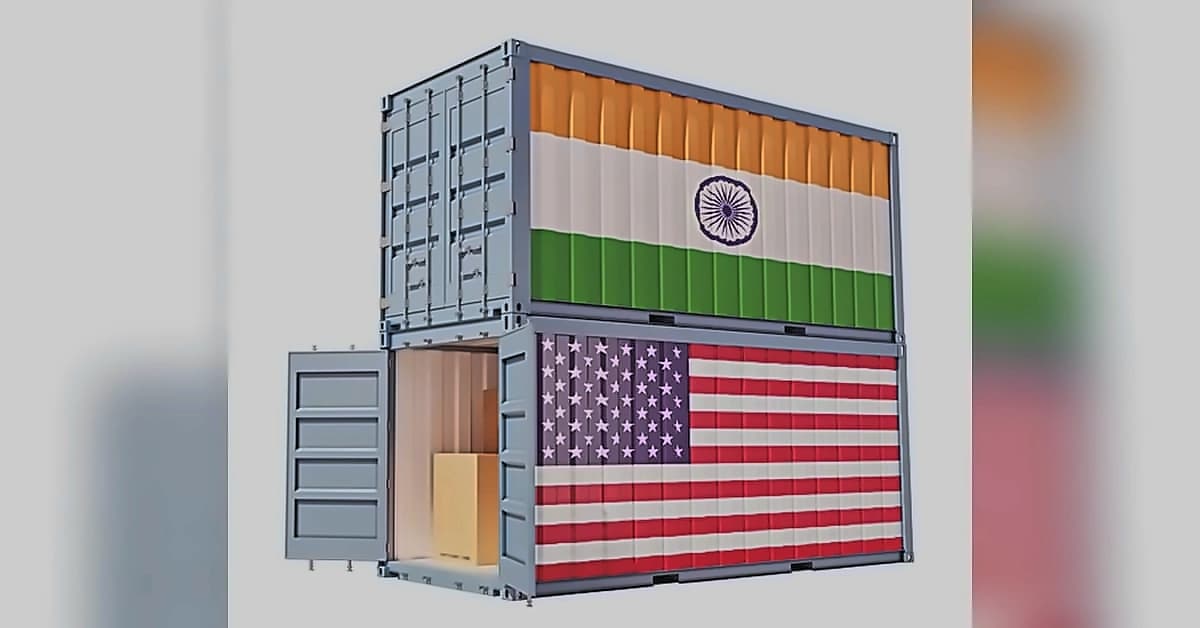
India and the US are 'very, very close' to signing their bilateral trade agreement, according to US Deputy Secretary of State Christopher Landau. Speaking on Tuesday at the SelectUSA Investment Summit in Maryland, Landau emphasized that while the deal is nearly complete, 'we have to get over that last hurdle' to finalize the agreement. As reported by PTI, Landau noted that the two countries have been negotiating for months and it's important for both sides to 'reach some closure' and move forward with other agenda items. 'I think it is very important to get a final resolution of that trade deal. We have been talking now for months that we are very close, and I think we are very close,' Landau told reporters on the sidelines of the summit. He recently visited India and acknowledged he has 'no huge inside information to provide on when that is coming' but reiterated his belief that the deal is 'very, very close' to completion. According to recent reports, 'The deal is not stuck—it's just waiting for the right moment.'
Landau highlighted India's global significance, stating that 'India now has the greatest population in the world' and 'India has incredible potential, economic potential'. According to PTI, the US official noted that while India has been 'not fully realised because of (the) economic models that India chose to pursue', the country is now 'poised to have massive economic development and to lift many hundreds of millions of people out of poverty'. He emphasized that 'India is one of the great powers of the world' and stressed the importance of finalizing the trade deal to move on to other bilateral issues. 'I think there's no question that India is one of the great powers of the world. India now has the greatest population in the world. And, India has incredible potential, economic potential, but I think, frankly, for many decades it was not fully realised because of (the) economic models that India chose to pursue,' Landau said.
Latest US trade data reveals significant progress in bilateral trade relations, with the US goods trade deficit with India narrowing to $3.8 billion in March 2026, down from $7.4 billion in March 2025. According to the US Census Bureau and Bureau of Economic Analysis, the overall goods and services deficit rose to $60.3 billion in March, up from a revised $57.8 billion in February. The detailed country data shows US exports to India reached $4.3 billion in March, while imports from India totaled around $8.4 billion. This improvement comes as India and the US continue negotiations over trade access, supply chains, technology cooperation and tariff issues, with the India-US trade deal closer than it has been in months despite ongoing tariff disagreements.
The progress faces potential complications from the Section 301 investigation launched on March 12, which covers 16 major economies including India, China, Japan, South Korea and the European Union. The probe spans critical sectors such as electronics and semiconductors, and depending on its findings, the US could impose new tariffs or revise existing ones. The turning point came when the US Supreme Court struck down the earlier reciprocal tariff regime on February 20, forcing Washington to look for alternative tools to maintain trade pressure. Currently, the US relies on Section 122, which allows temporary tariffs at around 10%, but this mechanism is limited in scope and duration. The focus has now shifted to Section 301, which offers a more flexible and long-term policy route. As one official involved in the discussions noted, 'Discussions are almost concluded, but the timing of signing the deal could align with the Section 301 outcome.'

Export-oriented stocks remain sensitive to updates around tariff changes and final deal timelines, with the India-US trade deal closer than it has been in months. While progress in negotiations supports positive sentiment, continued tariff disagreement adds uncertainty. The India-US trade deal timeline may depend on when the Section 301 probe concludes, creating a situation where the deal is ready in principle—but not yet ready in timing. India maintains a trade surplus of $34 billion with the US across multiple sectors including pharmaceuticals (40% of US generics), electronics, gems & jewellery, textiles & apparel, and engineering goods. US Trade Representative Jamieson Greer recently acknowledged that agriculture remained one of the difficult areas in the negotiations, telling the Committee on Ways and Means of the US Congress that 'India is a tough nut to crack... they've protected their agricultural markets for a very long time.' However, he noted potential for mutual agreement on items like distillers dried grains (DDGs), soybean meal and ethanol, which are among the items under discussion.