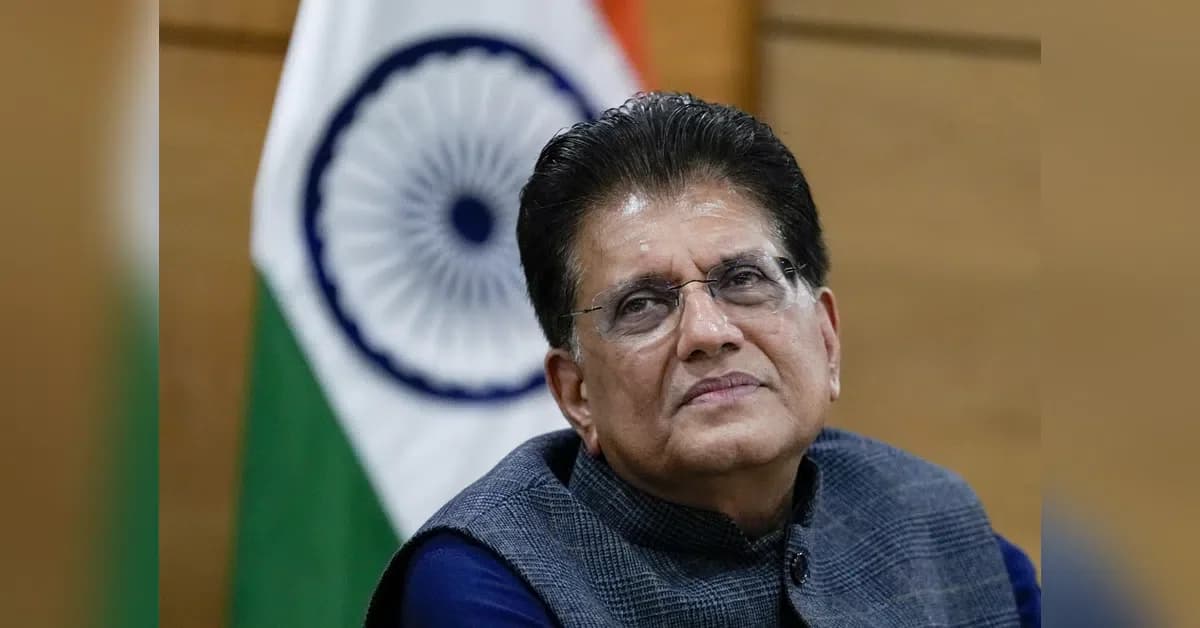
Commerce and Industry Minister Piyush Goyal expressed confidence that the first phase of the India-US Bilateral Trade Agreement (BTA) will be operationalised after the US provides Indian exports with a competitive tariff edge over neighbouring countries and ASEAN nations. Speaking at an event organised by Assocham, Goyal said "I have categorically and on several occasions expressed the confidence that what we have finalised with the US as the first tranche of the bilateral trade agreement, which was announced by our leaders on 3rd of February, will come into operation as soon as the United States is able to ensure that we get a comparative advantage over our competitors, the countries in our neighbourhood, the countries in the ASEAN region and other countries with whom we compete." The minister emphasized that the agreement will take effect once the US ensures Indian exports enjoy a comparative tariff advantage over countries in the neighbourhood and ASEAN region, with tariff advantage vis-a-vis these nations giving price competitiveness to Indian goods in the American market. Goyal's comments come amid ongoing discussions over the trade relationship between India and the US, including the ongoing US Section 301 process being conducted by the Office of the United States Trade Representative (USTR), noting that India has actively participated in these investigations. As per Hindustan Times, Goyal described the deal as "done on paper" - completed in substance but deliberately held back until the comparative advantage condition is actually delivered.
The minister's remarks come days after the United States imposed an additional 10% tariff on imports from India under Section 301 of the Trade Act following an investigation into forced labour practices. India is among 17 economies facing the 10% duty, the lowest tariff category under the action, with other countries in the same category including Canada, the UK, Mexico, Bangladesh, Pakistan, Malaysia, Indonesia and Sri Lanka. A higher 12.5% tariff has been imposed on economies that, according to the Office of the US Trade Representative (USTR), have weaker or no comparable measures to address forced labour concerns. Goyal stated that India had participated in the Office of the United States Trade Representative's Section 301 investigations related to forced labour concerns, as reported by NDTV Profit. He maintained that India would continue to capitalise on opportunities in the US market as long as its exporters retain a competitive tariff advantage over rival economies, with the US having imposed a 10 per cent tariff under one probe while another investigation is currently underway. When asked about reports linking potential tariffs to Russian oil, Goyal declined to comment, saying, 'We don't speculate. We don't comment on speculation.' The proposed legislation, which is yet to be passed by the US Congress, would authorise the US President to impose tariffs of up to 100% on imports from countries continuing to purchase Russian crude oil or natural gas after the law comes into effect.
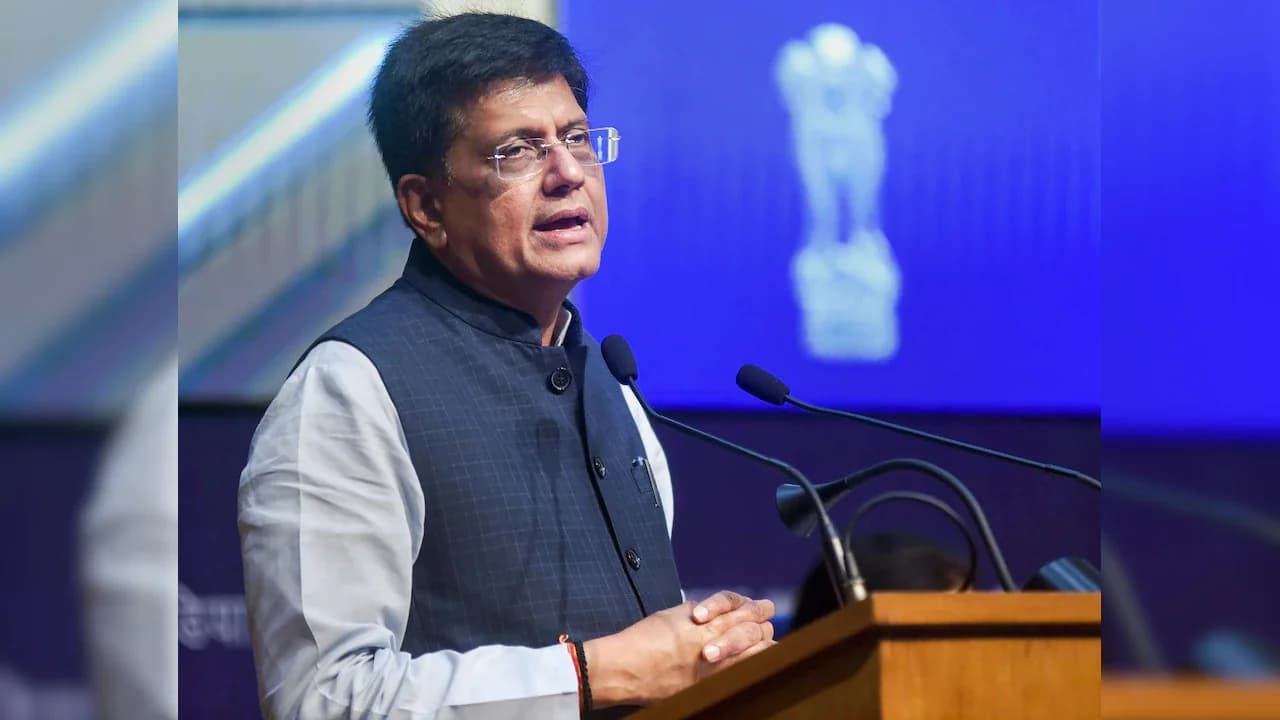
The minister emphasized India's commitment to maintaining its competitive position in the US market through strategic tariff advantages. Goyal stated that "For us, as long as we have comparative advantage or comparable duties, India will continue to grow its exports and continue to leverage the large US opportunity." As reported by NDTV Profit, he said 'As long as we have a comparative advantage in terms of comparable duties, we will continue to leverage the opportunities available in the US market'. This positioning reflects India's focus on ensuring its exports remain competitive against both US-based and regional competitors in key sectors, with India exporting goods worth about USD 87 billion to the US in 2025-26 forming the basis of the first tranche of the BTA. Despite global uncertainties, India's exports have recorded 15 per cent growth so far this fiscal year (April-July), demonstrating resilience in challenging market conditions. Goyal noted that India's exports of both goods and services continued to grow during 2025-26 despite prolonged geopolitical tensions, uncertainties relating to crude oil and gas supplies, developments affecting the Strait of Hormuz and the Red Sea, and the imposition of 50 per cent tariffs on most Indian exports to the US for a substantial part of the previous year.
Goyal identified specific countries that India must maintain a competitive edge over to ensure the trade deal's success. Countries such as Bangladesh, Sri Lanka, Vietnam, Thailand, Cambodia, Indonesia and Malaysia compete with India in the US market, and a tariff advantage over them would improve the price competitiveness of Indian goods. The minister said that once this basis is re-established, the first tranche of the BTA would be ready for implementation. The US is India's second-largest trading partner and the largest export destination, with bilateral goods trade standing at nearly ₹14.1 lakh crore in 2025, where India's exports were valued at ₹87.3 lakh crore. Goyal noted that tariffs had been imposed in the case of one probe, while the result of the other one was awaited, indicating the ongoing nature of these trade discussions. India had contested both the USTR investigations, maintaining that such issues should be addressed as part of the ongoing negotiations for the bilateral trade agreement.
Goyal and US Trade Representative Jamieson Greer held talks in New Delhi last month on issues relating to the first phase of the BTA. India and the US had announced the framework for the first phase of the agreement in February following discussions between Prime Minister Narendra Modi and President Donald Trump. However, subsequent changes in the US tariff regime led to further negotiations. The minister confirmed that another USTR investigation concerning structural excess manufacturing capacity involving India and 15 other trading partners is still under discussion, and a report is awaited. Goyal described the EU agreement as potentially 'game-changing', as it would open opportunities across 27 countries with a combined GDP of around $20 trillion for Indian exports of goods, services and mobility. The reasoning is straightforward - the EU represents 27 countries with a combined GDP of roughly $20 trillion, making an agreement covering goods, services and mobility across such a bloc represent by far the largest market access expansion in India's recent trade history, dwarfing the UK and Oman deals in economic weight even if it takes longer to fully implement.