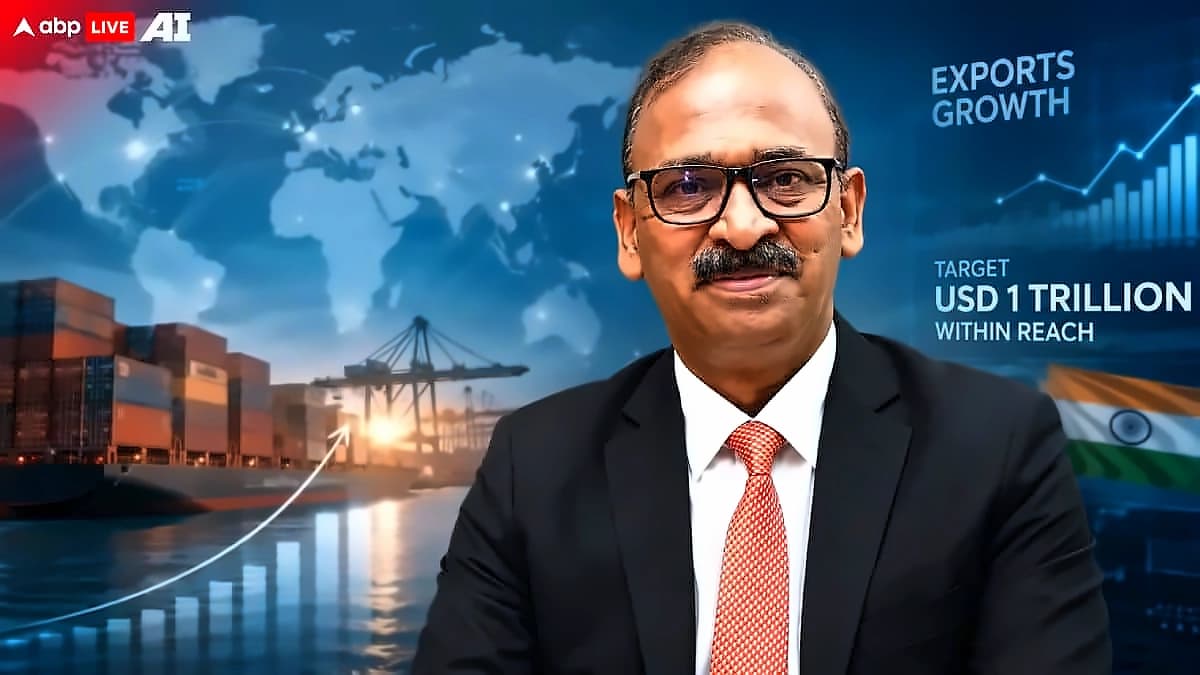
Commerce and Industry Minister Piyush Goyal announced that India is targeting total exports of $1 trillion in FY27, with merchandise exports expected to grow 16-17% to over $530 billion and services exports targeted at $470 billion. According to reports from The Times of India, Goyal called it an 'ambitious target' and emphasized that goods exports will need to increase from $442 billion to about $530 billion, representing a $90 billion increase. The minister explained that India's total exports stood at $870 billion in FY26, comprising merchandise exports of $450 billion and services exports of $420 billion. To achieve the $1 trillion target, goods exports will need to increase from $440 billion to about $515 billion, representing a 17% growth in goods, while services will grow from $421 billion to about $470 billion, marking an 11% growth. Goyal emphasized that India's exports grew 15% year-on-year during the first three months of FY26, expressing confidence that the country is well on track to achieve the ambitious milestone.
As reported by The Times of India, Goyal stated that discussions at the Board of Trade meeting focused on suggestions from industry representatives and state governments to support export growth. The minister highlighted that India is well on track to achieve the $1 trillion export target, with an estimated export growth of around 15% in the first quarter based on data up to June. Goyal emphasized that free trade agreements signed by India are helping expand market access for domestic exporters, noting that recently concluded free trade agreements have opened markets across 38 developed countries for Indian goods. The minister pointed out that in these markets, India does not compete but instead complements other nations, with the UAE agreement already operational and the India-UK Free Trade Agreement becoming operational from July 15th, giving 99% of Indian goods zero-duty access to the British market. Goyal noted that the UK's annual goods imports of around $900 billion are more than twice the value of India's total goods exports, opening significant export potential for Indian businesses.
According to The Times of India, experts believe that sectors such as engineering goods, petroleum products, electronic goods, drugs and pharmaceuticals, chemicals and gems and jewellery will drive the maximum push, as these categories account for around 71% of total goods exported by India. Electronics is emerging as India's fastest-growing manufacturing export sector, led by smartphones, telecom equipment, and electronic components, with electronics already contributing as the third biggest merchandise exports category and IT minister Ashwini Vaishnaw aiming to take it to the second spot in the coming years. The Production Linked Incentive (PLI) scheme has led to exports of over ₹8.3 lakh crore, with sectors attracting highest PLI outlays including electronics manufacturing, automobiles and auto components, high efficiency solar PV modules and ACC batteries, IT hardware and pharmaceuticals. Services exports have been a big driver, with services exports rising 7.9% to $418.3 billion in FY2025-26, nearly matching merchandise exports of $441.8 billion, with four prominent categories - telecommunications, computer and IT services, other business services, and transport and travel services - accounting for nearly 94% of service exports. As per EY India's DK Srivastava, defence exports have shown growth of 62.7% in FY26 in value terms, with the sector showing significant potential for continued growth.
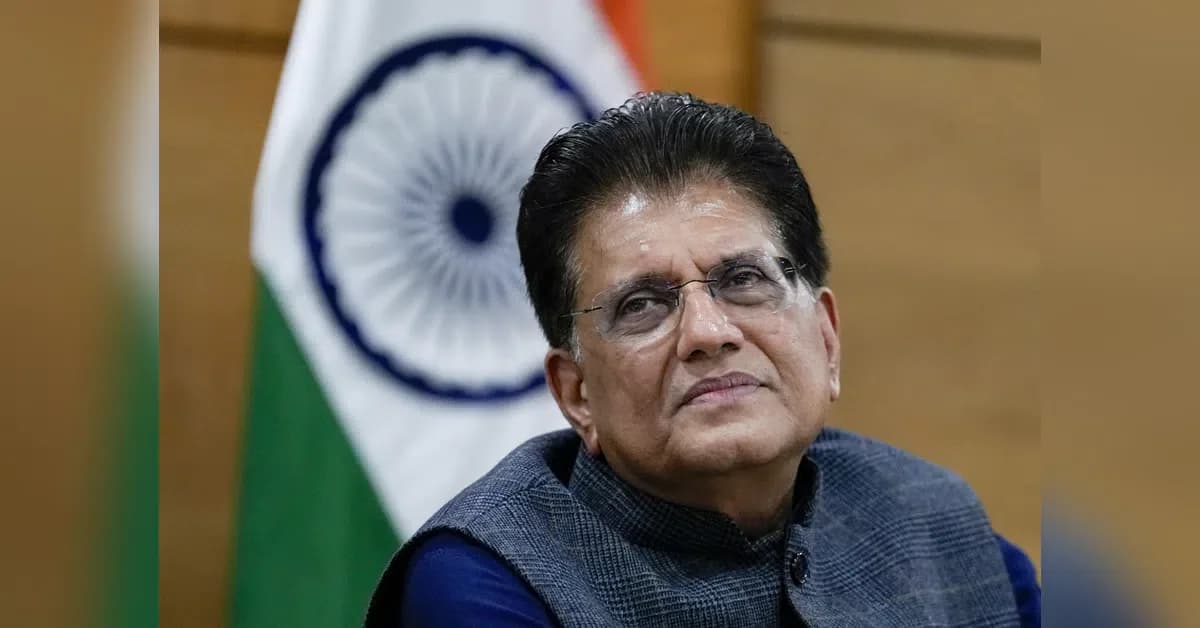
During the Board of Trade meeting, Goyal outlined a seven-point action agenda aimed at strengthening India's export ecosystem. According to Business Standard, the strategy includes making exports a higher priority for state governments and industry bodies, encouraging states to notify labour rules, providing full government funding for testing facilities required by exporters, and extending financial support through the Export Promotion Mission for regulatory approvals in overseas markets. The plan also calls for greater use of the Directorate General of Trade Remedies (DGTR) to counter dumping and predatory pricing, increased participation in global exhibitions, alignment of state industrial policies with the Centre, and development of industries that can substitute imports. Goyal emphasized that "We are getting there (to achieve the target). We are on track. But when you fly a kite, you have to hold it tight. So we have to achieve this with everyone's collective effort," as quoted by news agency PTI. The government has identified emerging opportunities in areas such as sustainable textiles, technical textiles, performance apparel and medical textiles, with state-specific production maps to align export promotion efforts with regional manufacturing strengths.
According to The Times of India, India has successfully negotiated major bilateral free trade agreements with 18 countries or economic groups, and is also a signatory to seven multilateral trade blocs including SAARC, ASEAN and SAFTA. Free trade agreements provide preferential access to more than half of global import markets, with immediate beneficiaries expected to be readymade garments, leather and footwear, gems and jewellery, and chemicals. Miren Lodha from Crisil Intelligence sees FTAs as a major enabler, as they improve market access and directly reduce India's tariff disadvantage in key export markets. However, GTRI's Ajay Srivastava cautions that less than 20% of global trade takes place through preferential tariff routes under FTAs, with India typically requiring deeper tariff cuts resulting in greater market access for partner-country exports than for Indian goods. The Directorate General of Foreign Trade (DGFT) has conducted around 80 FTA outreach programmes and is preparing a dedicated training calendar through regional offices and export promotion councils, while exporters continue to flag persistently high logistics costs, citing elevated ocean freight rates, inadequate container availability and vessel space, and multiple charges levied by shipping lines.