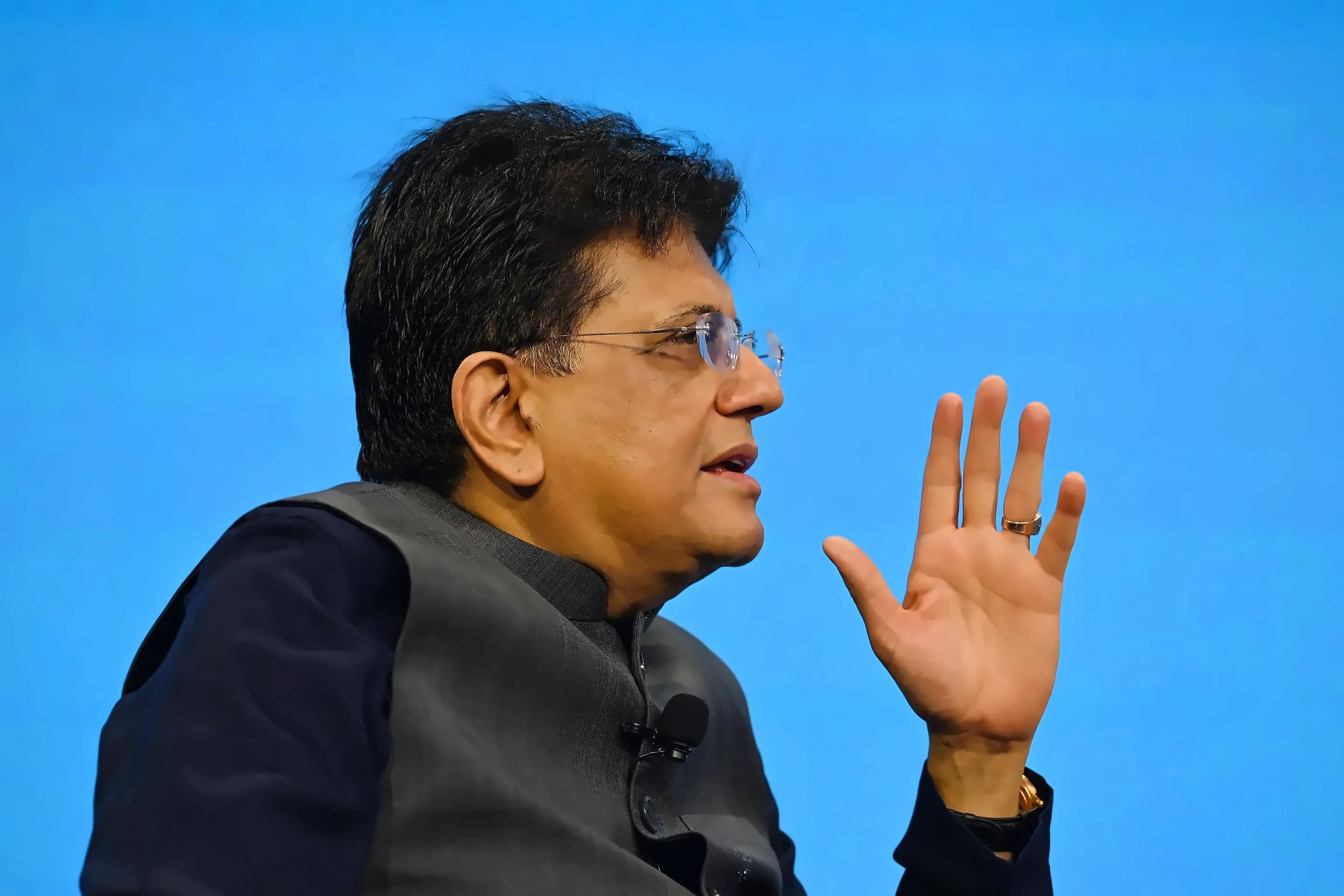
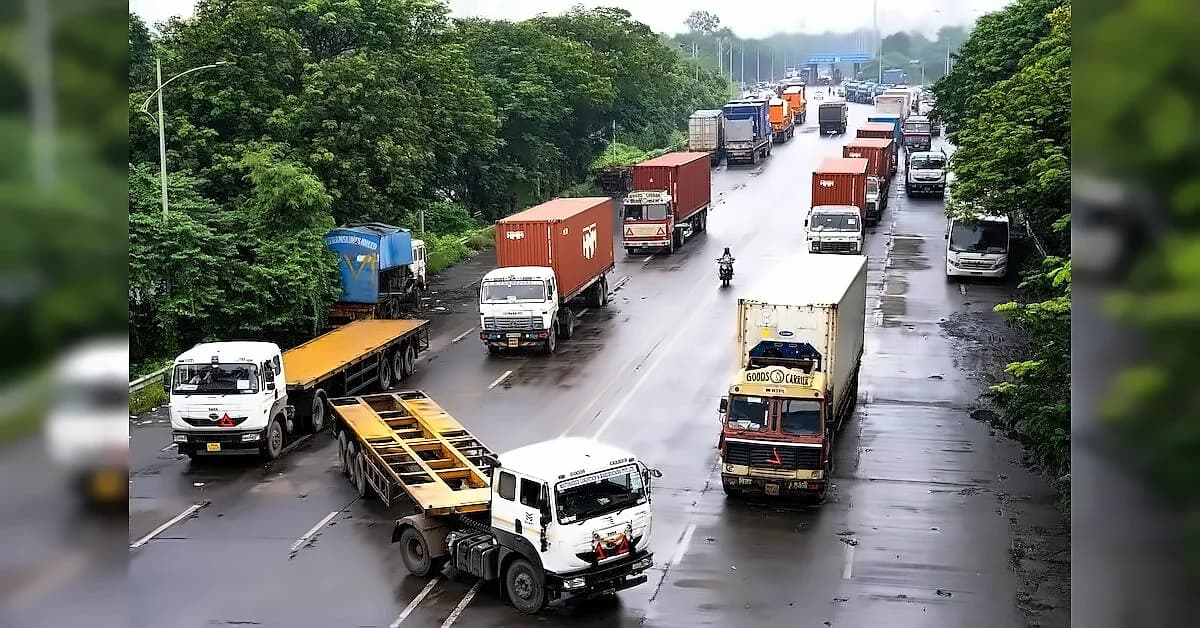
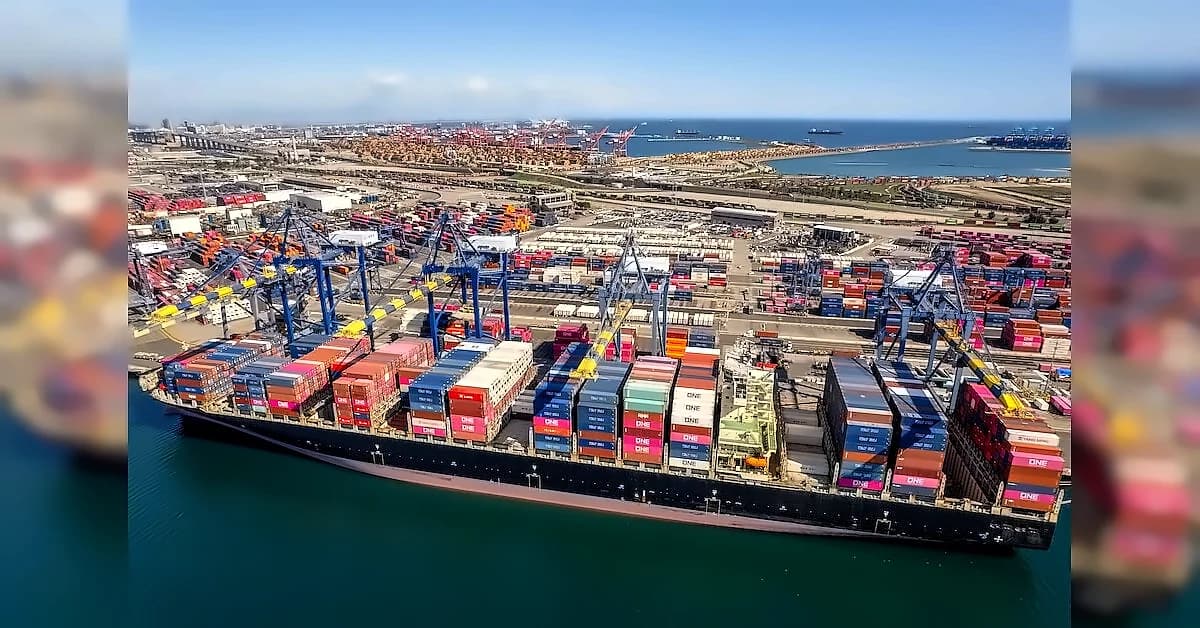
India's exports touched a record $863.11 billion in FY26 with nearly 5% growth despite facing global geopolitical tensions and disruptions in international trade, as confirmed by Commerce and Industry Minister Piyush Goyal. Speaking at the launch of the Bharatiya Vyapar Mahotsav website, Goyal emphasized that India's exports continued to grow even as several economies faced pressure from wars, tariffs and slowing trade flows. "This year's target is USD 1 trillion. This is a big target. We have to work together for this," Goyal stated, highlighting that while international trade was badly affected by prevailing global situations, India's exports remained resilient. The minister noted that India has signed nine FTAs in the past three-and-a-half years, covering 38 developed countries, which collectively provide preferential access to two-thirds of global trade. India has been at the receiving end of US President Donald Trump's tariff regime, which was struck down by the country's Supreme Court in February 2026, with Indian exports facing a cumulative 50% tariff including a 25% punitive tariff for buying Russian crude.
India's export pattern in FY2025-26 highlights a significant shift in major destination markets, with more than 35% of total merchandise exports coming from three major regions – North America, North-East Asia and Latin America. According to Commerce Ministry data, North America remains the largest market with exports of $97.7 billion (22.1% share), though growth was relatively slow at 1.3% year-on-year, indicating a mature and stable demand base. North-East Asia emerged as the fastest-growing destination, with exports increasing by 21.6% to reach $41.6 billion and its share moving up to 9.4%. Strong demand from countries such as China, Japan, South Korea, Mongolia and Taiwan supported this growth, with Indian exports like electronics, engineering products, chemicals and industrial goods seeing rising acceptance. Latin America also recorded healthy growth of 7.8% to $16.4 billion, contributing 3.7% to India's total exports, opening up new demand for Indian goods in manufacturing inputs and industrial products.
India's export diversification strategy gained significant momentum in FY26, with ships, boats, telecom instruments, pulses, marine products, graphite and explosives emerging as key growth drivers as exporters entered new markets and added fresh product-country combinations. According to an analysis by the commerce department, India expanded its export footprint through 1,821 new principal commodity product and country combinations during the last financial year, generating additional exports worth $202.2 million. Among products, ships, boats and floating structures emerged as the largest contributors, generating $57 million in additional exports across 19 new markets. Telecom instruments expanded into 20 new markets and generated exports worth $5.8 million, while nuclear reactors, industrial boilers and related parts added $14.3 million from 13 new markets. The trend highlights a gradual shift from traditional commodity-led expansion toward broader participation across high-value manufacturing, engineering, agri-processing and technology-intensive sectors. Several emerging sectors also added to this expansion, with aircraft and spacecraft parts, rail transport equipment, graphite-based products, explosives and consumer electronics finding new demand in multiple regions.
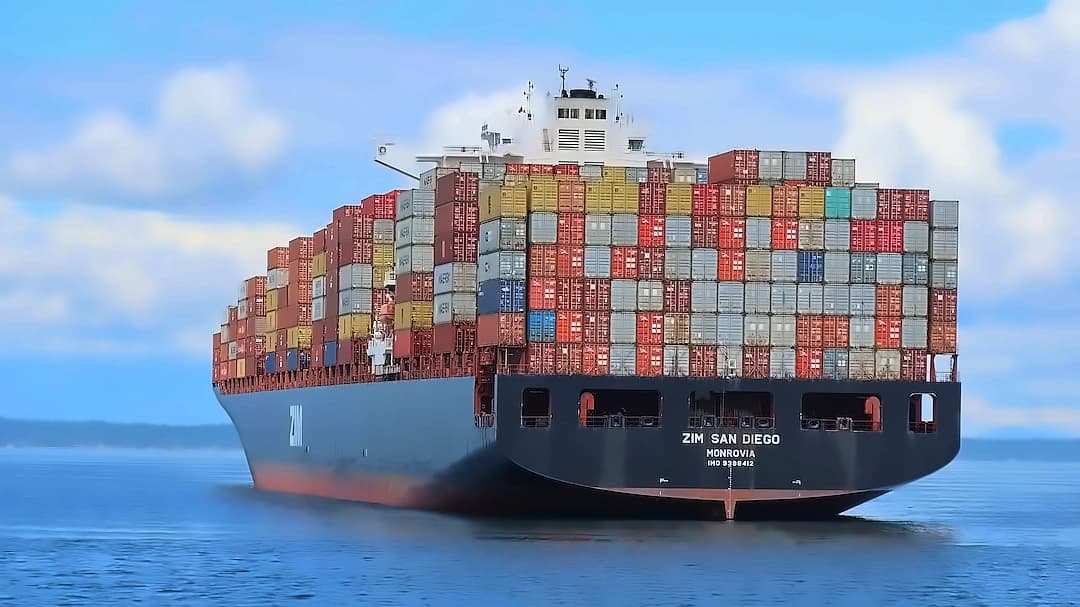
Commerce Minister Piyush Goyal urged Indian industry to leverage upcoming free trade agreements to boost exports rather than allowing imports to surge. Speaking at ASSOCHAM's India Business Reform Summit in Delhi, Goyal emphasized that "Unless Indian industries strengthen global engagements, invite investments, and promote exports, we can jolly well end up in a situation where more imports come in." He suggested that exporters conduct sampling and trial orders to deepen engagements even before trade deals come into effect, noting that "Every few months an FTA will come into force." The minister highlighted India's historical challenge with trade agreements, where imports have outpaced exports after several trade agreements, including the new-generation pact with the United Arab Emirates and agreements with ASEAN and South Korea. "I am looking for greater exports in value-added products, automobiles, and auto components, for example," Goyal said, adding that "We are looking for greater exports in electronics finished goods and consumer goods." He acknowledged the importance of certain imports for India's growth, stating that "If we need high-quality precision goods, they will need to be imported. They are enablers for India's growth story."
The Indian government has set an ambitious target of achieving $1 trillion in exports in the current financial year and doubling that to $2 trillion over the next five years, as confirmed by Commerce and Industry Minister Piyush Goyal. Addressing the launch of the Bharatiya Vyapar Mahotsav website, Goyal urged exporters to aggressively explore fresh opportunities created through trade agreements, emphasizing that achieving the FY27 target would require export growth of around 16-17%. The minister highlighted that exports from agriculture and fisheries sectors have crossed nearly ₹5 lakh crore, even as value addition remains limited, urging young entrepreneurs and startups to invest in processing and manufacturing to enhance export competitiveness. The government has broadened the definition of MSMEs to include enterprises with turnover of up to ₹500 crore with the objective of helping businesses scale up. The Bharatiya Vyapar Mahotsav, scheduled for August 12-15 at Bharat Mandapam, is expected to bring together around 1,000 businesses from across the country. Goyal also asked the industry to view the current global situation and geopolitical uncertainties as an opportunity for India to strengthen business processes, undertake faster reforms, build greater resilience, and strengthen supply chains.